April birthstone
Diamond
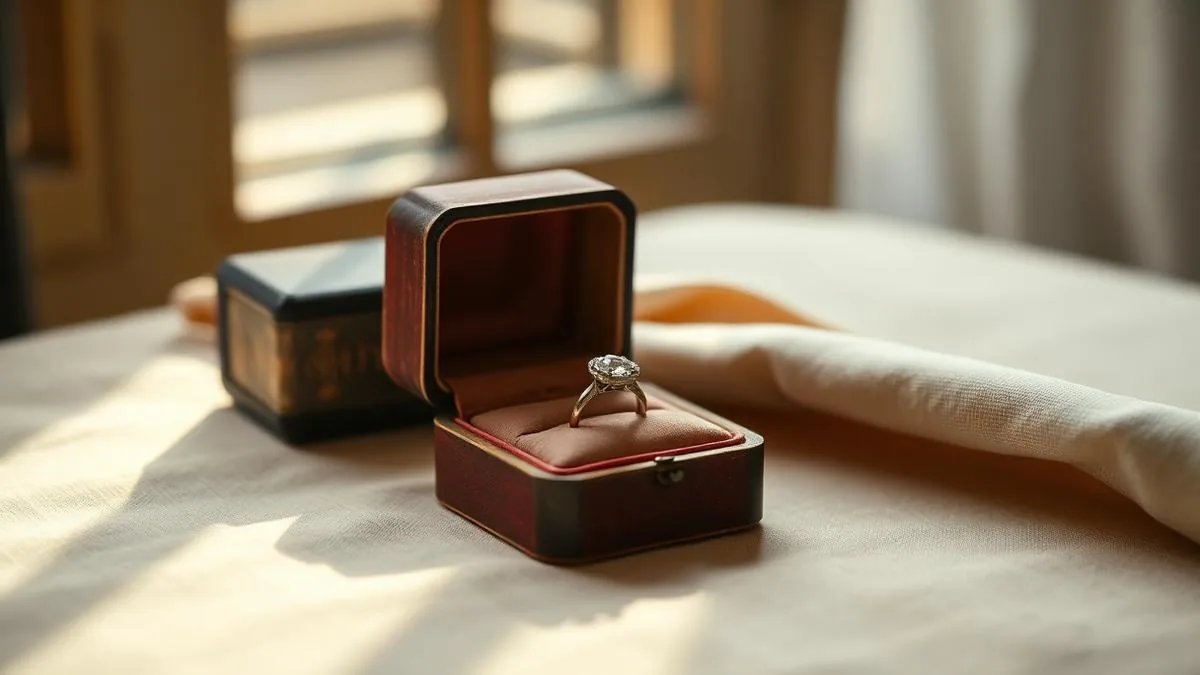
The April birthstone is diamond, the hardest natural material at 10 on the Mohs scale. In antique jewelry the interest is not the stone itself but the way it was cut. Rose, old mine, old European and transitional cuts were shaped by hand for candlelight and lamplight, and next to a modern round brilliant they have a smaller table, a higher crown, a larger culet and a slower, warmer flash.
- Species
- Crystalline carbon
- Color range
- Colorless through to warm tints, and rarely strong fancy colors
- Mohs hardness
- 10
- Also this month
- Nothing else on the modern US list
A modern round brilliant is designed for maximum sparkle under a spotlight. Antique cuts were not. They were cut to save weight from the rough and to look alive under a single flame, which is why an old European cut throws broad, lazy blocks of fire rather than the fine white scintillation of a modern stone.
Rose cuts are older still and completely different: a flat back and a dome of triangular facets, with no pavilion at all. They glow rather than sparkle, and they are usually set in closed back mounts, sometimes over foil, in Georgian and early Victorian pieces.
The practical consequence for a buyer is that certification tells you less than it does with a modern stone. Grading laboratories score antique cuts against modern proportions, which penalizes exactly the features that make them desirable. What matters more is whether the stone is original to the mount, and whether the cut is honest for the period.
In antique and vintage jewelry
Rose cuts in Georgian and Victorian closed back mounts, old mine cushions, old European cut solitaires and clusters, and calibre set diamonds in Art Deco platinum.
Wearing and caring for it
Diamond is hard but not unbreakable, and an exposed culet or a thin girdle can chip. Have claws checked yearly on a ring worn daily. Closed back and foiled antique settings must never be soaked or put in an ultrasonic cleaner.
As a gift
An antique cut diamond is the natural choice for a milestone gift. Because it is not competing in the modern certified market, the money buys character and size rather than a grading report.
Common questions
How do I recognize an old European cut?
Compared with a modern round brilliant it has a smaller table, a higher crown, a shorter, chunkier facet pattern and usually an open culet you can see as a small circle when you look straight down through the stone.
Are antique diamonds worth less than modern ones?
Not automatically. They are priced in a different market. A well cut old European or old mine stone with good color can command a premium precisely because it cannot be reproduced.
Should an antique diamond be certified?
It can be, but a modern grading report judges it against modern proportions and will describe a period cut unfavorably. We state carat weight, color and clarity as our gemologist, a GIA Graduate Gemologist (GG), assesses them, and we say plainly when a stone looks like a later replacement.
Shop the pieces
Shop diamond jewelry
Antique and vintage pieces set with diamond, each one a single example.
Nothing matching this is available right now. Every piece is a single example and sells once, so this changes regularly. Browse everything in stock or ask our buyers to look for it.