Metals & materials
Understanding European gold hallmarks
American gold says 14K. European gold shows you a lion, an eagle's head or a tiny crowned figure. Here is how to read them.
Written by our in-house jewelry team · Updated August 4, 2026 · 10 min read
In short
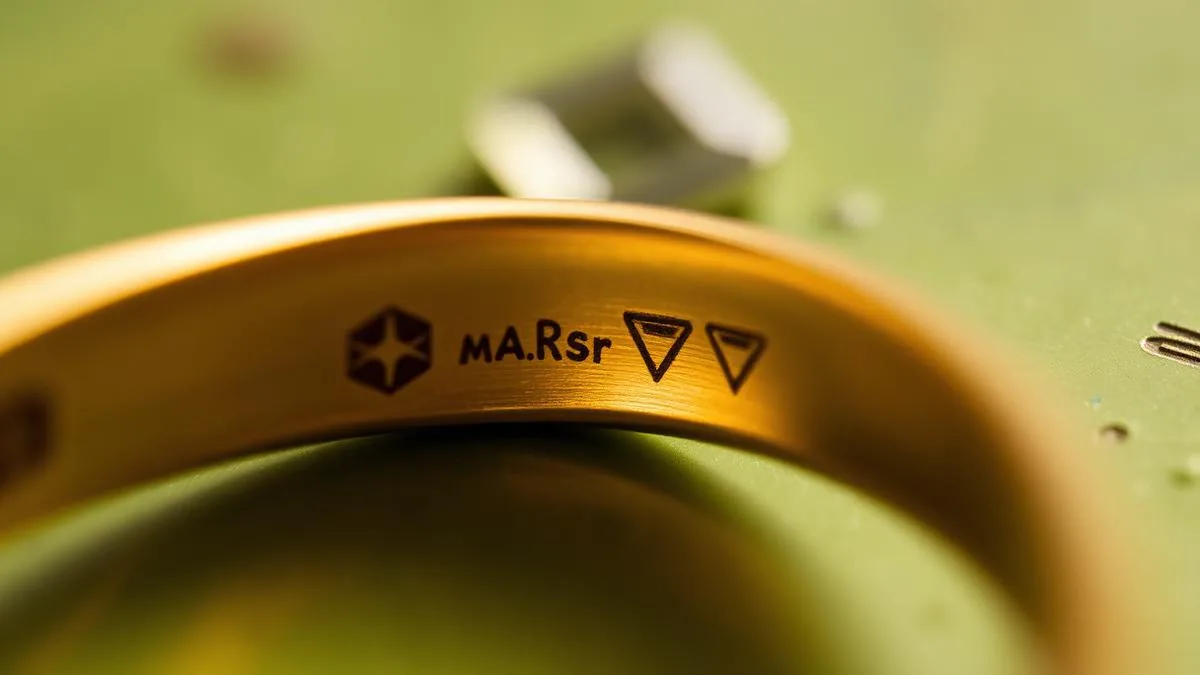
A European gold hallmark is a struck mark showing the metal's fineness, and often also a maker's mark, an assay office mark and a date letter. Continental marks usually state fineness in parts per thousand — 585 for 14K, 750 for 18K — where British marks combine a fineness number with a town and date letter. An unmarked piece is not automatically fake: many genuine pieces were never marked, or were marked in a place since worn away, which is why we test metal as well as read marks.
This is the single biggest source of confusion for American buyers of European jewelry. In the US, gold is usually stamped with a karat number and a maker's name, and that stamp is the manufacturer's own claim. In much of Europe, gold is stamped by an independent government assay office that has physically tested the metal.
That difference is worth understanding, because a European hallmark is stronger evidence than a US karat stamp. It just does not look like a number.
Shop the pieces: Everyday vintage fine jewelry, curated and available now.
Millesimal fineness: the numbers behind the karats
European marks state purity in parts per thousand rather than in karats. The conversion is simple and worth memorizing.
- 375 = 9K gold, 37.5% pure
- 417 = 10K gold
- 585 = 14K gold, the most common European standard for everyday jewelry
- 750 = 18K gold, the standard for fine European work
- 916 = 22K gold
- 800, 835, 925 = silver standards, 925 being sterling
- 950 = platinum
The four marks you may find
A complete hallmark is a cluster, not one stamp. Read it as a set.
- Standard mark: the purity, shown as a number or as a national symbol
- Assay office mark: which office tested and stamped the piece
- Maker's or sponsor's mark: usually initials in a shaped shield
- Date letter: a single letter in a distinctive font and shield, used mainly in Britain, which dates a piece to one specific year
“A hallmark tells you a metal standard and often a country and a year. It never tells you who designed the piece.”
Country by country
These are the marks we meet most often at our own bench.
- Netherlands: a standing lion for 750 and 585 gold, with a small number in the corner of the shield giving the standard. Dutch pieces also carry the mark of the assay office that tested them. Older Dutch silver shows a crowned figure.
- France: an eagle's head for 18K gold, in use since 1838, and an owl for imported gold. A boar's head or a crab appears on silver. French marks are tiny, often on the edge of a bezel or inside a shank.
- United Kingdom: the most complete system in the world. A crown with 18 or 750 for gold, a town mark such as a leopard's head for London or an anchor for Birmingham, a maker's mark and a date letter. A British hallmark can date a piece to a single year.
- Germany: usually plain numeric, 333, 585 or 750, sometimes with a crescent moon and crown from 1888 onward.
- Italy: numeric fineness plus a star and a provincial number identifying the manufacturer, for example 750 with a star and a two-digit code.
- Switzerland and Austria: a helvetia head and a Diana head respectively on older work.
What a hallmark does and does not prove
An assay office mark proves the metal was independently tested at the point of manufacture or import. It does not prove the age of the piece, that the stones are natural, or that the piece has not been altered since.
It is also perfectly common for genuine antique jewelry to carry no mark at all. Marks wear away with polishing, and some periods and workshops never marked small pieces. An unmarked piece is not automatically suspect, but the metal should then be independently tested rather than assumed.
How we handle marks
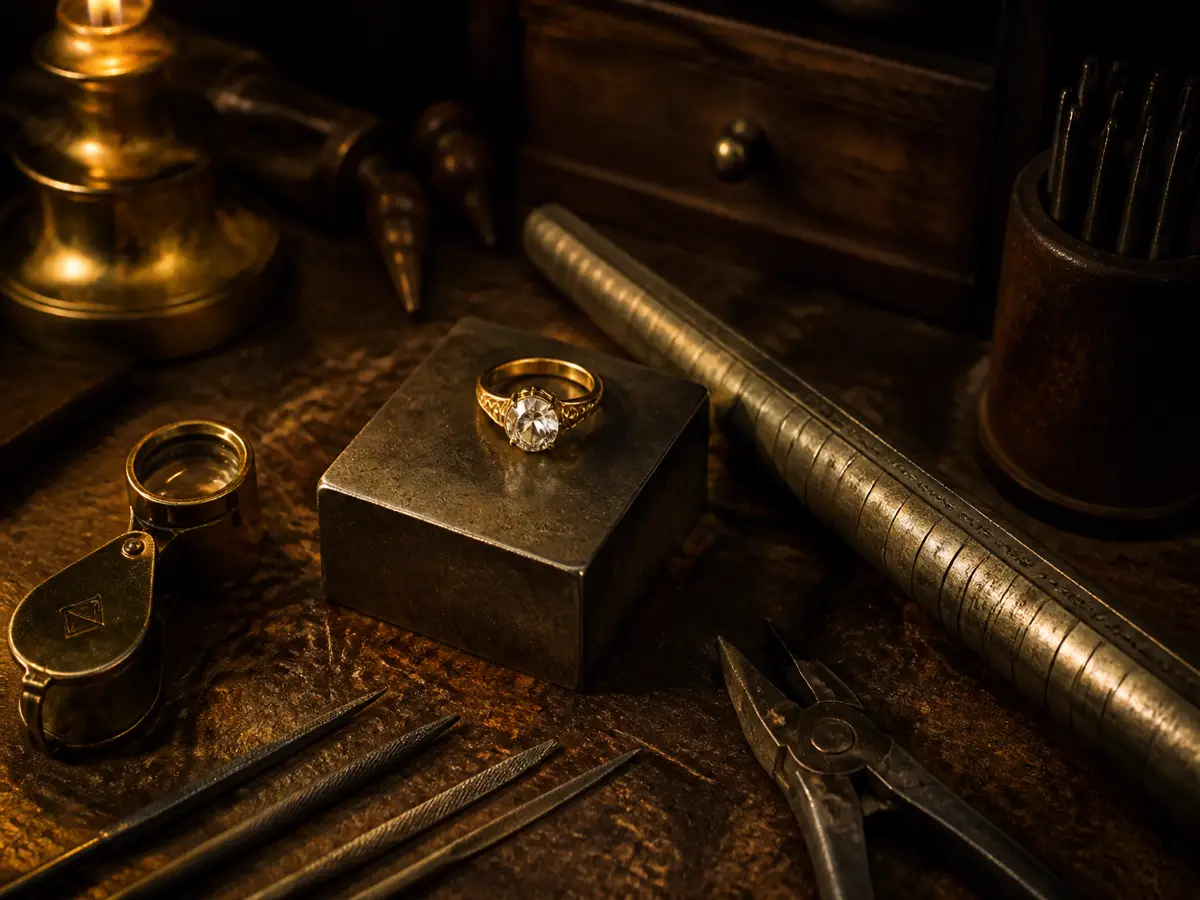
Every piece we take in is checked at our own bench and, where Dutch law requires it, hallmarked by a recognized Dutch assay office. We photograph the hallmark of every piece we list and we will read it out and magnify it for you during a video viewing.
When a mark is worn beyond reading, we say so plainly and give the tested metal standard instead. We never describe a piece as 18K on the strength of a mark we cannot actually read.
Frequently asked questions
- What does 750 mean on gold jewelry?
- 750 parts of gold per thousand, which is 75% pure gold, the same as 18K. Similarly 585 is 14K and 375 is 9K.
- Is a European hallmark better than a US karat stamp?
- It carries more weight as evidence. A European assay office mark means an independent government body physically tested the metal, while a US karat stamp is the manufacturer's own declaration.
- My antique ring has no hallmark. Is it fake?
- Not necessarily. Hallmarks wear away with a century of polishing, and small or exported pieces were often left unmarked. The metal should be independently tested, and a reputable seller will state the tested standard rather than guessing.
- What does a Dutch assay office do?
- A recognized Dutch assay office is an independent body that tests and stamps precious metal in the Netherlands. Its mark means the gold or silver standard was verified where Dutch law requires it, not just claimed by the seller.
- Can I date a piece from its hallmark?
- British hallmarks include a date letter that pins a piece to a single year. Most other countries changed their marks only occasionally, so they give a date range rather than an exact year.
Written by our estate jewelry team and reviewed by our in-house gemologist, a GIA Graduate Gemologist (GG). We have been buying and selling European antique jewelry since 1973.
From the reading to the piece
Shop hallmarked vintage gold
Related guides
Keep reading
metals
14K vs 18K gold explained
Two numbers that decide the color, the durability and a surprising amount of the price of a piece.
authenticity
Reading maker's marks and hallmarks
How a mark set is built, what each stamp actually proves, and what it never can.
authenticity
How to tell if vintage jewelry is real
Genuine period jewelry usually agrees with itself. Reproductions rarely do.