Metals & materials
14K vs 18K gold explained
Two numbers that decide the color, the durability and a surprising amount of the price of a piece.
Written by our in-house jewelry team · Updated July 20, 2026 · 7 min read
In short
18K gold is 75% pure gold, 14K is 58.5%. 18K has a richer color and is the standard in most European antique jewelry; 14K is harder, more scratch resistant and less expensive, and is common in American and in some Dutch and German pieces. Neither is better in the abstract: 18K suits color and heirloom pieces, 14K suits daily wear.
Karat measures how much of an alloy is pure gold, out of 24 parts. 14K is 58.5% gold, marked 585 in Europe. 18K is 75% gold, marked 750. Everything else in the alloy is copper, silver, zinc, palladium or nickel, and that remainder does most of the visible work.
Neither is better in the abstract. They are different tools, and antique jewelry uses both deliberately.
Shop the pieces: Everyday vintage fine jewelry, curated and available now.
Color
18K reads distinctly warmer and richer because there is simply more gold in it. Next to it, 14K looks slightly paler and a little cooler, though the alloy matters as much as the karat: a copper-heavy 14K can look warmer than a palladium-heavy 18K.
In white gold the relationship flips in practical terms. 14K white gold holds a bright white more easily, while 18K white gold carries more yellow underneath and depends more on its rhodium plating, which wears off every few years and needs redoing.
Durability
14K is harder and more scratch resistant, because the alloying metals are harder than gold. For a ring worn daily on a working hand, that is a genuine advantage.
18K is softer and dents and scratches more readily, but it is also more malleable, which is why fine hand engraving and delicate settings were often made in it. Claws in 18K bend rather than snap, which sometimes saves a stone.
Neither is fragile. A well-made 18K shank at 1.8 mm outlasts a thin 14K one at 1 mm every time. Thickness matters more than karat.
“There is no better karat, only a better karat for how you actually live.”
Skin sensitivity
Almost all gold allergy is actually nickel allergy. Because 18K contains less alloy overall, it usually contains less nickel and is the safer choice for sensitive skin. If you react to jewelry, ask specifically whether the alloy is nickel-free rather than only asking the karat.
Price and value
18K contains about 28% more gold than 14K, so the raw metal costs meaningfully more, and that shows up in both retail price and scrap value.
In antique jewelry it rarely dominates the price. Age, maker, design quality, stone quality and condition move an antique price far more than the karat does. A superb 14K Deco ring will outprice a plain 18K band without difficulty.
What you will actually find in European antique jewelry
European fine jewelry leans to 18K, marked 750, and it is the default for good French, Dutch and Italian work. 14K, marked 585, is extremely common in Dutch and German everyday jewelry and in mid-century pieces.
British antique work adds 9K and 15K, marked 375 and 625, which have no direct American equivalent. 9K is hard, pale and very durable; 15K, discontinued in 1932, is a lovely warm color and a useful dating clue on its own.
So which should you choose?
Choose 14K if the piece will be worn every day on a hand that works, if you want the brightest white gold, or if scratch resistance matters more to you than color.
Choose 18K if you want the warmest color, if you have sensitive skin, or if the piece has fine engraving or delicate settings that deserve the softer metal. For an heirloom that will be worn on occasions rather than daily, 18K is usually the more satisfying choice.
Frequently asked questions
- Is 18K gold better than 14K?
- It is purer, warmer in color and gentler on sensitive skin, but it is softer and more expensive. 14K is harder and more scratch resistant, which suits daily wear. Neither is better in every situation.
- What is 585 and 750 gold?
- European fineness marks. 585 means 58.5% pure gold, the same as 14K. 750 means 75% pure gold, the same as 18K.
- Does 14K gold tarnish?
- Gold itself does not tarnish, but the copper and silver in the alloy can dull slightly over time, and 14K has more of them than 18K. Normal cleaning restores it completely.
- Which gold is better for sensitive skin?
- 18K, because it contains less alloy and therefore usually less nickel, which is the actual cause of most jewelry reactions. Always ask whether the alloy is nickel-free.
- What is 9K and 15K gold?
- British standards you will meet in antique jewelry. 9K is 375 parts per thousand, hard and pale. 15K is 625 parts and was discontinued in 1932, which makes it a useful clue for dating a piece.
Written by our estate jewelry team and reviewed by our in-house gemologist, a GIA Graduate Gemologist (GG). We have been buying and selling European antique jewelry since 1973.
From the reading to the piece
Everyday vintage gold
Related guides
Keep reading
metals
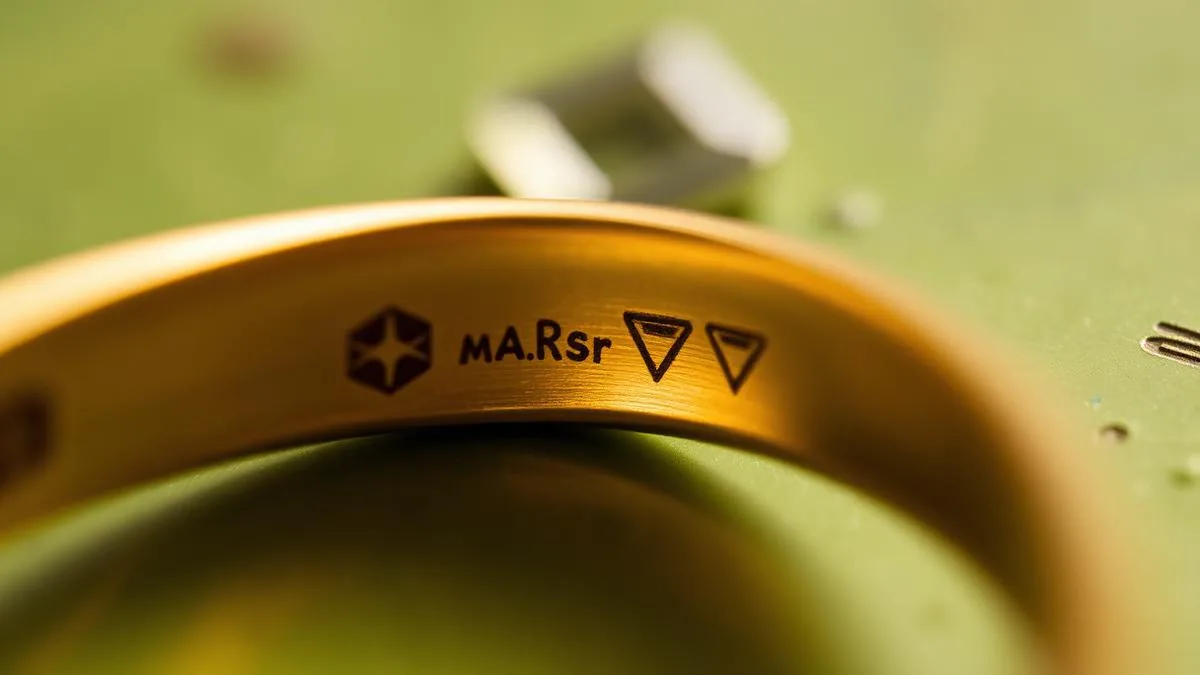
Understanding European gold hallmarks
American gold says 14K. European gold shows you a lion, an eagle's head or a tiny crowned figure. Here is how to read them.
metals
White gold vs yellow gold vs rose gold in vintage jewelry
What gives gold its color, and what each color tells you about a piece's age.
authenticity
How to care for your vintage jewelry
Why repolishing can halve the value of a piece that took a century to earn its surface.