Metals & materials
White gold vs yellow gold vs rose gold in vintage jewelry
What gives gold its color, and what each color tells you about a piece's age.
Written by our in-house jewelry team · Updated August 7, 2026 · 7 min read
In short
Pure gold is always yellow. White, yellow and rose gold are all the same metal alloyed differently, gold mixed with silver and copper for yellow tones, gold mixed with a higher proportion of copper for rose tones, and gold mixed with white metals such as palladium, nickel or silver for white tones, sometimes finished with a rhodium plating for extra brightness. The color a piece uses is also a useful, though not absolute, clue to its era, since rose gold was especially common in the 1940s and white gold became a mainstream choice for diamond jewelry from the mid-twentieth century onward.
Gold in its pure, 24K form is a rich, warm yellow and is also too soft for most jewelry to hold its shape under daily wear. Every karat of jewelry gold below 24K is an alloy, a deliberate mixture of gold with other metals chosen for strength and, just as often, for color.
Understanding what those alloys are made of explains why a 14K yellow ring, a 14K white ring and a 14K rose ring can look completely different while containing the same proportion of pure gold. It also helps place a piece in its likely era, since fashion in gold color has shifted noticeably across the twentieth century.
Shop the pieces: Everyday vintage fine jewelry, curated and available now.
How alloying creates each color
Yellow gold is alloyed primarily with silver and copper in proportions that keep the warm tone of pure gold while adding hardness. The exact mix varies by karat and by country, which is part of why 18K yellow gold from different eras and workshops can look subtly different in warmth.
Rose gold increases the proportion of copper relative to silver, and the more copper in the mix, the pinker the result. Some vintage rose gold, particularly from the 1940s, is alloyed with a notably high copper content, giving it a deeper, warmer rose than most rose gold made today.
White gold replaces most of the copper and silver with white metals, historically palladium or nickel, sometimes with a touch of silver or zinc. Because the natural color of white gold alloy is a pale, slightly warm grey rather than a bright white, most white gold jewelry, both vintage and modern, is finished with a thin rhodium plating to give it a brighter, colder shine.
- Yellow gold: gold plus silver and copper, kept in balance for a warm tone
- Rose gold: gold plus a higher proportion of copper for a pink tone
- White gold: gold plus white alloying metals, often finished with rhodium plating
What color suggests about era, and its limits
Rose and green gold surged in popularity in the 1930s and 1940s, driven partly by scarcity of platinum and other alloying materials during the war years, and a piece in a distinctly warm pink gold with sculptural Retro styling is a reasonable candidate for that period. White gold became widely used for diamond jewelry from the 1920s onward and grew especially dominant again from the mid-twentieth century as platinum became more available and fashion shifted toward crisp white metal for diamonds.
Color is a clue, not a proof. Yellow gold has been used continuously across every era, rose gold has come back into fashion more than once since the 1940s, and white gold jewelry has been made steadily for a century. We date a piece from its construction and design details as a whole, using color as one supporting signal among several rather than the deciding factor.
“White gold is a plated finish on most vintage pieces. Rhodium wearing thin is maintenance, not damage.”
How color affects durability and care
Higher copper content, as in rose gold, tends to make an alloy slightly harder than an equivalent karat of yellow gold, which is part of why rose gold jewelry can show wear a little differently, often holding sharp edges longer. White gold's durability depends heavily on its specific alloy and, in rhodium-plated pieces, on the plating itself, which wears thin over years of contact and can be professionally reapplied.
A rhodium-plated white gold ring that looks slightly warmer or greyer than when it was new has simply lost some of its plating through normal wear, not developed a fault, and replating restores the bright white finish without affecting the gold underneath.
Mixing colors in one piece
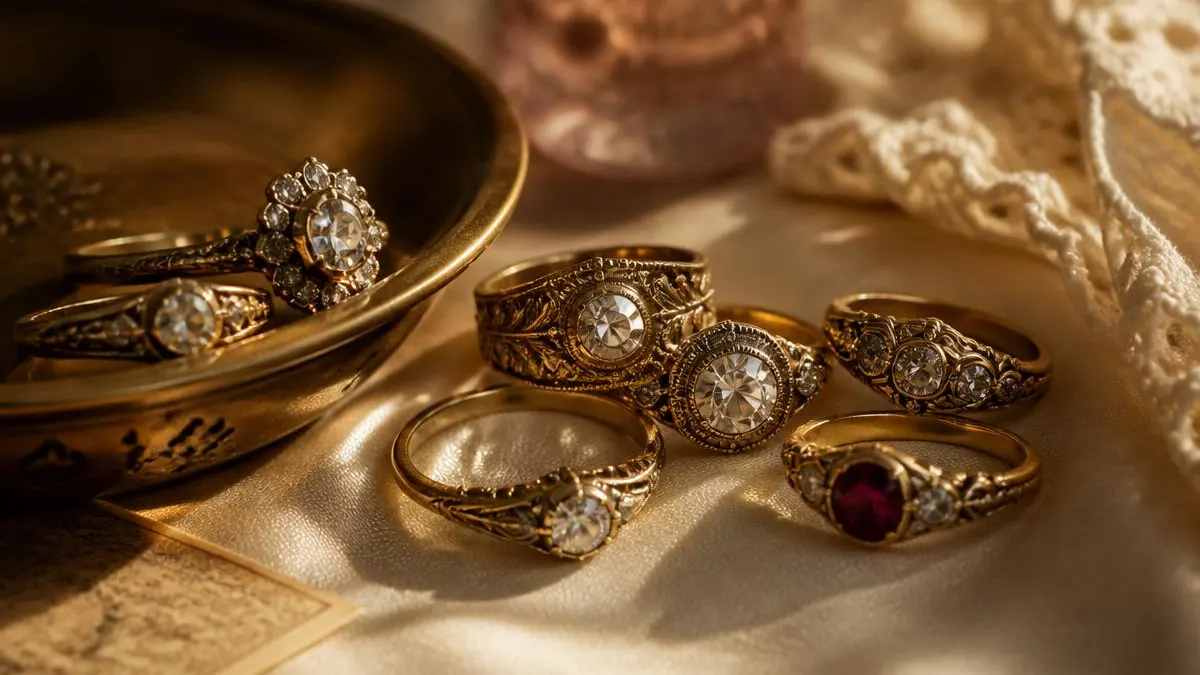
Two-tone and tri-color jewelry, combining yellow, white and rose gold in one design, has appeared across multiple eras, from Retro ribbon and bow motifs to later revival styles, and is not a sign of mismatched repairs when the construction is consistent throughout. We check that all colors in a multi-tone piece share the same construction quality and wear pattern, which is a better indicator of whether the combination is original than the color choice itself.
Frequently asked questions
- Is white gold a different metal from yellow gold?
- No. Both are gold alloyed with other metals. Yellow gold uses silver and copper to keep gold's natural warm tone, while white gold uses white metals such as palladium to lighten the color.
- Why does my white gold ring look slightly yellow after some years?
- Most white gold jewelry is finished with a thin rhodium plating that wears thin over time, revealing the naturally pale grey tone of the gold alloy underneath. Replating restores the bright white finish.
- Does rose gold mean a ring is from the 1940s?
- Not necessarily. Rose gold was especially popular in the 1930s and 1940s, but it has returned to fashion more than once since, so we date rings by construction and style overall, not by color alone.
- Is one gold color stronger than the others?
- Alloy composition affects hardness more than color does directly, though higher copper content, common in rose gold, tends to add some hardness. The karat and specific alloy matter more than color for overall durability.
Written by our estate jewelry team and reviewed by our in-house gemologist, a GIA Graduate Gemologist (GG). We have been buying and selling European antique jewelry since 1973.
From the reading to the piece
Shop vintage gold jewelry
Related guides
Keep reading
metals
Silver and platinum in vintage and antique jewelry
Why platinum defined an era, how sterling silver is used, and how to tell them apart.
metals
22K and high-karat gold in antique and regional jewelry
Why some traditions favor 22K and 24K gold, and how it wears differently.
eras
Retro jewelry guide, 1935 to 1950
Rose gold, sculpted volume and big colored stones, born out of wartime scarcity.