Types & anatomy
Engagement ring settings & styles explained
Solitaire, halo, three-stone, cluster, toi et moi, five-stone and east-west: what each one is, how it wears, and who it suits.
Written by our in-house jewelry team · Updated August 8, 2026 · 8 min read
In short
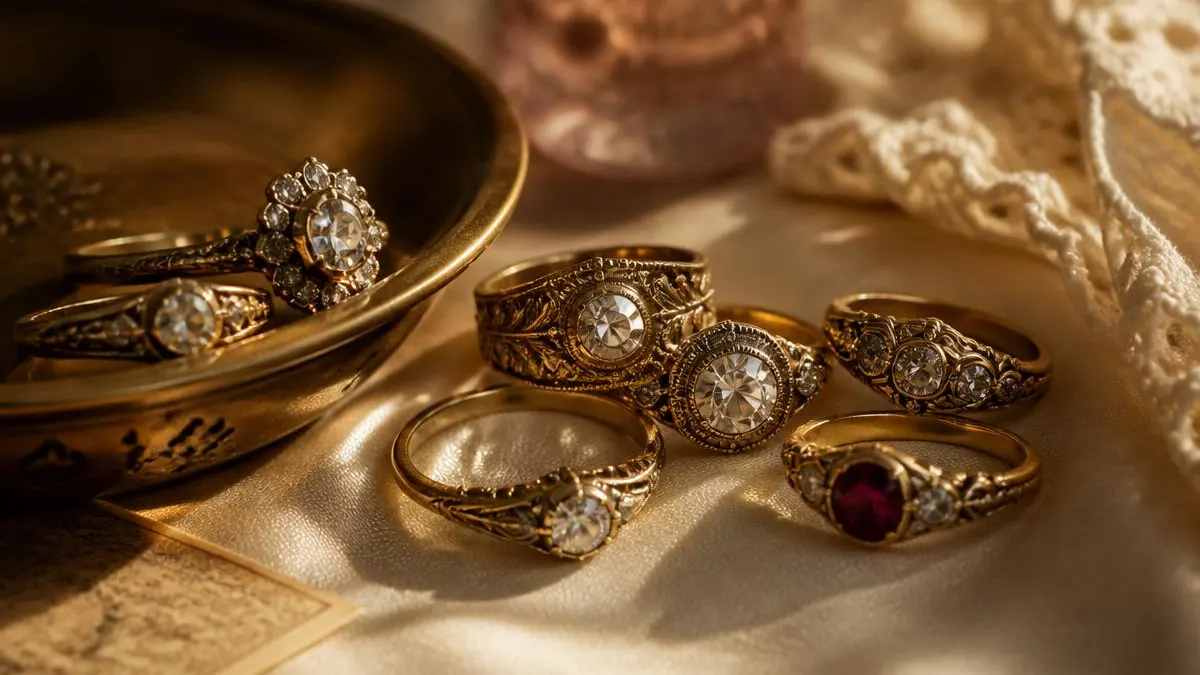
Engagement ring styles are named after how the stones are arranged, not after a period. A solitaire has one stone; a halo frames a center with small stones; a three-stone sets a center between two shoulder stones; a cluster groups many small stones into one head; a toi et moi sets two stones side by side; a five-stone or eternity runs stones along the band; and an east-west turns a single stone across the finger instead of along it.
Style names get used loosely online, and the same ring is often described three different ways by three different sellers. This is how we use the terms on our own product pages, so you can read a listing here and know exactly what is meant.
Each style below links through to the rings we currently have in that arrangement. Stock is single-piece, so those pages change as things sell.
Shop the pieces: Solitaire, curated and available now.
Solitaire
One stone, held by claws, a bezel or a rub-over collet. Because there is nothing else to look at, everything depends on the proportion of the head and the height the stone sits at. Antique solitaires often sit lower than modern ones, which makes them easier to live with under gloves and sleeves.
Suits: anyone who wants the stone itself to be the whole design, and anyone who expects to stack a wedding band flush against it.
Halo
A ring of small stones around the center. Jewelers have used the device since the Georgian period, long before the word 'halo' was applied to it, because it makes a modest center read larger and gives the ring a soft, lit outline in low light.
Suits: a smaller center stone you want to look generous, and anyone drawn to Edwardian and Art Deco outlines.
“Style names describe how the stones are arranged, not when the ring was made.”
Three-stone, or trilogy
A larger center with a stone on each shoulder, sometimes matched, sometimes deliberately contrasting: two diamonds beside a sapphire, or two calibre-cut sapphires beside a diamond. Finding an antique trilogy with genuinely matched old cut side stones is harder than it looks, because the stones had to be cut for each other by hand.
Suits: people who want width across the finger without extra height, and anyone who likes the past-present-future reading of it.
Cluster
Many small stones grouped into a single flowering head, so the ring reads as one large shape from a distance. Victorian and Edwardian clusters were the ordinary engagement ring of their day, which is why so many survive.
Suits: buyers who want presence and pattern rather than one big stone, and anyone shopping in a tighter budget band who still wants real period work.
Toi et moi
Two stones set side by side, curving past each other along the shank. The French name is literal: you and me. Often the two stones are deliberately different, a diamond with a sapphire or an emerald, and occasionally two different cuts of the same stone.
Suits: anyone who wants a ring that is obviously about two people, and anyone tired of symmetrical designs.
Five-stone and eternity
A line of stones running across the front of the ring, or all the way around it. Five-stone rings sit flat and stack beautifully; full eternity bands cannot usually be resized, because cutting the band destroys the setting, so buying in the right size matters more here than anywhere else.
Suits: anyone who prefers a band to a raised head, and anyone who works with their hands.
East-west
The center stone turned on its side so its long axis runs across the finger. It is uncommon in period jewelry and it changes the whole feel of an elongated cut, making it look wider and more modern than the same stone set north-south.
Suits: oval, emerald and marquise cuts, and anyone who wants something quietly unusual.
How the style affects daily wear
Height is the practical variable. A tall claw-set solitaire catches on knitwear; a bezel, a cluster or a flat five-stone rarely does. Millegrain edges soften with wear and can be re-cut, engraving cannot always be restored, and pavé set with tiny grains needs a check every few years.
Whatever the style, ask about the shank. Wear concentrates at the bottom of the band, and a shank that has worn thin will need rebuilding sooner rather than later. We check that before listing and say what we found.
Frequently asked questions
- Which engagement ring style is the most timeless?
- A low-set solitaire and a well-proportioned three-stone both date the least, because neither depends on a fashion for a particular outline. Cluster and halo designs read more clearly of their period, which many buyers actively want.
- Which styles can be resized?
- Solitaires, halos, three-stone and cluster rings can usually be resized by our goldsmith at no cost. Full eternity bands and rings with stones or engraving running around the whole shank generally cannot.
- What is the difference between a cluster and a halo?
- A halo has one clear center stone with a frame of smaller stones around it. A cluster has no single dominant stone: the whole head is the design.
Written by our estate jewelry team and reviewed by our in-house gemologist, a GIA Graduate Gemologist (GG). We have been buying and selling European antique jewelry since 1973.
From the reading to the piece
Shop solitaire rings
Each piece is one of a kind and sells once, so this collection changes constantly.
View solitaireRelated guides
Keep reading
buying
Why a vintage engagement ring: unique, sustainable, and built to last
One of a kind by definition, made from metal and stones already above ground, and built by hand to be repaired rather than replaced.
buying
Buying an engagement ring online safely
What to check before you send money to a jeweler you have never met, and what a serious seller should be willing to show you.
compare
Solitaire vs halo vs cluster
Three ways to spend the same money, and what each one actually gives you on the hand.
buying
The vintage engagement ring buying guide
Everything we would want a friend to know before spending several thousand dollars on a ring made a century ago.