Compare & decide
Solitaire vs halo vs cluster
Three ways to spend the same money, and what each one actually gives you on the hand.
Written by our in-house jewelry team · Updated August 7, 2026 · 7 min read
In short
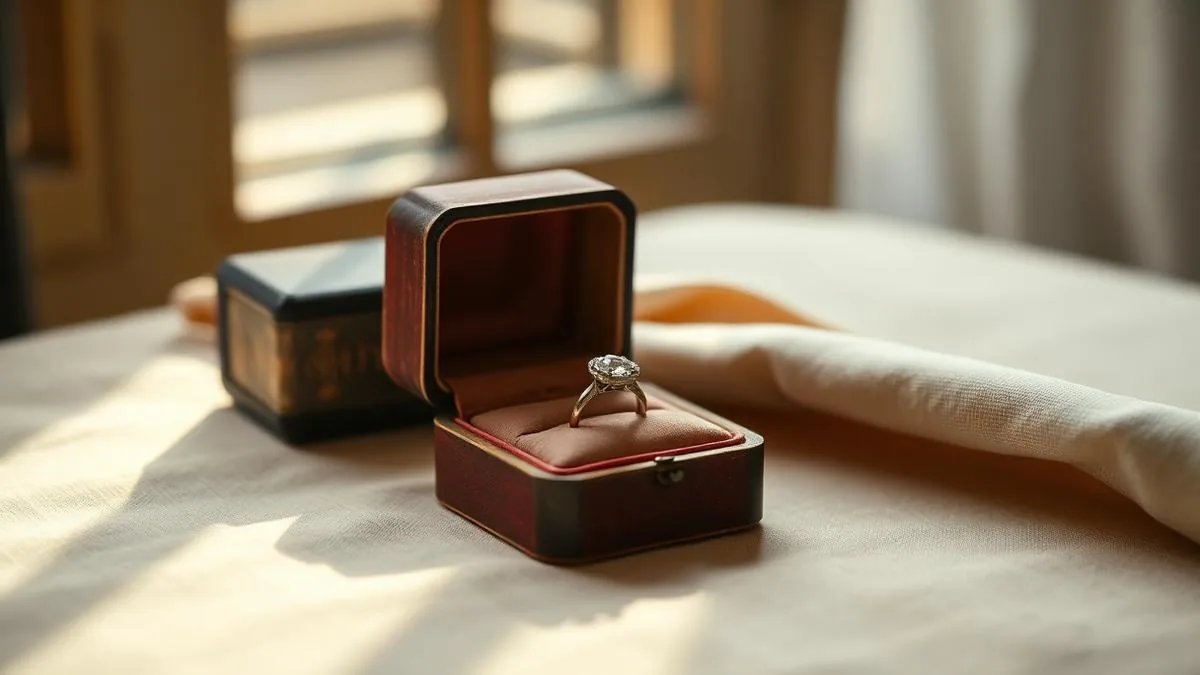
A solitaire spends the budget on one stone and shows it honestly, which suits a buyer who cares about the center stone above all. A halo frames a center stone with small ones so the ring reads larger for the money, at the cost of more settings to maintain. A cluster spreads the budget across several stones and gives the most visual size and antique character per dollar, but has no single dominant stone.
These three are the real decision most engagement ring buyers are making, whether or not they use these words. The honest way to compare them is by what each one does with a fixed budget.
Shop the pieces: Solitaire, curated and available now.
Solitaire
One stone carries everything. That is its appeal and its discipline: the quality of the center is fully exposed, and so is any weakness in it.
A solitaire is also the easiest of the three to service. There is one setting to check, and a jeweler can usually resize the shank without touching the head.
Halo
The frame of small stones makes the center look larger and lifts the whole outline, so a halo gives more presence per dollar than a solitaire. Antique halos, particularly Edwardian and Art Deco ones, do this with real delicacy and low profiles.
The cost is maintenance. A halo has many small settings, and small stones in a hundred-year-old halo do come loose. It is also a design that dates: heavy modern halos read very much of their moment, where antique ones do not.
Cluster
A cluster spends across several stones instead of one, and historically that is exactly why clusters exist. For antique buyers it is the value option: the most width, sparkle and period character for the money.
There is no single stone to fall in love with, which matters to some buyers a great deal and not at all to others. Clusters also sit taller, so think about how the ring will live next to a wedding band.
- Most honest about the center stone: solitaire
- Most visual size for the money, with upkeep: halo
- Most antique character and width per dollar: cluster
- Easiest to resize and service: solitaire
Living with each one
Ask three practical questions before you choose: does it sit flush with a band, can it be resized, and how many settings will need checking each year. A high solitaire and a tall cluster both need thought about the band; a halo needs a maintenance habit.
We show all of this on a video viewing: the profile from the side, the height on a hand, and whether a band sits against it.
Frequently asked questions
- Which ring style looks biggest for the money?
- Generally a cluster, then a halo, then a solitaire. Both clusters and halos use several small stones to create width, which costs far less than the same spread in a single stone.
- Are halo rings harder to maintain?
- They have more small settings than a solitaire, so there is more to check. An annual look at the settings is sensible for any halo worn daily, and essential for an antique one.
Written by our estate jewelry team and reviewed by our in-house gemologist, a GIA Graduate Gemologist (GG). We have been buying and selling European antique jewelry since 1973.
From the reading to the piece
Shop solitaire rings
Each piece is one of a kind and sells once, so this collection changes constantly.
View solitaireRelated guides
Keep reading
types
Types of vintage rings explained
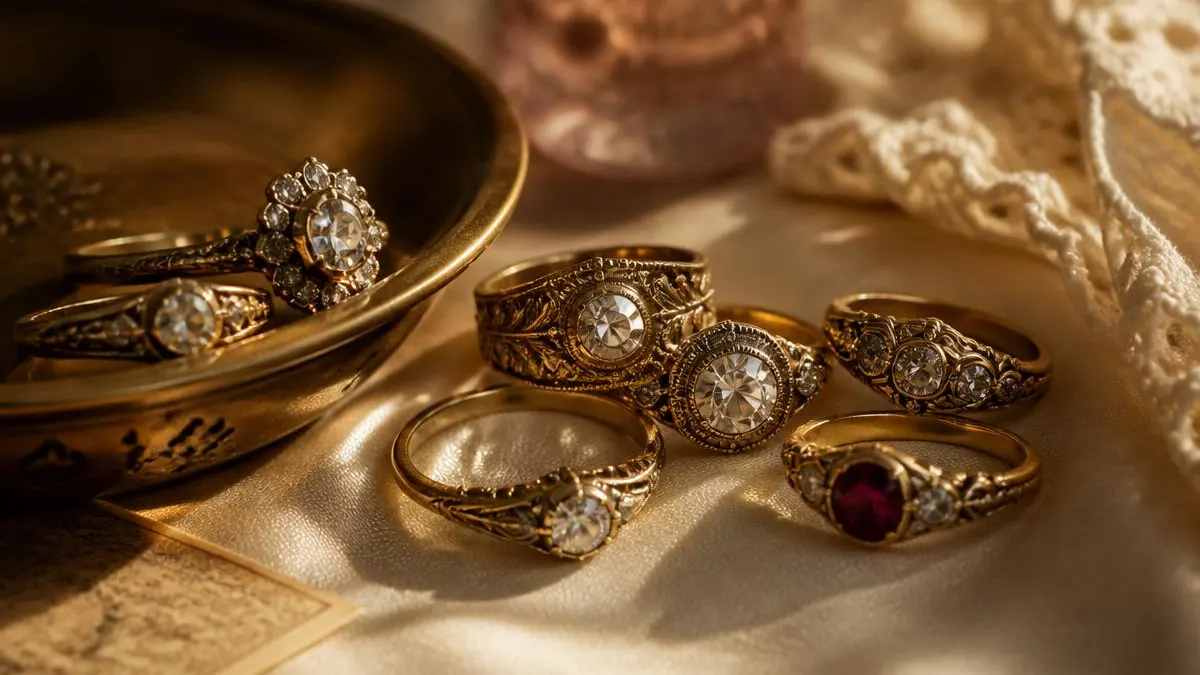
Signet, solitaire, cluster, cocktail, eternity, toi et moi and halo, and how to tell them apart on the hand.
types
Ring setting types explained
Prong, bezel, pavé, gypsy and cut-down: how a stone is held, and why it matters for wear.
buying
The vintage engagement ring buying guide
Everything we would want a friend to know before spending several thousand dollars on a ring made a century ago.
compare
Vintage vs new vs lab-grown engagement rings
Three genuinely different propositions. What each one is good at, and who should buy which.