Compare & decide
Vintage vs new vs lab-grown engagement rings
Three genuinely different propositions. What each one is good at, and who should buy which.
Written by our in-house jewelry team · Updated August 7, 2026 · 7 min read
In short
A vintage ring is an existing, one-of-a-kind piece with hand cutting and period character, but it cannot be customized and sizing may be limited. A newly made ring gives you exact specification, a modern-cut stone and full flexibility, at the cost of individuality. A lab-grown diamond is chemically and optically a diamond, produced in a laboratory, and generally costs far less per carat than a comparable mined stone, though its resale market is different and still developing. None of the three is simply better.
We sell vintage, so read this with that in mind. We have also written it the way we would talk to someone across the counter, which means saying plainly when one of the other two options is the better fit.
The three differ on more than price. Take them one at a time.
Shop the pieces: Vintage engagement rings, curated and available now.
Vintage and antique
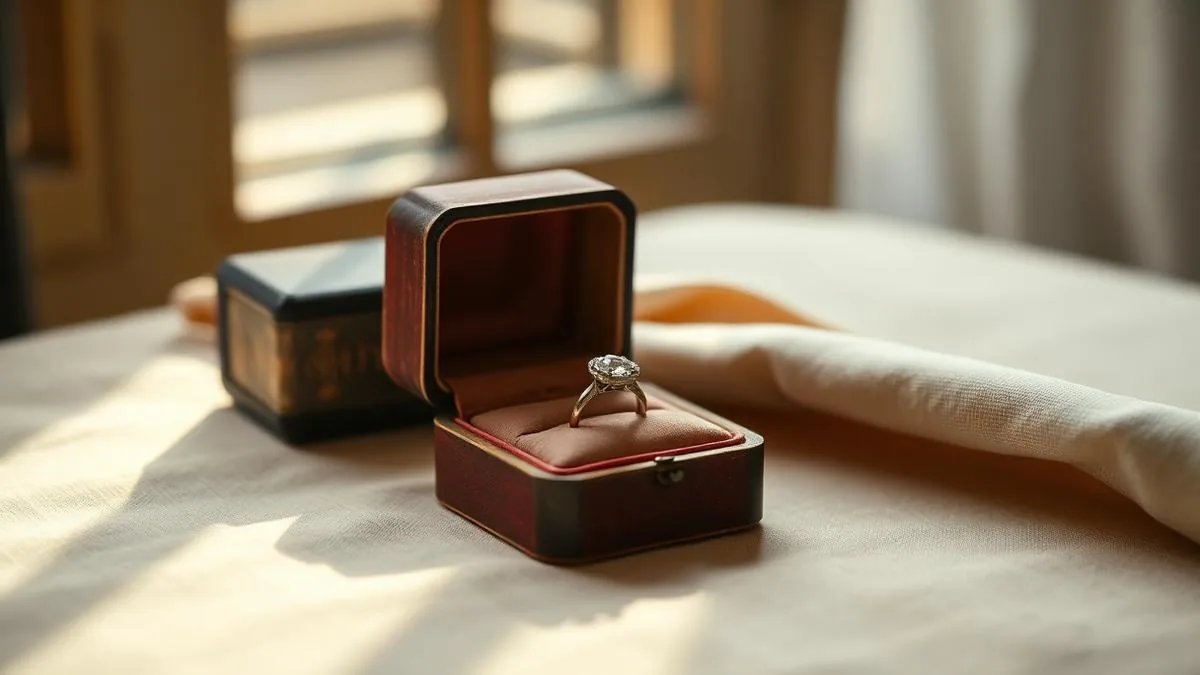
You are buying an object that already exists, made by hand, usually with a stone cut before electric light and by eye rather than by machine. Old mine and old European cuts behave differently from modern brilliants: broader flashes, more warmth, more character under candlelight and lamplight.
The trade-offs are real. There is exactly one of each ring, so if it is not your size, resizing may be limited by the setting. Condition varies, an antique ring may need periodic claw checks, and you cannot ask for the same ring in a different stone.
- For: individuality, hand craftsmanship, an existing piece rather than a newly made one, often more design for the money
- Against: no customization, sizing limits, condition varies, one chance to buy
Newly made
A new ring gives you control: your stone, your setting, your metal, your size, and a warranty on new work. Modern cutting is extremely precise and modern brilliants return light in a way old cuts were never designed to.
What you give up is character and, usually, value for money on the setting, because you are paying for new manufacture. You are also buying something of which there are many.
- For: exact specification, perfect sizing, new-work guarantees, matching bands available
- Against: no history, less individuality, new manufacture cost
Lab-grown diamonds
A lab-grown diamond is a real diamond: the same crystal structure and the same physical and optical properties as a mined one. It is produced in a laboratory rather than mined, and it must be disclosed as lab-grown at every stage of a sale. In the United States the FTC's jewelry guidance is clear that undisclosed or misleading description is not acceptable.
Lab-grown stones typically cost substantially less per carat than comparable mined stones, and prices have moved a great deal in recent years. That makes them excellent value if what you want is size and clarity. It also means the resale market behaves differently from mined stones, and we would not present a lab-grown diamond as a store of value.
- For: a genuine diamond at a lower cost per carat, consistent quality, full specification control
- Against: no antique character, a different and still developing resale market, must always be disclosed
How we would choose
If you want a ring nobody else has, and you like the idea that it already has a history, buy vintage. If you have a precise vision, an unusual finger size or you need a matching set, buy new. If you want the largest, cleanest diamond your budget allows and you are relaxed about resale, a lab-grown stone in a well-made setting is a rational choice.
One thing applies to all three: buy from someone who tells you exactly what you are getting, in writing. Origin, treatments, lab-grown status and any restoration should all be on the invoice.
What we do and do not sell
We sell authentic vintage, antique and estate jewelry, and our own newly handcrafted Atelier line, which is always labeled as newly made. We do not describe anything new as vintage, and we do not sell lab-grown diamonds as antique stones.
If a piece has been restored or a stone replaced, that is in the description. It is the same standard we would want as buyers.
Frequently asked questions
- Are lab-grown diamonds real diamonds?
- Yes. They have the same crystal structure and physical properties as mined diamonds. They are produced in a laboratory rather than mined, and that must always be disclosed.
- Do vintage engagement rings hold their value better?
- We cannot promise that, and neither should anyone else. What we can say is that a vintage ring is a scarce, one-of-a-kind object, and that scarcity has historically supported the market for fine antique jewelry. Any specific prediction about future value is speculation.
- Is a vintage ring always cheaper than a new one?
- No. That is a common myth. A fine antique ring with a good old cut stone or a signature can cost more than a new ring of similar size. What vintage often gives you is more craftsmanship and individuality for the same money.
Written by our estate jewelry team and reviewed by our in-house gemologist, a GIA Graduate Gemologist (GG). We have been buying and selling European antique jewelry since 1973.
From the reading to the piece
Shop vintage engagement rings
Each piece is one of a kind and sells once, so this collection changes constantly.
View vintage engagement ringsRelated guides
Keep reading
buying
The vintage engagement ring buying guide
Everything we would want a friend to know before spending several thousand dollars on a ring made a century ago.
history
A history of the engagement ring
From Roman betrothal rings to the diamond solitaire, and how much of the story is advertising.
gemstones
Old European cut vs modern brilliant
Why an antique diamond flashes color where a modern one flashes white.
compare
Solitaire vs halo vs cluster
Three ways to spend the same money, and what each one actually gives you on the hand.