Metals & materials
Silver and platinum in vintage and antique jewelry
Why platinum defined an era, how sterling silver is used, and how to tell them apart.
Written by our in-house jewelry team · Updated August 7, 2026 · 7 min read
In short
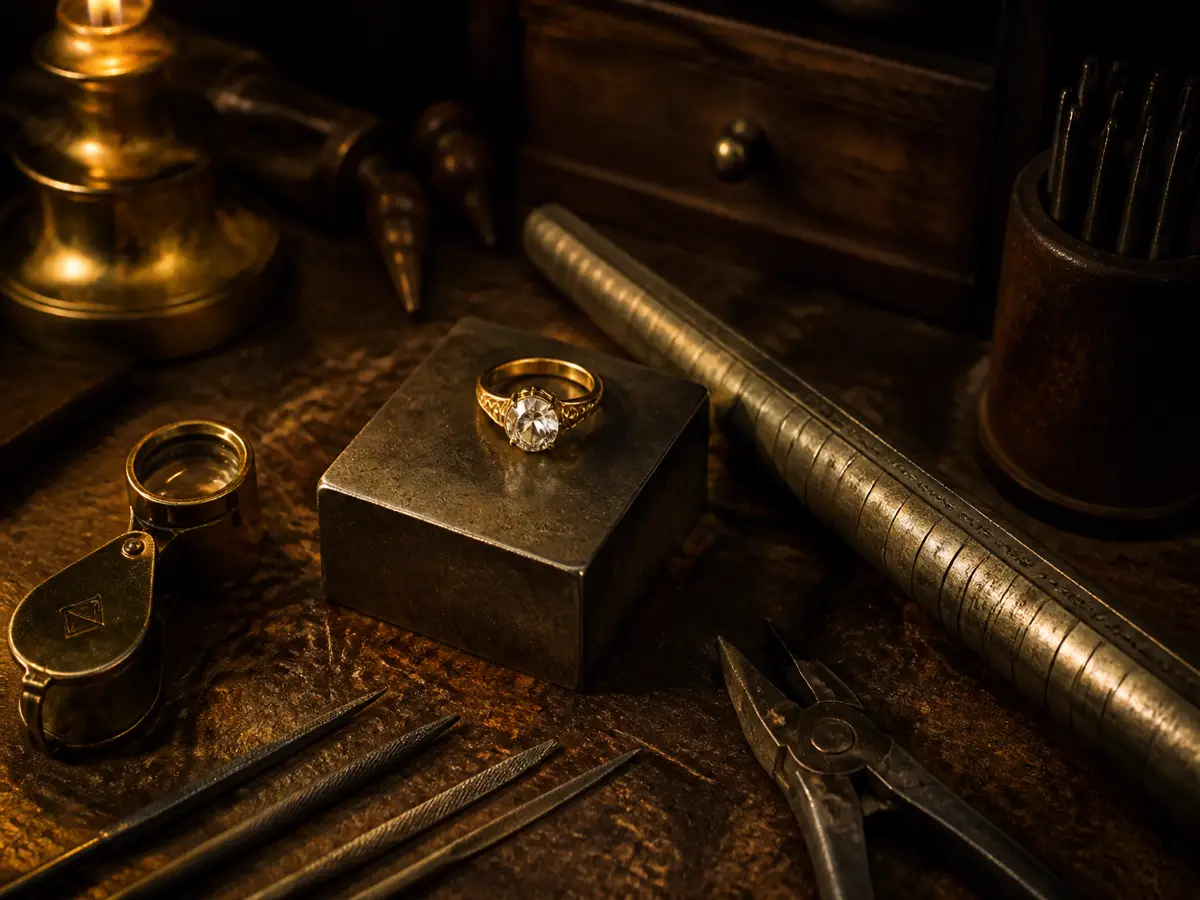
Platinum became the preferred setting metal for fine diamond jewelry from the late nineteenth century through the 1930s because it is strong enough to hold stones securely in very fine, nearly invisible settings, and it does not tarnish. Sterling silver, often backed with gold, was the standard setting metal for diamonds before platinum's rise and continued to be used for costume and secondary jewelry throughout. Telling the two apart by eye is unreliable because platinum can be rhodium-plated white gold's cousin in appearance, so we confirm the metal with testing and hallmarks rather than by look alone.
Platinum and silver occupy different roles in the story of antique jewelry, and both are frequently confused with white gold by eye. Understanding what each metal actually did in a piece, and when it was typically used, helps make sense of both the history and the care instructions that come with it.
As with gold, marks help but do not replace testing. A metal's true identity in an antique piece is best confirmed through a combination of hallmark, density testing and visual inspection under magnification, which is part of the review every piece receives before it is listed.
Shop the pieces: Fine & rare, curated and available now.
Why platinum defined the Edwardian and Art Deco era
Platinum's strength allowed jewelers to fabricate settings with extremely fine, delicate metalwork, the millegrain edges and pierced, lace-like galleries characteristic of Edwardian and Art Deco diamond jewelry, without the metal bending or the stones loosening over time. Because platinum does not tarnish or discolor the way silver can, it also stayed bright without the maintenance silver settings required.
This combination of strength and permanent whiteness is why platinum became the metal of choice for fine diamond jewelry through the first three decades of the twentieth century, until wartime restrictions on platinum for military use in the 1940s pushed jewelers back toward gold, accelerating the rise of white gold as platinum's practical successor.
Silver's role before and alongside platinum
Before platinum became widely workable for fine settings, sterling silver was the standard metal for setting diamonds in the eighteenth and nineteenth centuries, because its bright white color suited diamonds better than yellow gold did. Silver-topped gold construction, where a piece is built in gold with a silver top only around the stones, was a common technique that gave the visual benefit of silver's whiteness while avoiding some of silver's tendency to tarnish and to stain skin or clothing with prolonged contact.
Silver also remained the standard metal for costume jewelry, less formal pieces, and continental European silver jewelry traditions throughout the nineteenth and twentieth centuries, independent of the platinum story in fine diamond work. Genuine sterling and coin silver antique jewelry has its own long, legitimate history and is not simply a lesser substitute for platinum or gold.
Telling platinum, white gold and silver apart
Visual inspection alone is not reliable, since rhodium-plated white gold, sterling silver, and platinum can all look similarly bright and white, especially after cleaning. Platinum is notably denser and heavier for its size than either silver or white gold, which is one useful physical clue, along with the fact that platinum does not tarnish, so a setting that has never dulled over decades without polishing is more likely platinum.
The most reliable confirmation combines the hallmark, where present, with density testing and close inspection of the setting style, since certain fine gallery and millegrain work is strongly associated with platinum's structural capabilities in a way plated white gold of the same era typically was not built to match. This is the kind of assessment our gemologist, a GIA Graduate Gemologist (GG), carries out as standard rather than relying on a hallmark or appearance alone.
Care differences that matter
Platinum develops a soft surface patina with wear rather than losing metal significantly, since scratches on platinum mostly displace the metal rather than remove it, which is part of why many original platinum settings from a century ago remain structurally sound today. Sterling silver tarnishes on contact with air and needs occasional gentle polishing to stay bright, and repeated aggressive polishing over many decades can thin a silver setting more noticeably than it would thin platinum.
We recommend a soft cloth and mild care for both metals, and avoid harsh commercial dips on antique silver jewelry with oxidized detailing, since those recesses are often intentionally darkened for contrast and stripping them changes the piece's original appearance.
Frequently asked questions
- Why was platinum used so much in Art Deco jewelry?
- Platinum is strong enough to hold diamonds securely in very fine, delicate settings and does not tarnish, which suited the era's intricate, lace-like metalwork and made it the preferred metal for fine diamond jewelry until wartime restrictions limited its use in the 1940s.
- How can you tell platinum from white gold by eye?
- Reliably, you generally cannot. Both can look similarly bright white, especially after cleaning or rhodium plating. Density testing and hallmark confirmation are the reliable methods, which is why we test rather than judge by appearance alone.
- Is silver jewelry from the Victorian era less valuable than gold jewelry from the same period?
- Not necessarily. Sterling and coin silver were legitimate, widely used metals for both fine and costume jewelry throughout the nineteenth century, and their value depends on craftsmanship, design and condition, not simply on the metal being silver rather than gold.
- Does antique platinum jewelry need special care?
- It is quite durable day to day, since scratches tend to displace rather than remove the metal, but we still recommend gentle cleaning and having prongs and settings checked periodically, as with any antique piece.
Written by our estate jewelry team and reviewed by our in-house gemologist, a GIA Graduate Gemologist (GG). We have been buying and selling European antique jewelry since 1973.
From the reading to the piece
Shop fine and rare platinum pieces
Related guides
Keep reading
metals
White gold vs yellow gold vs rose gold in vintage jewelry
What gives gold its color, and what each color tells you about a piece's age.
eras
Art Deco jewelry: a complete guide
1920 to 1935, when jewelry stopped imitating flowers and started imitating architecture.
metals
22K and high-karat gold in antique and regional jewelry
Why some traditions favor 22K and 24K gold, and how it wears differently.