Authenticity & care
How to tell if vintage jewelry is real
Genuine period jewelry usually agrees with itself. Reproductions rarely do.
Written by our in-house jewelry team · Updated August 7, 2026 · 8 min read
In short
Genuine vintage and antique jewelry can usually be identified by a weight of agreeing evidence rather than one single test: hand-tool marks and pierced, hand-finished construction, stone cuts appropriate to the claimed period, wear that appears exactly where a piece would actually be touched or worn, and a hallmark or maker's mark that is consistent with the metal, country and era claimed. No individual detail proves authenticity on its own, but several independent details agreeing with each other is strong evidence, and several disagreeing with each other is a warning sign.
'Is this real' usually has more than one honest meaning. A buyer might be asking whether a piece is genuinely as old as claimed, whether a maker's signature is authentic, or whether the stones are natural. All three questions matter, and they are answered slightly differently.
This guide sets out the evidence we look for on every piece before it is listed, so you can apply the same checks yourself, or know what to ask a seller who is unwilling to show you.
Shop the pieces: New arrivals, curated and available now.
Construction as evidence of age
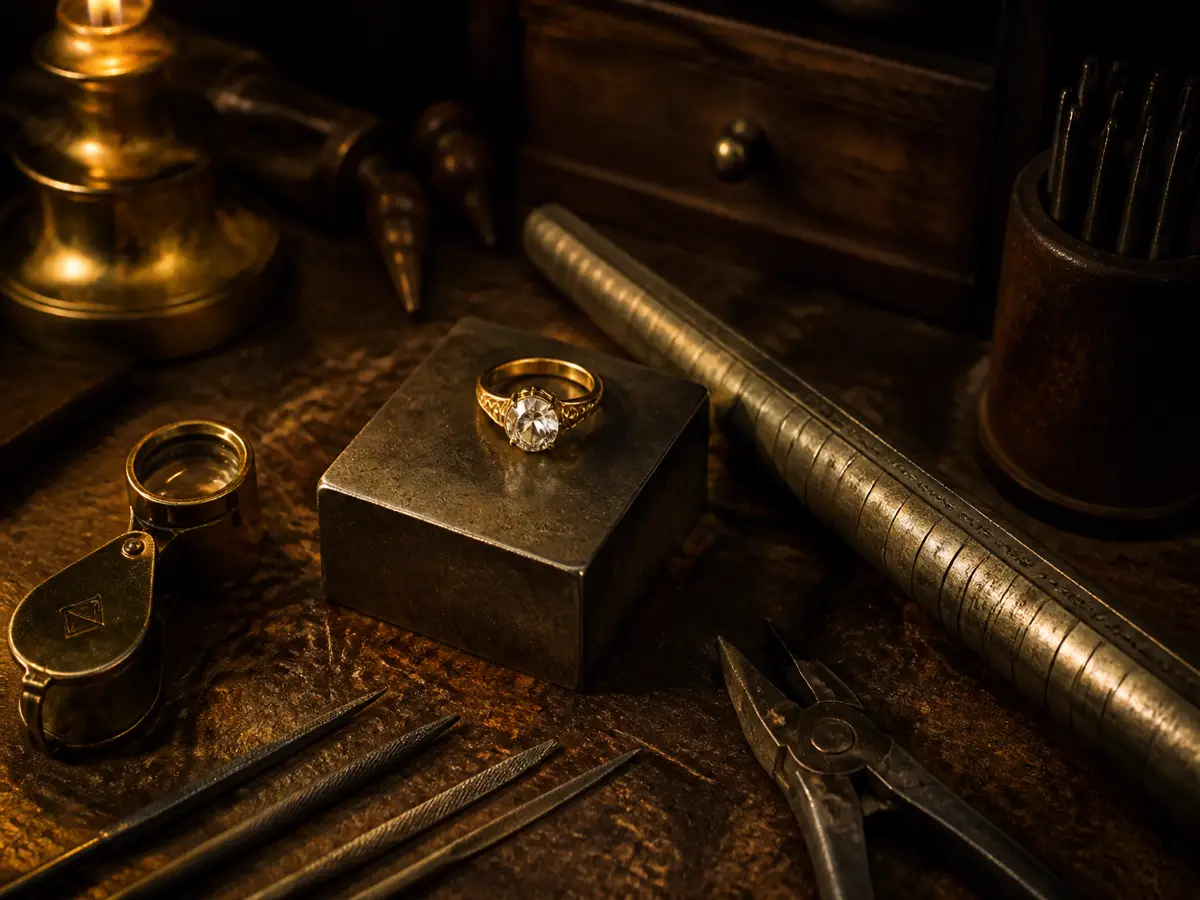
Genuinely old jewelry made before mass production was hand fabricated: cut from sheet, formed, soldered and finished by hand, which leaves small, honest irregularities. Pierced rather than solid galleries, millegrain that varies slightly from bead to bead, and solder joins that are neat but not machine-perfect are all typical of hand work.
A modern cast reproduction tends to show the opposite: a single-piece body with no evidence of separately assembled parts, a faintly grainy or slightly soft surface texture straight from the mold, and decorative detail that is either too crisp or too uniform to have been done by hand.
Stone cuts appropriate to the period
Diamond and gemstone cutting changed in fairly well documented stages over the last two centuries. Old mine and old European cuts, with their higher crowns, smaller tables and often visible open culets, belong to the nineteenth and early twentieth centuries. The modern round brilliant, with its wider table and shallower crown, became standard from around the mid-twentieth century onward.
A stone cut in a style that postdates its setting, or a setting clearly reshaped to accommodate a stone it was not originally made for, is one of the clearest signs that something has changed since the piece was first made, whether recently or decades ago.
Wear in the right places
Genuine long-term wear appears exactly where a piece is actually touched or rubbed: the underside of a ring shank, the tips of prongs, the pin catch on a brooch, the clasp of a bracelet. It is gradual and slightly uneven rather than symmetrical.
Artificially aged reproductions sometimes darken recesses to imitate patina, or apply uniform wear across a surface that would not naturally wear evenly. Sharp, unworn edges on a piece claimed to be a century old, sitting alongside deliberately darkened crevices, is worth a closer look.
Hallmarks and maker's marks
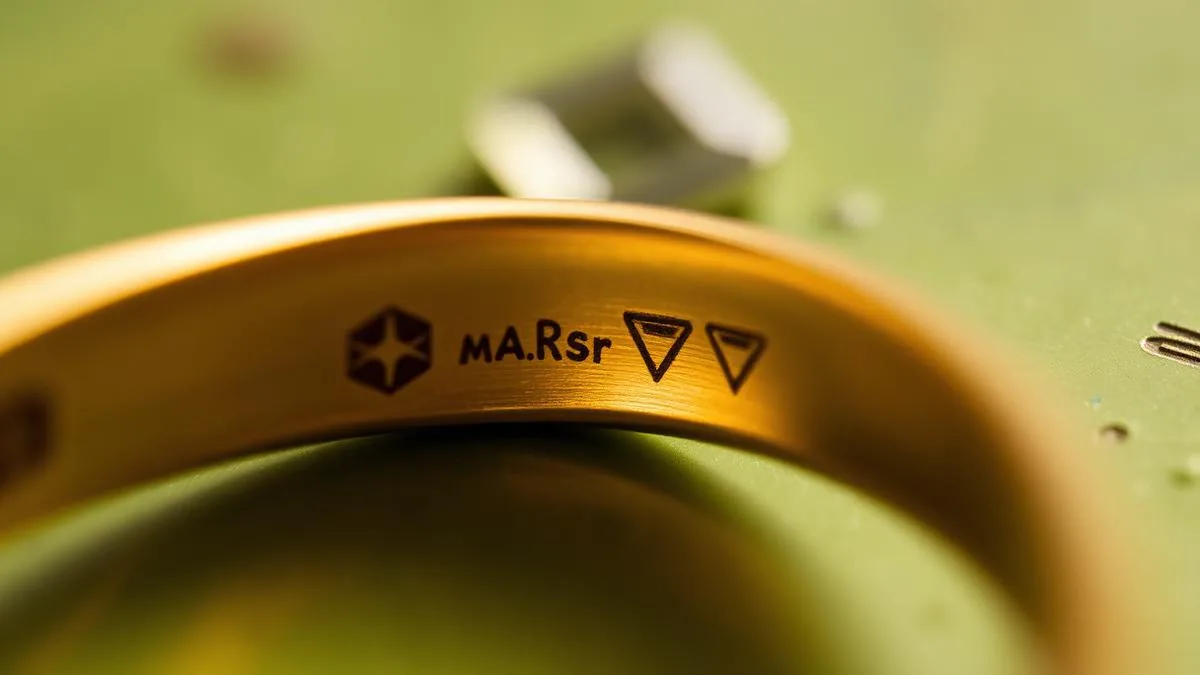
A hallmark confirms that the metal was tested to a stated standard, and in systems that use a date letter, it confirms the year of testing. A maker's mark, where confirmed, attributes the piece to a specific workshop or house. Both should agree with the piece's construction, metal and claimed country of origin.
A mark alone is not proof of everything. It does not confirm that stones are original to the setting or that the piece has not been altered since it was made, which is why marks are read alongside construction and stones rather than on their own.
Weighing the evidence together
No single check above is conclusive by itself, because any one detail can have an innocent explanation. A replaced stone does not necessarily mean a piece is misrepresented as a whole, and an unusually clean piece might genuinely have been well cared for rather than reproduced.
The real test is agreement. When construction, stone cuts, wear and marks all point the same direction, that is strong evidence one way or the other. When they contradict each other, such as a Victorian hallmark on a mount with modern brilliant-cut stones and no wear at all, that pattern is the actual warning sign, more than any single detail alone.
When to get an expert opinion
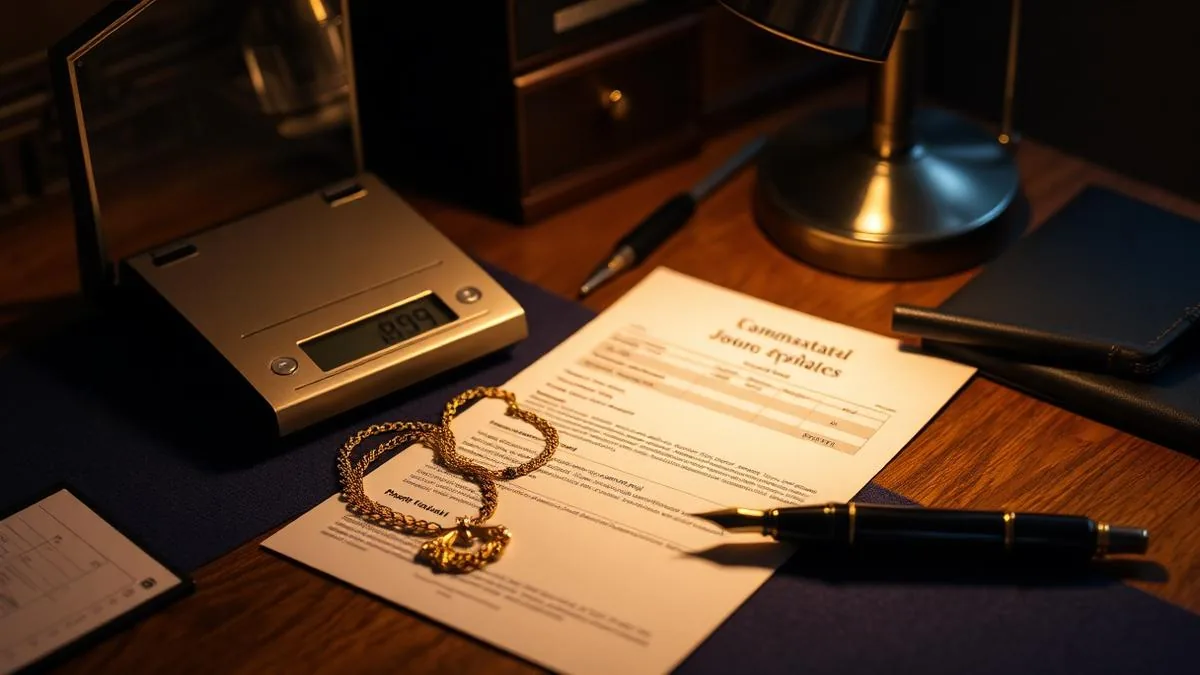
If a piece has meaningful value, sentimental or financial, and you are not confident in your own read of the evidence, a detailed valuation and authenticity report prepared by a qualified gemologist is worth the cost. This typically includes stone identification, construction assessment and an opinion on period and any prior alterations.
Our own in-house gemologist reviews every piece we sell against these same checks before it is listed, and we disclose replacements, repairs and any uncertainty in the description rather than leaving buyers to work it out for themselves.
Frequently asked questions
- Does a hallmark prove a piece is genuinely antique?
- It proves the metal was tested to a stated standard and, where a date letter system is used, it confirms the year of testing. It does not prove the stones are original or that nothing about the piece has changed since it was made.
- Can I tell if a diamond is old just by looking at it?
- Cut style is a strong clue. Old mine and old European cuts have a higher crown, smaller table and often a visibly open culet compared with a modern round brilliant, but confirming a diamond's exact age and history with confidence usually needs a trained eye or gemological equipment.
- Is a piece with a repaired stone automatically less authentic?
- No. A well-disclosed, well-matched replacement stone in an otherwise genuine antique piece is common and does not make the whole piece a reproduction. It is undisclosed or mismatched replacements that raise concern.
- What is the single strongest piece of evidence?
- There isn't one. The strongest conclusions come from several details, construction, stone cuts, wear pattern and marks, all agreeing with each other rather than from any one test taken alone.
- Should I trust a certificate that comes with a piece?
- A certificate is only as reliable as the person or lab that issued it. Look for a named, qualified gemologist or a recognized laboratory, and be cautious of vague or unsigned documents that do not describe specifically what was examined.
Written by our estate jewelry team and reviewed by our in-house gemologist, a GIA Graduate Gemologist (GG). We have been buying and selling European antique jewelry since 1973.
From the reading to the piece
Shop new arrivals
Each piece is one of a kind and sells once, so this collection changes constantly.
View new arrivalsRelated guides