June birthstone
Pearl
The June birthstone is pearl, with moonstone and alexandrite as the recognized alternates. Pearl is organic rather than mineral, built from layers of nacre inside a living mollusk, and at 2.5 to 4.5 on the Mohs scale it is the softest thing most people wear daily. Natural pearls formed without human help, cultured pearls were started by a technician, and the difference in value is enormous.
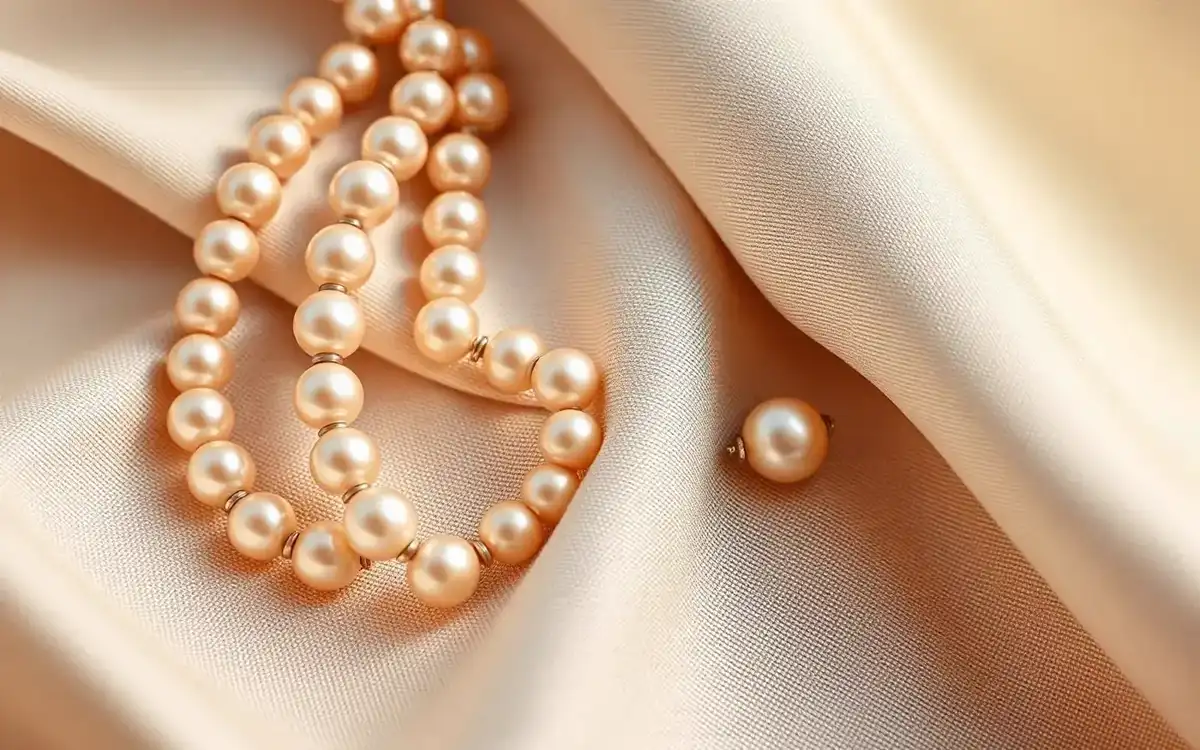
- Species
- Organic, formed inside a mollusk
- Color range
- White, cream, rose, gray and black, with overtone
- Mohs hardness
- 2.5 to 4.5
- Also this month
- Moonstone, Alexandrite
Before cultured pearls arrived commercially in the 1920s, every pearl in a European piece was natural, and natural pearls were frequently worth more than the diamonds set beside them. That is why Edwardian and Victorian jewelry uses seed pearls so lavishly, and why a genuine natural pearl strand from that period is a serious object.
Telling natural from cultured cannot be done reliably by eye. It requires x ray imaging of the internal structure, which shows whether there is a bead nucleus at the center. Anyone who tells you they can be certain by rolling a pearl against their teeth is guessing.
Luster is what separates a good pearl from a dull one. Look at the reflection of a window or a lamp on the surface: on a fine pearl the edge of that reflection is sharp, and on a tired one it is soft and milky. Surface blemishes are normal on any natural pearl.
In antique and vintage jewelry
Seed pearl borders and clusters in Victorian and Edwardian gold and platinum, single pearl and diamond rings, long Art Deco strands, and pearl drop earrings.
Wearing and caring for it
The most demanding stone here. Put pearls on last, after perfume and hairspray, and wipe them with a soft cloth before they go away. Never use any cleaner or solvent. Strands should be restrung on silk with a knot between each pearl every few years, which we do before any strand leaves us.
As a gift
Pearls read as classic rather than trend led, which is why they work as a graduation, wedding or anniversary gift. An antique seed pearl piece gives the look at a fraction of the cost of a fine strand.
Common questions
How can I tell a natural pearl from a cultured one?
Reliably, only by x ray, which reveals whether there is a bead nucleus inside. Where a strand's status matters to the price, we say exactly what evidence we have.
Do pearls need restringing?
Yes. Silk stretches and absorbs body oils. A worn strand should be restrung with knots between the pearls so a broken thread loses one pearl rather than all of them.
What is a seed pearl?
A very small natural pearl, typically under two millimeters, used in quantity as a border or a cluster in nineteenth and early twentieth century jewelry.
Shop the pieces
Shop pearl jewelry
Antique and vintage pieces set with pearl, each one a single example.
Nothing matching this is available right now. Every piece is a single example and sells once, so this changes regularly. Browse everything in stock or ask our buyers to look for it.