Glossary
Vintage jewelry terms A to Z
Bezel, cabochon, millegrain, plique-a-jour: every word we use in a description, explained plainly.
Written by our in-house jewelry team · Updated August 7, 2026 · 10 min read
In short
A vintage jewelry glossary explains the construction terms, cut names, materials and hallmark language used to describe antique jewelry, from bezel and gallery to old mine cut, millegrain, vermeil and plique-a-jour, so a buyer can read a listing the way a jeweler would.
Every trade has its own shorthand, and antique jewelry has more of it than most. A single listing might mention a gallery, a girdle, a culet and a closed back, and none of those words mean what you might guess from everyday English.
This glossary collects the terms we actually use, organized from A to Z so you can look one up in a moment, or read straight through and come away speaking the language yourself.
Shop the pieces: New arrivals, curated and available now.
A
- Art Deco — the geometric, machine-age jewelry style of roughly 1920 to 1935.
- Art Nouveau — the flowing, nature-based style of roughly 1890 to 1910, favoring enamel and sinuous line over stone value.
- Aesthetic period — the late Victorian years, roughly 1885 to 1901, marked by lighter, smaller jewelry.
- Acrostic jewelry — a piece set with stones whose first letters spell a word, such as REGARD or DEAREST.
- Amber — fossilized tree resin, warm and light, sometimes containing trapped insect or plant matter.
- Art glass — decorative colored glass used as a paste or costume substitute for gemstones.
B
- Bail — the loop on a pendant or charm through which a chain passes.
- Bakelite — an early, hard plastic used from the 1920s to 1940s for colorful bangles, pins and beads.
- Baguette cut — a narrow, rectangular step cut, common as an accent stone from the 1920s onward.
- Bezel — a rim of metal wrapped around a stone to hold it in place, with or without an open back.
- Book chain — a flat chain of folded, book-shaped links, popular in the Victorian period.
- Bog oak — ancient oak preserved in peat bogs, carved into black jewelry mainly in 19th century Ireland.
- Bombe — a rounded, domed form used for rings and brooches.
- Brilliant cut — a faceting style built around triangular and kite facets to maximize light return.
- Buckle motif — a belt or garter buckle shape used as a symbol of loyalty and eternal bond.
C
- Cabochon — a stone polished into a smooth dome with no facets.
- Calibre cut — small stones cut to a shape that fits a setting exactly, with no gaps between them.
- Cameo — a raised relief carving, usually a profile, cut from shell, hardstone or coral.
- Cannetille — fine twisted wire and tiny beads worked into lacy, filigree-like decoration, typical of the 1820s to 1840s.
- Carre cut — a small square step-cut stone, often used as a side or accent stone.
- Chasing — decorating metal by hammering it from the front with punches, without removing metal.
- Channel setting — stones set in a row between two parallel metal walls, with no visible prongs.
- Closed-back setting — a setting with a solid metal backing behind the stone, often foiled to enhance color, typical before the late 1800s.
- Collet — a plain metal band or bezel encircling a stone, an older term for a simple bezel setting.
- Culet — the small flat facet, or a point, at the bottom of a diamond, often visible from above in old cuts.
- Cushion cut — a squarish cut with rounded corners and larger facets, common through the 19th century.
D
- Demantoid garnet — a rare green garnet, mined chiefly in the Ural Mountains from the 1860s, prized in Russian and later jewelry.
- Die-struck — metal formed by stamping it between hardened dies, giving crisp, repeatable detail cheaper than hand chasing.
- Double clip brooch — a brooch made of two matching clips that can be worn together or separately, popular in the 1930s and 1940s.
- Doublet — a composite stone made of two joined layers, sometimes used to imitate a more valuable single stone.
E
- Edwardian — the jewelry style of roughly 1901 to 1915, marked by platinum, lace-like openwork and garland motifs.
- Enamel — colored glass fused to metal at high heat, used for decoration and, in black, for mourning jewelry.
- Etruscan revival — a 19th century style reviving ancient granulation and wirework, popular from the 1860s to 1880s.
- Eternity ring — a ring set with stones running fully or partly around the band, given to mark a lasting bond.
F
- Facet — a flat, polished face cut into a gemstone to control how light enters and exits.
- Festoon necklace — a necklace of two or more looping chains or garlands, common in the Edwardian period.
- Filigree — decorative openwork made from fine twisted or plain wire, popular from the Edwardian era through the 1920s.
- Findings — the small functional parts of a piece of jewelry, such as clasps, jump rings, pin backs and ear wires.
- Foiled stone — a stone backed with metal foil to brighten or change its color, common before modern lighting made it unnecessary.
G
- Gallery — the pierced or solid structure of metal beneath a stone setting, connecting it to the shank or mount.
- Girandole — an earring or pendant with three drops hanging from a central bow or stud, an 18th and 19th century form.
- Girdle — the narrow band around the widest part of a cut gemstone, where the crown meets the pavilion.
- Gold filled — a base metal core with a thick layer of karat gold mechanically bonded to it, thicker and more durable than plating.
- Granulation — decoration made from tiny beads of gold fused to a surface, an ancient technique revived in the 19th century.
- Guilloche — a fine engine-turned pattern cut into metal, often enameled over so the pattern shows through translucently.
- Gutta percha — an early rubber-like natural latex, molded into black mourning jewelry in the mid to late 1800s.
H
- Hallmark — an official mark struck on precious metal indicating its purity, and in some countries the maker and assay office.
- Hair jewelry — jewelry incorporating or made from woven human hair, used as a sentimental or mourning keepsake, mainly Victorian.
- Hinged bangle — a rigid bracelet that opens on a hinge, usually secured by a box clasp with a safety catch.
J
- Jabot pin — a decorative straight pin with an ornament at each end, used to secure a collar or drape of fabric.
- Jet — a dense, black organic gem material formed from fossilized wood, carved into mourning jewelry, chiefly from Whitby.
- Jump ring — a small metal ring used to connect components such as a clasp to a chain.
K
- Karat — a measure of gold purity out of 24 parts, so 18K gold is 18 parts gold to 6 parts other metal.
- Knife-edge — a shank or wire profile that comes to a narrow ridge rather than a flat or rounded surface, common in Art Deco design.
L
- Lavaliere — a pendant necklace with one or two drops, hanging from a fine chain, fashionable in the Edwardian era.
- Lorgnette — folding eyeglasses on a handle, often decorative and worn on a chain, an accessory rather than jewelry proper.
- Lover's knot — an interlaced loop motif symbolizing a bond that cannot be undone, used across many eras.
M
- Marcasite — small faceted pieces of pyrite set closely together to imitate the sparkle of diamonds, popular in Georgian and later revival jewelry.
- Marquise cut — a boat-shaped cut with pointed ends, also called navette.
- Millegrain — a decorative border of tiny raised beads worked along a metal edge with a wheel tool, typical of Edwardian and Art Deco work.
- Mine cut — see old mine cut.
- Minerva mark — the head of Minerva used as part of the French hallmark system to denote gold purity.
- Mourning jewelry — jewelry made or worn to commemorate the dead, typically in jet, black enamel or hair, mainly 19th century.
N
- Niello — a black metallic alloy inlaid into engraved metal for contrast, an old technique seen in Russian and Continental silver.
- Navette cut — see marquise cut.
O
- Old European cut — a round diamond cut used from roughly the 1890s to the 1930s, with a small table, high crown and open culet.
- Old mine cut — an earlier diamond cut, roughly 18th century to the 1890s, with a cushion-shaped outline, a smaller table, a higher crown and a larger culet than the old European cut.
- Openwork — metalwork pierced through to create a pattern, reducing weight and adding light.
P
- Paste — cut and polished glass used to imitate gemstones, made since the 18th century and valued in its own right today.
- Pave — a setting technique in which many small stones are set close together so the metal supporting them barely shows.
- Pendeloque — a drop-shaped, fully faceted cut used for pendant and earring stones.
- Pinchbeck — a copper and zinc alloy made to resemble gold, used in the 18th and early 19th centuries before cheaper gold plating existed.
- Plique-a-jour — enamel applied with no metal backing, so light passes through it like a miniature stained-glass window.
- Prong — a metal claw that grips a stone to hold it in its setting.
R
- Repousse — a technique of shaping metal into relief decoration by hammering it from the reverse side.
- Retro — the bold, sculptural jewelry style of roughly 1935 to 1950, favoring rose gold and large scale.
- Riviere — a necklace of similarly cut and graduated stones set in a continuous line.
- Rose cut — a stone with a flat base and a domed top covered in triangular facets, common from the 17th to the 19th century.
- Rose gold — gold alloyed with a higher proportion of copper, giving it a pink or reddish tone.
S
- Seed pearl — a very small natural pearl, often strung on horsehair or thread and worked into Georgian and Victorian jewelry.
- Shank — the band portion of a ring, running from one side of the setting to the other.
- Solitaire — a piece, usually a ring, set with a single stone.
- Step cut — a rectangular or square cut with parallel facets arranged in rows, as in an emerald cut.
- Suffragette jewelry — jewelry combining green, white and violet stones, associated with the early 20th century women's suffrage movement.
T
- Table — the large, flat top facet of a cut gemstone.
- Tassie — a molded glass medallion imitating an engraved gem, named for the 18th century gem engraver James Tassie.
- Tremblant — a mount fitted with a small spring so a decorative element, often a flower head, trembles as the wearer moves.
- Trombone clasp — a sliding pin-and-tube clasp mechanism used for brooches and some bracelets.
V
- Vermeil — sterling silver plated or coated with gold.
- Vinaigrette — a small, hinged container with a pierced inner grille, historically holding a sponge soaked in aromatic vinegar.
Frequently asked questions
- What is the difference between an old mine cut and an old European cut diamond?
- Both are hand-cut round diamond styles that predate the modern brilliant. The old mine cut is earlier, roughly 18th century to the 1890s, and tends to have a squarer outline and a smaller table. The old European cut, common from the 1890s to the 1930s, is rounder with a slightly larger table, but both keep the high crown and open culet that give antique diamonds their soft, warm sparkle.
- What does millegrain mean on a ring?
- Millegrain is a decorative border of tiny raised metal beads worked along an edge with a hand or wheel tool. It appears constantly on Edwardian and Art Deco jewelry, both for decoration and to help hold pave stones in place, and it softens or disappears if a ring is polished too heavily over the years.
- What is pinchbeck and is it worth anything?
- Pinchbeck is a copper and zinc alloy developed in the 18th century to imitate gold, used before affordable gold plating existed. It has no bullion value, but well-made pinchbeck pieces are collected for their design and age, and honest early examples can be valued by collectors on that basis.
- What is the difference between vermeil and gold filled?
- Vermeil is sterling silver with a layer of gold plated or coated onto it. Gold filled is a base metal core mechanically bonded to a comparatively thick layer of karat gold. Gold filled wears longer than vermeil because its gold layer is thicker and more durable, though neither is solid gold throughout.
- Why do closed-back settings have foil behind the stone?
- Before modern lighting and cutting styles maximized brilliance on their own, jewelers backed a stone with reflective metal foil, sometimes tinted, to brighten or even color the stone from behind. It is a normal and expected feature of pre-1900 closed-back jewelry rather than a flaw.
Written by our estate jewelry team and reviewed by our in-house gemologist, a GIA Graduate Gemologist (GG). We have been buying and selling European antique jewelry since 1973.
From the reading to the piece
Shop new arrivals
Each piece is one of a kind and sells once, so this collection changes constantly.
View new arrivalsRelated guides
Keep reading
glossary
The visual language of vintage jewelry
Snakes, hands, crescents and forget-me-nots: what antique motifs were meant to say, and who wore them.
eras
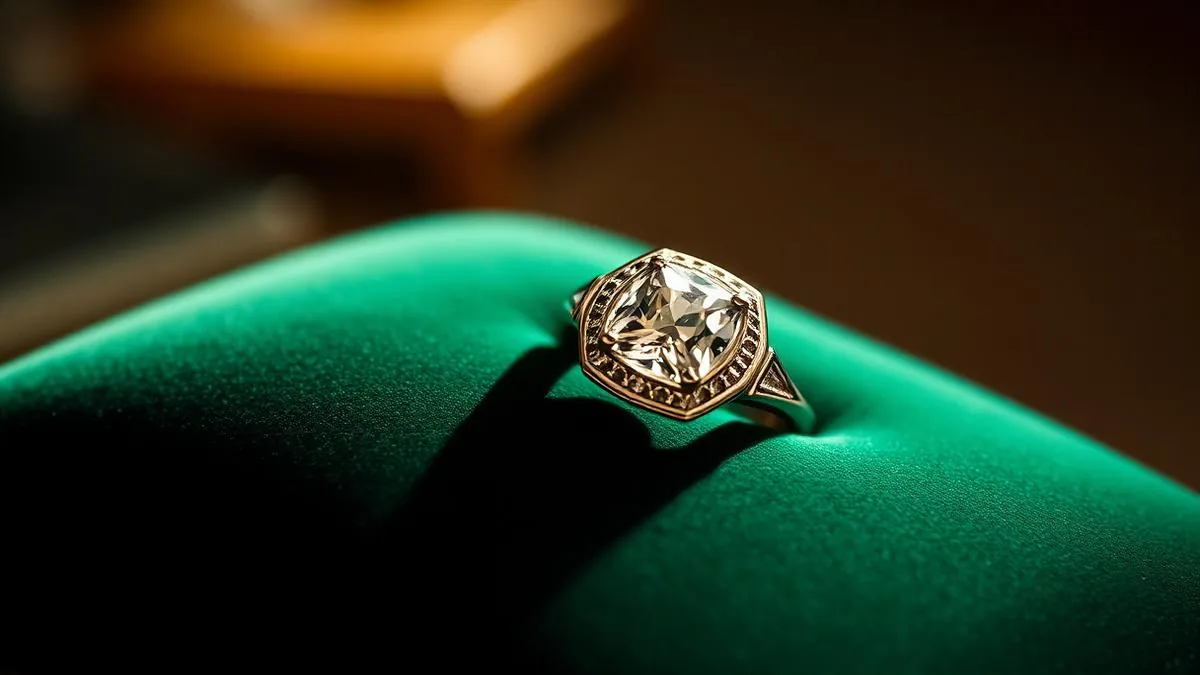
Art Deco jewelry: a complete guide
1920 to 1935, when jewelry stopped imitating flowers and started imitating architecture.
gemstones
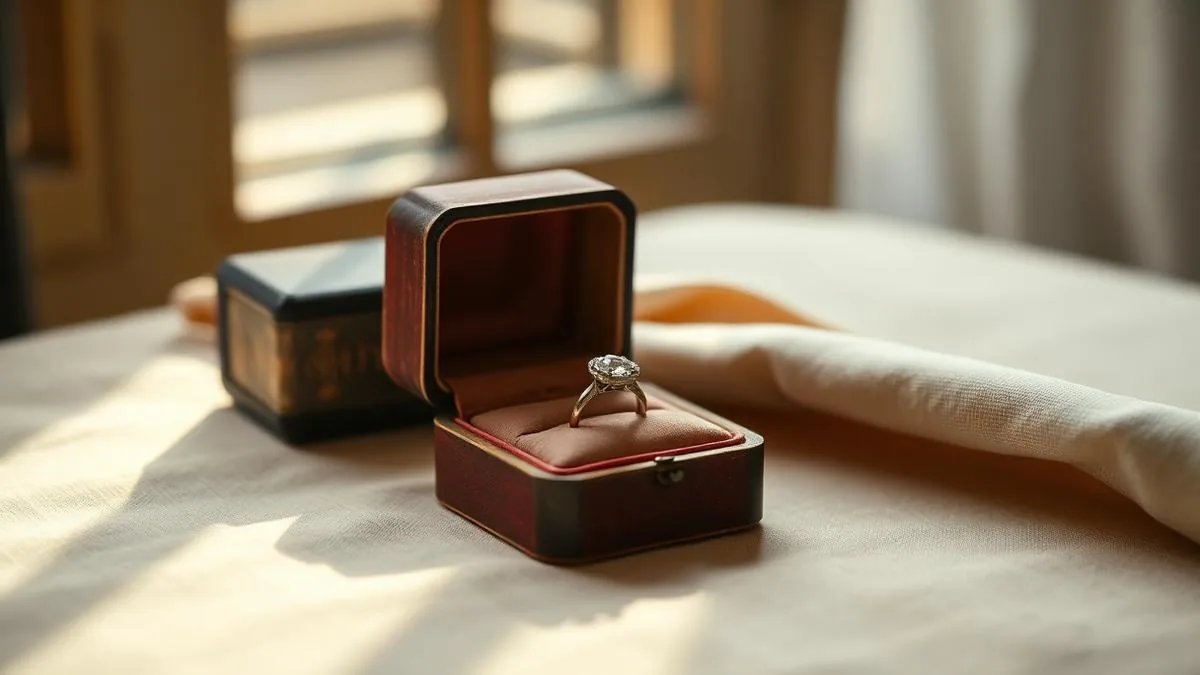
Old European cut vs modern brilliant
Why an antique diamond flashes color where a modern one flashes white.