Behind the scenes
Inside our Amsterdam atelier
The bench, the tools, and the quiet judgment calls that decide how far a restoration goes.
By Our workshop — Workshop, Amsterdam · July 2, 2026
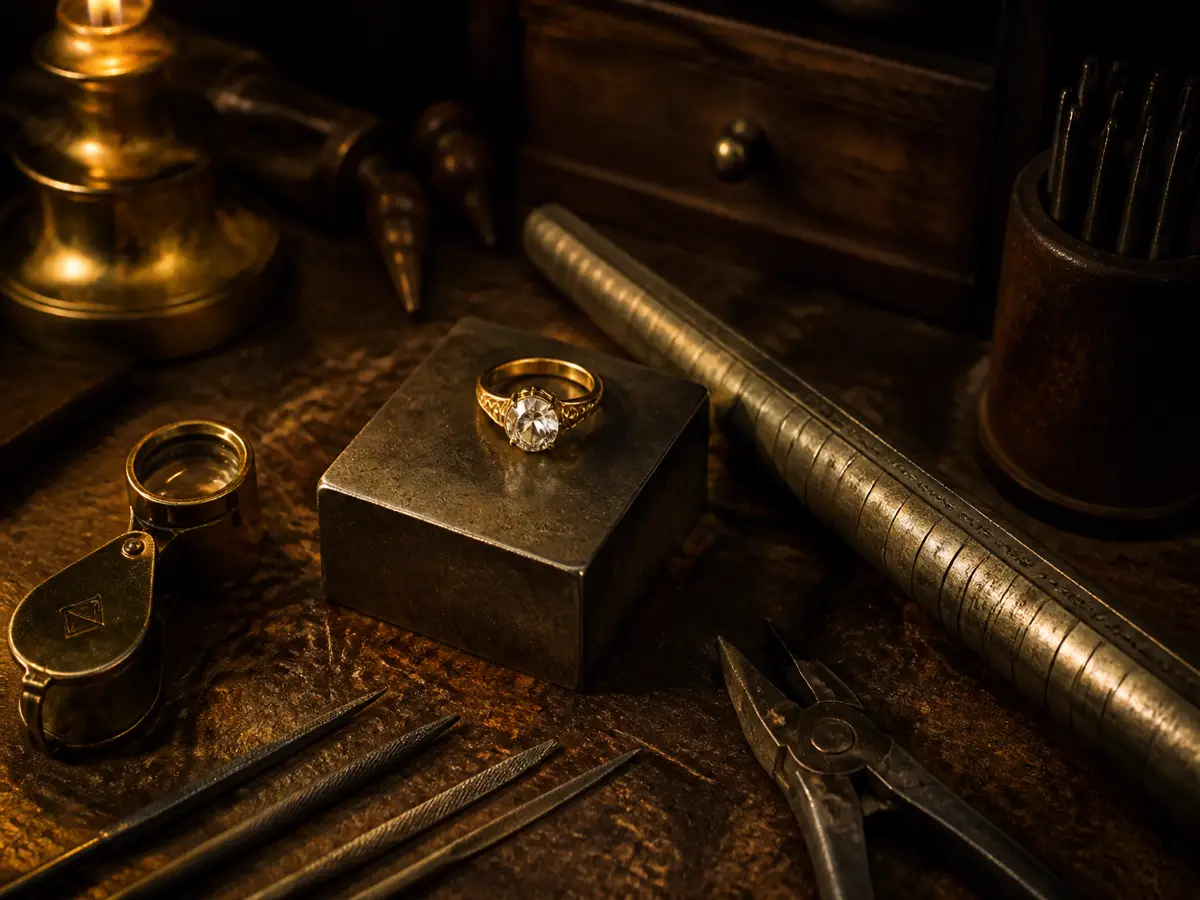
The bench itself is unremarkable: a wooden peg, a leather skin to catch filings, a row of files and gravers worn smooth by hands other than the ones using them now. What makes it useful is not the bench but the habits built around it, passed down over four generations of the same family business.
Most pieces that come to the bench do not need much. A claw needs re-tipping so a stone sits securely. A jump ring has stretched and wants closing. A clasp has tired springs. These are small, reversible jobs, and they make up the bulk of what our goldsmiths do in a given week.
Restoration proper is slower and more deliberate. Before any tool touches a piece, it is photographed, examined under magnification, and discussed. We ask what condition the piece needs to be in to be worn safely, and no more than that. A hairline crack in a shank gets soldered because a ring should not break on someone's hand. A century of soft surface wear on a locket does not get polished away, because that wear is the piece's history and removing it would remove value along with it.
We will re-tip worn claws, replace a missing pin stem, tighten loose settings, and clean metal using methods gentle enough not to strip patina. We will not repolish a piece back to a mirror finish, replace an original stone with a modern one without saying so clearly, or reshape a design to make it more fashionable. If a repair would misrepresent what the piece is, we do not make it.
Stones are handled with particular caution. Old cut diamonds and colored stones set by hand a hundred years ago were not always set the way a modern jeweler would set them today, and unpicking that work risks damaging both the stone and the setting. Where a stone is loose, we secure it in a way that respects the original construction rather than replacing the setting outright.
Sometimes the right decision is to do nothing at all. A brooch with a slightly bent pin that still functions, a bracelet with soft, honest wear on the clasp, a ring with a faint scratch across the shoulder: none of these need our intervention, and we would rather sell a piece with its history intact than one that has been smoothed into looking new.
Every repair, however small, is logged and disclosed. If we have re-tipped claws or replaced a clasp, the product description says so. We think buyers are entitled to know exactly what has and has not been touched, and that transparency matters more to us than a piece looking flawless in a photograph.
The bench is also where a piece earns its final description. Once the workshop is satisfied that a ring, pendant or bracelet can be worn safely and honestly, it moves to photography and then to our gemologist, a GIA Graduate Gemologist (GG), for the write-up that eventually reaches you. Nothing is listed until it has passed through both.
See it before you buy it
Every piece is unique. One of our specialists will show it to you in daylight on a private video call, in your own time zone.
Book a video viewingMore from the journal
Guides
How to read a European gold hallmark
The small marks that tell you where a piece was made, when, and in what karat.
Eras
Victorian, Edwardian, Art Deco: a short guide
Three eras, three very different ideas of what jewelry should say about you.
Buying
Buying antique jewelry from Europe, from the US
Duties, insurance and why a video viewing beats any set of photographs.