Guides
The story behind a piece
How a single object gets researched, from hallmark to construction, and why we only publish what we can prove.
By Our in-house gemologist — GIA Graduate Gemologist (GG), Amsterdam · May 27, 2026
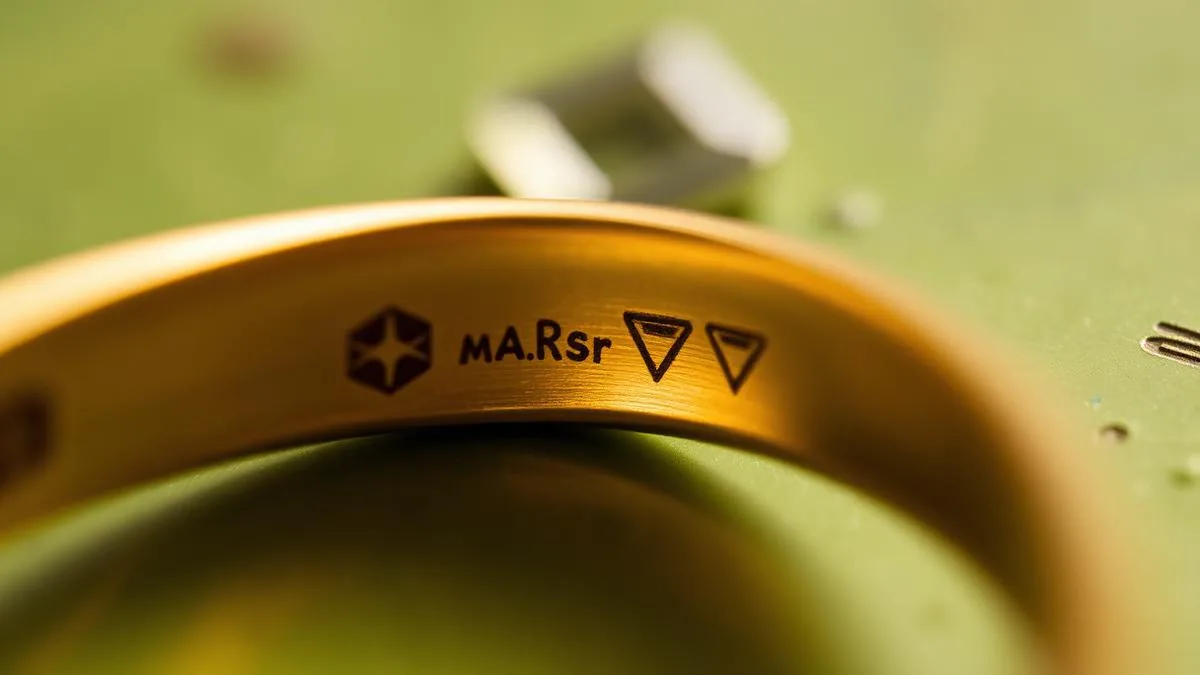
Every piece that reaches our shop carries a story of some kind, but not every part of that story can be verified, and that distinction shapes everything we write about it.
The research starts with the hallmark, when there is one to read. A standard mark tells us the metal purity, a maker's mark can sometimes be traced to a known workshop, and a date letter or assay office mark can narrow a piece to a specific country and period, occasionally to a single year. Where marks are worn or absent, we say so rather than guess at what they might once have shown.
Construction tells its own part of the story. The way a clasp is built, how a setting is soldered, whether claws are hand filed or cast, the type of pin stem on a brooch: all of these are consistent with certain periods and techniques, and inconsistent with others. A piece that claims to be Georgian but shows machine made components from a much later date is not Georgian, whatever the seller believed.
Gemstones are examined separately from the metalwork. Cut style, inclusion patterns and evidence of treatment all help place a stone in time and assess its condition, and this examination happens under magnification by our gemologist, a GIA Graduate Gemologist (GG), not by eye across a counter.
Where a seller has told us something about a piece's past, a name, an occasion, a country, we record it, but we treat it as family memory rather than fact unless it can be backed up by a mark, a document, or a construction detail that supports it. We are explicit on every listing about which claims are established and which are simply what we were told.
This means some pieces come with a fuller story than others. A ring with a clear hallmark, a traceable maker's mark and construction consistent with both will carry a confident, specific description. A piece with a worn mark and no paperwork will be described more generally, by period style and metal test, because that is what we can actually stand behind.
We do not publish attributions we cannot support, and we do not promise a valuation based on a story alone. When a client wants a full written record, our gemologist, a GIA Graduate Gemologist (GG), prepares a detailed valuation and authenticity report, which sets out exactly what has been verified and by what method.
That discipline is slower than simply repeating what a seller told us, and it means some interesting stories never make it into a product description at all. We think that is the right trade. A piece is worth more to a buyer for what can be proven about it than for what merely sounds good.
See it before you buy it
Every piece is unique. One of our specialists will show it to you in daylight on a private video call, in your own time zone.
Book a video viewingMore from the journal
Guides
How to read a European gold hallmark
The small marks that tell you where a piece was made, when, and in what karat.
Eras
Victorian, Edwardian, Art Deco: a short guide
Three eras, three very different ideas of what jewelry should say about you.
Buying
Buying antique jewelry from Europe, from the US
Duties, insurance and why a video viewing beats any set of photographs.