Buying
Wearing antique jewelry every day
Old pieces were made to be used, not preserved behind glass. Here is what daily wear actually asks of them.
By Our client team — Client service · July 10, 2026
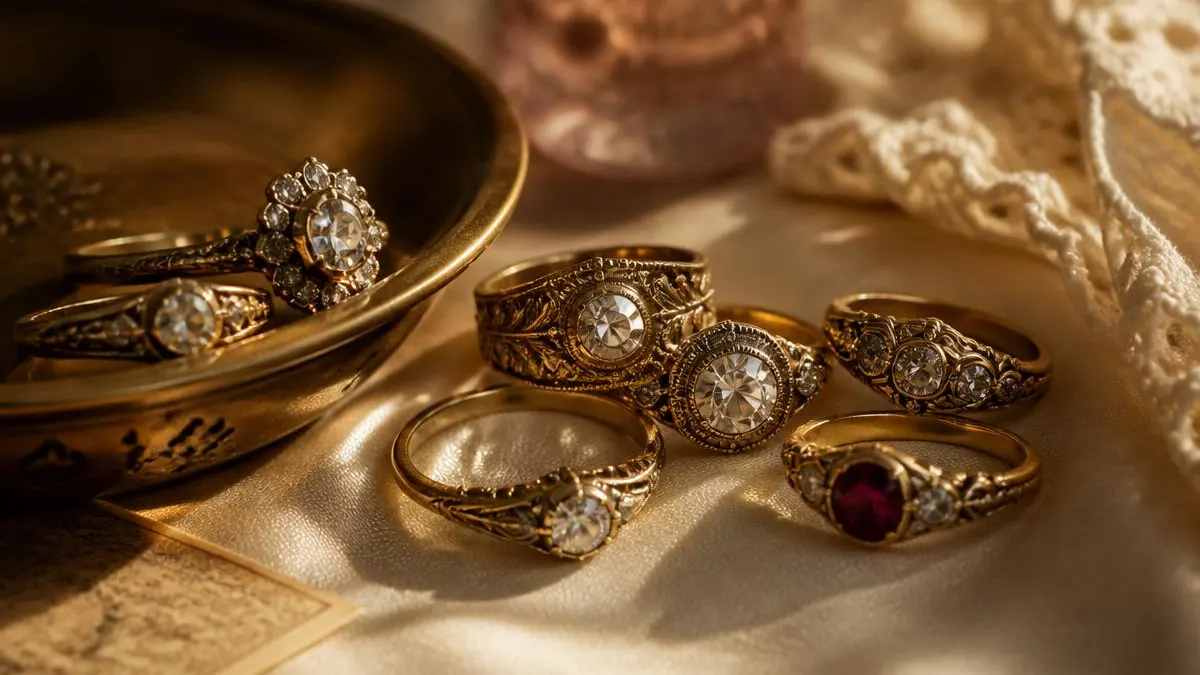
A common assumption is that antique jewelry belongs in a drawer, brought out for occasions and otherwise kept safe. Most of it was never designed that way. A Victorian wedding band or an Edwardian signet ring was made for a hand that worked, cooked, gardened and shook other hands, and the metal and settings reflect that.
Gold does not weaken with age the way some other materials do. A well made band from the nineteenth century is, metallurgically, no more fragile today than the day it was made, provided the setting and shank are sound. Our workshop checks exactly that, claw security, shank integrity, clasp function, before any piece is listed, precisely so it can be worn rather than shelved.
What does change with daily wear is the surface. Soft patina develops, edges round slightly, and engraving can gradually shallow. This is not damage in any meaningful sense; it is simply what happens to metal that gets used, and it is part of why an antique piece looks different from something newly made. If you want a piece to keep a crisp, untouched surface indefinitely, that is a reasonable preference, but it points toward occasional wear rather than daily wear.
Stone hardness matters more for daily use than metal does. Diamonds and sapphires tolerate everyday knocks well. Softer stones such as opal, pearl, emerald and turquoise are more vulnerable to scratches and impact, and pieces set with them are usually better suited to regular but not constant wear, taken off for manual work, sport or sleep.
Rings take the most punishment of any category simply because hands do the most. If you want one antique piece to wear every day without a second thought, a low set band or a piece with a durable stone in a secure, low profile setting will hold up better than a tall, delicate setting, whatever period it comes from.
Basic habits extend any piece's life regardless of age: taking rings off before heavy manual tasks, storing pieces separately so they do not scratch each other, and an occasional gentle clean rather than harsh solvents or ultrasonic cleaners at home. None of this is specific to antique jewelry, but it matters more when a piece cannot simply be replaced.
If a piece does need attention after years of wear, a loose claw, a stretched clasp, that is a normal and expected part of owning something old, not a sign it was unsuitable for daily use in the first place. Our workshop can advise on small repairs regardless of where a piece was purchased.
See it before you buy it
Every piece is unique. One of our specialists will show it to you in daylight on a private video call, in your own time zone.
Book a video viewingMore from the journal
Guides
How to read a European gold hallmark
The small marks that tell you where a piece was made, when, and in what karat.
Eras
Victorian, Edwardian, Art Deco: a short guide
Three eras, three very different ideas of what jewelry should say about you.
Buying
Buying antique jewelry from Europe, from the US
Duties, insurance and why a video viewing beats any set of photographs.