Authenticity & care
How to date a vintage ring
Work through marks, metal, construction, cut, setting and wear in order, and settle on a range rather than a year.
Written by our in-house jewelry team · Updated August 7, 2026 · 9 min read
In short
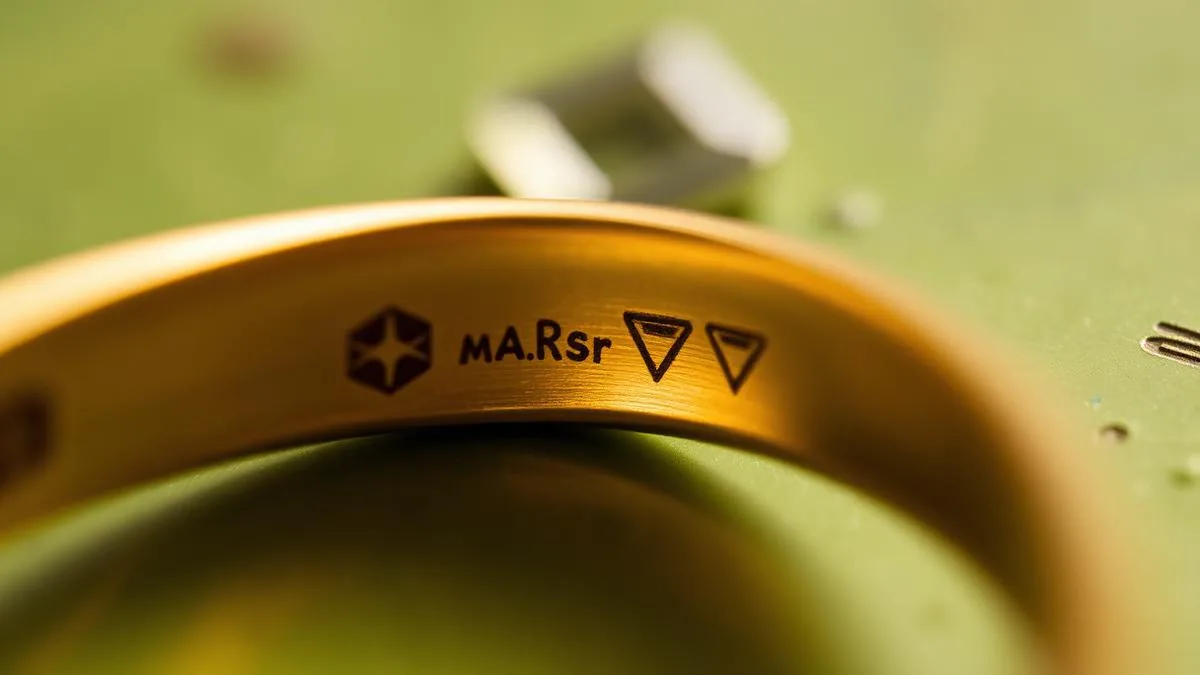
Date a vintage ring by weighing several kinds of evidence in order of reliability: hallmarks and maker's marks first, since some carry an exact year; then the metal and its standard, which can rule periods in or out; then construction and tool marks, which separate hand work from machine work; then the cut of any stones, which brackets a period; then setting style and wear pattern, which are the weakest evidence on their own. Where the marks name a specific model, the ring cannot predate that model's documented introduction, whatever the style suggests.
Buyers frequently ask us to date a ring to a precise year, and the honest answer is usually a range rather than a single date, arrived at by weighing several independent kinds of evidence against each other.
This is the method our gemologist, a GIA Graduate Gemologist (GG), uses, in the order we trust it, so you can apply the same reasoning to a ring in your own hands.
Shop the pieces: Antique engagement rings, curated and available now.
Start with marks
Hallmarks and maker's marks are the strongest evidence available, because some marking systems, British hallmarking in particular, record an exact year through a date letter, and others at least confirm a country and a metal standard. Read the mark set fully before looking at anything else, since it can immediately narrow decades of possible range down to one.
A signed piece from a known house adds a further layer: if the maker's records or documented model history place a design's introduction in a specific year, the ring cannot be older than that year even if its style would otherwise suggest an earlier date. This rule, that a documented introduction date sets a firm floor, overrides style every time the two disagree.
Read the metal and its standard
The metal standard itself carries dating information. Certain karat standards and marking conventions were used only within particular windows in a given country, and platinum's practical availability for fine jewelry work is generally understood to begin around the turn of the twentieth century, so a platinum ring is very unlikely to predate that period regardless of its style.
The color and working properties of the alloy can also be a clue, though a weaker one than the stamped standard itself, since alloy recipes shifted gradually with the availability of different metals over the decades.
Look at construction and tool marks
How a piece was actually built tells you a great deal about when. A closed, solid back behind a stone, hand-pierced and filed gallery work, and slightly irregular hand-cut millegrain all point to earlier hand fabrication. A cast shank with uniform, machine-applied millegrain and a fully open, symmetrical setting points to later, more mechanized manufacture.
Under magnification, hand work tends to show small irregularities of spacing and depth that a trained eye can distinguish from the mechanical regularity of cast or machine-finished work. This evidence is harder to fake convincingly than a mark or a stone, which is part of why it carries real weight.
Bracket the period with the cut of the stones
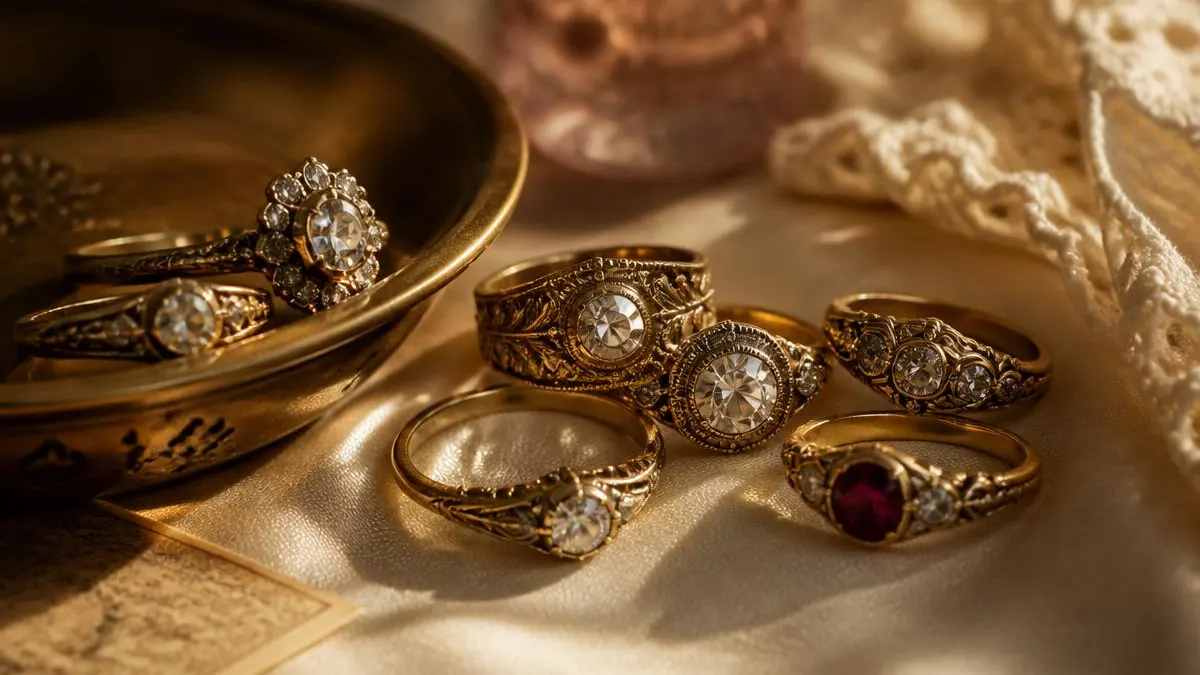
Diamond and gemstone cutting styles changed over time in ways that are well documented and give a useful bracket. Old mine cuts, with their high crowns, small tables and cushion-shaped outlines, generally predate old European cuts, which in turn generally predate the modern round brilliant that became standard through the twentieth century.
This evidence brackets a period rather than pinpointing a year, and it can be misleading on its own, since older cut stones were, and still are, reset into later mountings. A cut consistent with an earlier period is only strong evidence when it agrees with the marks and the construction, not when it stands alone.
Read setting style and wear pattern last
Setting style, meaning the overall design language of a piece, is the weakest evidence on its own because every popular historical style has been revived, sometimes repeatedly, in later decades. Art Deco geometry in particular has been reproduced since at least the mid twentieth century, so style should confirm a dating already suggested by marks, metal and construction rather than establish one by itself.
Genuine, consistent age wear, meaning gradual thinning at points of contact, softened engraving, and a shank worn thinner on the bottom than at the shoulders, is supporting evidence that a ring has actually been worn for a long period, though it cannot by itself tell you how long. Uneven wear, such as a crisp mark sitting inside a heavily worn shank, is worth a closer look rather than an assumption either way.
Check the findings
Small functional parts, ring shank profiles, the type of pin catch on a brooch, or the mechanism of a clasp, changed over time in ways that are documented and give another point of comparison. A finding that postdates the ring's other evidence is a sign of a later repair or alteration rather than proof the whole piece is misdated, and it is worth noting separately rather than discarding the earlier evidence entirely.
Reasoning to a range, not a year
Once the evidence is gathered, the honest step is to state a range that all of it supports, rather than force a single year that only one piece of evidence suggests. A ring with a British hallmark carries an exact assay year, and reasonable phrasing states that year directly. A ring with no date-bearing mark, dated instead by cut, construction and style, is more honestly described as circa a decade or a named period.
Where two kinds of evidence genuinely disagree, for example a mounting that reads as early Edwardian holding a stone cut in a later style, the more likely explanation is a later replacement stone or a later repair rather than a wrong reading of either piece of evidence. Naming that possibility is more useful to a buyer than picking one date and ignoring the conflict.
Frequently asked questions
- What if a ring has no marks at all?
- Unmarked rings are common, especially Georgian, early Victorian and much unsigned American work. Dating then rests on construction, cut and metal evidence together, and the attribution should honestly be described as circa rather than an exact year.
- Can a ring be older than the style it looks like?
- Yes, if an earlier stone was reset into a later mounting, which was common practice, especially with well-loved family stones. Marks and construction on the mounting itself, not the stone, generally date the mounting.
- Can a ring be newer than its style suggests?
- Yes, and this is common with revived styles such as Art Deco, which has been reproduced since at least the mid twentieth century. Marks, construction and metal standard are what separate a genuine period piece from a later revival.
- Why won't you give me an exact year for my ring?
- We give an exact year when the evidence supports one, most often from a British date letter. Where the evidence is style, cut and construction only, an honest attribution is a range, and we would rather be accurate than falsely precise.
Written by our estate jewelry team and reviewed by our in-house gemologist, a GIA Graduate Gemologist (GG). We have been buying and selling European antique jewelry since 1973.
From the reading to the piece
Shop antique rings
Each piece is one of a kind and sells once, so this collection changes constantly.
View antique engagement ringsRelated guides
Keep reading
buying
What makes vintage jewelry valuable
Rarity, maker, craftsmanship and condition matter more than age on its own.
metals
Understanding European gold hallmarks
American gold says 14K. European gold shows you a lion, an eagle's head or a tiny crowned figure. Here is how to read them.
gemstones
Old European cut diamonds explained
Rounder than an old mine cut, still cut for candlelight and gaslight, not a spotlight.