Gemstones & cuts
Old European cut diamonds explained
Rounder than an old mine cut, still cut for candlelight and gaslight, not a spotlight.
Written by our in-house jewelry team · Updated August 7, 2026 · 8 min read
In short
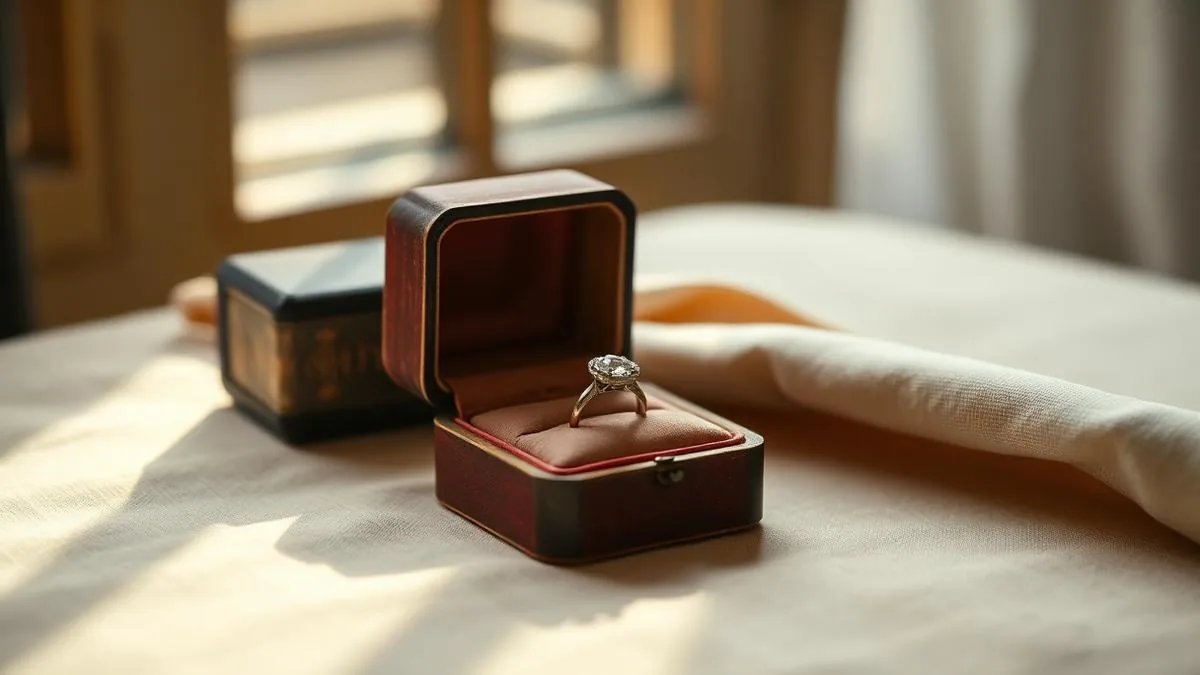
The old European cut is the round, hand-cut predecessor of the modern brilliant, made roughly from the 1890s to the 1930s. It has a round outline, a small table, a high crown, a deep pavilion and usually a visible culet. It fires in large, distinct flashes, which is why it suits candlelight and lamplight better than modern spotlighting.
The old European cut is the diamond you will meet most often in Edwardian and Art Deco jewelry, and one of the most common antique cuts in circulation overall. It is round, unlike its cushion-shaped predecessor the old mine cut, but it still belongs firmly to an era before mathematically standardized proportions.
This guide covers what defines the cut, when to expect it, how to recognize it against a modern round brilliant, and how to think about its value and its paperwork.
Shop the pieces: Old European cut rings, curated and available now.
What the old European cut is
An old European cut diamond is a round, hand-cut stone with a small table, a high crown, a large facet on the culet often left flat and visible, and a full brilliant-style facet arrangement finished by hand rather than by fixed formula. It is the direct ancestor of the modern round brilliant, refined from the cushion-shaped old mine cut into a rounder outline as cutting equipment and skill improved.
It still lacks the precise, calculated proportions of a modern brilliant. Round-ish rather than perfectly round, with facets placed and polished by eye, it carries the same gentle hand-cut irregularity as the old mine cut, just within a more circular outline.
When it was cut
The old European cut emerged in the later nineteenth century as cutters moved away from the cushion outline, and it became the standard diamond cut through the end of the Victorian era, the Edwardian years, and into the Art Deco period, roughly the 1890s through the 1930s. It overlaps at its later end with the transitional cut, as cutters began adjusting proportions toward what would become the modern round brilliant.
Because it was cut over such a long span with evolving equipment, individual old European cut stones vary noticeably in how close they sit to the older, higher-crowned style versus the newer, slightly flatter transitional style. Both are correctly called old European cuts.
How to recognize one
The outline is round, which is the first thing that separates it from an old mine cut. Compared with a modern round brilliant of the same diameter, an old European cut sits taller, with a distinctly smaller table and a steeper crown.
Looking straight down through the table, you will typically see a small circle or point at the very center: the culet, often left as a visible flat facet rather than polished to a point. A modern brilliant is cut so this area reads as a dark bow-tie or open facet pattern instead, with little or no visible culet.
Under a loupe, expect facets that are close to but not perfectly even, and a girdle that may vary slightly in width or finish around the stone. Symmetry is looser than any modern grading standard, which is expected for hand-finished work of the period and not a flaw to be corrected.
- Round outline, unlike the cushion-shaped old mine cut
- Small table relative to the stone's diameter
- High, steep crown compared with a modern brilliant of the same size
- Visible culet, often a small flat facet at the center
- Facets and girdle slightly irregular from hand finishing
How it behaves in light
Like the old mine cut, the old European cut was made for warm, low, flickering light rather than a jeweler's spotlight or bright indoor electric lighting. It returns light in broader, softer flashes with a visible play of color as the stone moves, sometimes described as its signature or its fire under warm light, rather than the tight, rapid white sparkle a modern brilliant is engineered to produce.
Under strong direct light, the open culet and steep crown can also let some light leak straight through the bottom of the stone rather than reflecting back to the eye, which is part of why an old European cut can look a touch darker at the center under certain lighting even when its color grade is good. Many buyers consider this part of the character rather than a defect.
What drives value
Color and clarity are assessed on the same scales as any diamond, generally face-up in the mount for stones that remain set. Within the category, cut quality varies stone to stone since these were hand finished: good symmetry, a well-centered culet, and minimal wear or chipping at the facet junctions all support value.
Size, originality to a period setting, and overall condition of the surrounding piece also weigh heavily. An old European cut diamond that clearly belongs to the antique mount it sits in, rather than a later replacement, generally carries more value than the same stone loose, because buyers of this category are frequently buying the complete period piece rather than the diamond alone.
Grading and certification realities
Laboratories will identify an old European cut and can grade its color and clarity, but modern cut-grade scales, built around the proportions of the round brilliant, do not meaningfully apply to it. A certificate for an old European cut, where one exists, typically notes the cutting style along with color and clarity rather than assigning a modern cut grade.
A large share of old European cut diamonds remain mounted and undocumented by a laboratory, because extracting a century-old stone from a delicate original setting carries real risk to the metalwork. It is normal, and appropriate, for a seller to describe weight and grade in the mount as estimates rather than certified figures in this case.
Buying and care notes
Check whether the stone looks original to its setting. A wide-table, shallow-crown modern round brilliant sitting in a mount built for a small-table, high-crown stone is one of the clearest signs the original diamond has been swapped out, so it is worth asking the seller directly about this before you buy.
The diamond itself needs no special care beyond routine gentle cleaning, but the surrounding antique metalwork, especially claws and galleries on delicate Edwardian and Art Deco settings, should be checked periodically by a goldsmith. Avoid ultrasonic and steam cleaners on the piece as a whole.
Frequently asked questions
- How is an old European cut diamond different from a modern round brilliant?
- An old European cut has a smaller table, a higher crown and usually a visible culet, giving it a taller profile and a softer, warmer light return. A modern round brilliant has a wider table, a shallower crown and little or no visible culet, cut to maximize white sparkle under bright, even lighting.
- Is an old European cut diamond the same as an old mine cut?
- No. The old European cut is round, while the old mine cut is cushion-shaped with rounded corners. The old European cut generally comes later, from roughly the 1890s through the 1930s, following on from the older old mine cut style.
- Are old European cut diamonds worth less than modern diamonds?
- Often lower per carat under grading systems designed for modern proportions, but rarity, condition, and demand for the antique look mean a fine old European cut stone, especially in an original setting, can equal or exceed a comparable modern brilliant in price.
- Can an old European cut diamond be graded and certified?
- Yes, a laboratory can grade its color and clarity and note its cutting style, though the modern cut grade itself does not meaningfully apply. Many antique examples remain mounted and undocumented because removing them risks damaging the original setting.
- Why does my old European cut diamond look dark in the center?
- The open culet and steep crown can allow some light to pass straight through the bottom of the stone rather than reflecting back, which can read as a darker center under certain lighting even in a well-cut example. This is characteristic of the cut rather than necessarily a fault.
Written by our estate jewelry team and reviewed by our in-house gemologist, a GIA Graduate Gemologist (GG). We have been buying and selling European antique jewelry since 1973.
From the reading to the piece
Shop old European cut pieces
Each piece is one of a kind and sells once, so this collection changes constantly.
View old european cut ringsRelated guides
Keep reading
gemstones
Old mine cut diamonds explained
A cushion-shaped, candlelit ancestor of the round brilliant, cut mostly by eye.
gemstones
Transitional cut diamonds explained
Not quite antique, not quite modern, a diamond caught between two eras of cutting.
gemstones
Antique diamond cuts compared
Rose cut, old mine, old European, transitional and modern brilliant, side by side.