Gemstones & cuts
Antique diamond cuts compared
Rose cut, old mine, old European, transitional and modern brilliant, side by side.
Written by our in-house jewelry team · Updated August 7, 2026 · 9 min read
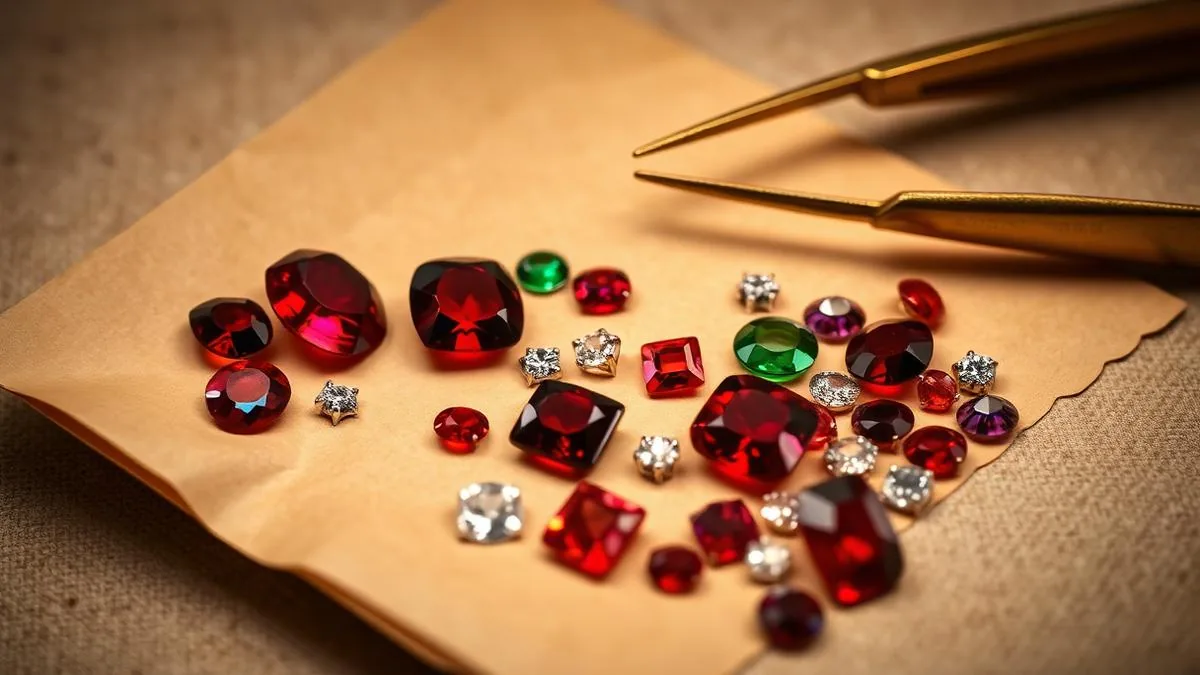
In short
The main antique cuts are the rose, the old mine, the old European, the transitional and the small single cut. Broadly, they move from a soft glow with no pavilion (rose), through hand-shaped cushions with big culets (old mine), to round hand-cut stones with high crowns (old European), and finally toward modern proportions (transitional). Each was cut by eye for the light of its own century, which is why they behave differently from a modern brilliant.
Every antique diamond cut is a response to the light available at the time and the tools available to shape it. Lined up in order, they tell the story of diamond cutting moving from soft, glinting candlelight pieces toward the precise, engineered sparkle of the modern round brilliant.
This guide is a map of that whole family: what separates each cut from its neighbors, and, since it is the comparison we are asked about most, a close look at old European cut versus modern brilliant specifically.
Shop the pieces: Old European cut rings, curated and available now.
The cuts, in rough order
Rose cut diamonds are the earliest of this group, with a flat, unfaceted base and a domed top covered in triangular facets and no table or pavilion at all. They dominated from the sixteenth century into the early twentieth, giving a soft, glassy glow rather than brilliance, and they remain popular today for that same romantic quality.
Old mine cut diamonds followed, cushion-shaped with rounded corners, a small table, a high crown and a large, usually visible culet, dominant through the Georgian period and much of the Victorian era. Old European cut diamonds refined the outline into a rounder, more symmetrical shape while keeping the small table, high crown and open culet, and were the standard through the late Victorian, Edwardian and Art Deco years.
Transitional cut diamonds, from roughly the 1930s and 40s, sit between the old European cut and the modern brilliant, with a larger table and lower crown than an old European cut but still shy of full modern proportions. The modern round brilliant, standardized from around the mid-twentieth century onward, has a wide table, a shallow crown and minimal or no visible culet, and is the standard cut in new jewelry today.
- Rose cut: flat base, faceted dome, no table or pavilion, 16th century to early 20th
- Old mine cut: cushion outline, high crown, small table, large culet, Georgian to mid-Victorian
- Old European cut: round outline, high crown, small table, visible culet, late Victorian to Art Deco
- Transitional cut: larger table, lower crown, smaller culet, roughly 1930s-40s
- Modern round brilliant: wide table, shallow crown, minimal or no culet, mid-20th century onward
Old European cut versus modern brilliant, in detail
This is the comparison buyers ask about most, because it is the one that most often decides whether a diamond in an antique setting looks right or looks like a later replacement. The two sit at opposite ends of a hundred years of cutting philosophy.
An old European cut has a smaller table than a modern brilliant, meaning less of the stone's face is given over to that flat top facet and more of the surface is broken up into smaller crown facets. It also has a distinctly higher crown, sitting taller above the girdle, where a modern brilliant is deliberately cut low and shallow for the same diameter.
The culet tells the story most clearly. An old European cut usually leaves a larger, open culet, visible as a small flat window or point when you look straight down through the table. A modern brilliant is cut so this point is minimized or eliminated, with the center instead reading as a dark bow-tie or an evenly lit facet pattern. Lower crown and larger table together also mean a modern brilliant's lower half facets, between the girdle and the culet, read as proportionally shorter and more compact than the taller, more elongated lower half of an old European cut.
Put together, an old European cut shows chunkier, larger flashes of light and color as it moves, sometimes called its flash or its fire under warm light, while a modern brilliant shows tighter, more numerous, whiter flashes of scintillation engineered for even, bright, typically electric light.
- Table: smaller on an old European cut, wider on a modern brilliant
- Crown height: higher on an old European cut, shallower on a modern brilliant
- Culet: larger and open on an old European cut, minimal or absent on a modern brilliant
- Lower half facets: shorter and more compact on a modern brilliant, taller on an old European cut
- Overall look: chunkier, warmer flash on an old European cut versus precise, white scintillation on a modern brilliant
“Cut is the single most reliable dating clue after the hallmark, because nobody re-cuts a stone to make a ring look older.”
Why the differences exist
Every one of these proportions is a response to available light. Rose cuts and old mine cuts were finished for candlelight and oil lamps, where a broad, glinting surface reads better than fine, precisely angled facets. Old European cuts inherited that logic even as gaslight, and later early electric light, began to change what jewelers were cutting for.
By the time transitional and modern cuts arrived, consistent, bright electric lighting was standard, and cutters and researchers could work out mathematically which proportions returned the most light back to the eye under those conditions. The modern brilliant is the result of treating that question as a precise optical problem rather than a matter of tradition or available tooling.
Dating a piece by its cut
Because these styles overlap in date rather than switching cleanly from one to the next, a diamond's cut is a strong supporting clue for dating a piece rather than proof on its own. A rose cut points strongly toward Georgian or Victorian work, an old mine cut toward Georgian through mid-Victorian, an old European cut toward late Victorian through Art Deco, a transitional cut toward the 1930s and 40s, and a modern brilliant toward the mid-twentieth century or later.
The most useful check is whether the cut of the center stone actually matches the age and construction of the mount around it. A modern brilliant sitting in a mount clearly designed for a small-table, high-crown antique stone, with facets and proportions that do not agree with the setting's original design, is one of the clearest signs that the original diamond has been replaced at some point in the piece's history.
What all of this means for value
Modern cut grading scales were built around the modern round brilliant, so rose cuts, old mine cuts, old European cuts and transitional cuts are generally graded lower on cut, if at all, than a system designed for their own proportions would rate them. Antique diamond pricing is not directly comparable to modern certified diamonds. Cut, rarity, condition, provenance, color, clarity and the originality of the mounting all affect value.
That is not the same as saying they are lesser stones. Fewer survive, none are being newly cut in these older styles at any real scale, and demand for their particular character, warmer light, visible hand work, genuine period romance, has grown steadily among collectors. A fine antique cut diamond in an original setting, with strong color and clarity and well-preserved cutting, can command a real premium over its raw grading numbers would suggest.
Grading and certification across the family
Laboratories can identify and describe all of these cuts and will grade color and clarity for any of them, generally face-up in the mount for stones that remain set, or under standard loose-stone conditions for stones that have been removed. Formal cut grading in the modern sense applies meaningfully only to the modern brilliant and, in some cases, to transitional cuts whose proportions sit close enough to it.
Most rose cut, old mine cut and old European cut diamonds remain mounted in their original settings and have never been independently graded, because removing a fragile antique stone risks damaging delicate period metalwork. A careful seller states plainly when a weight or grade is estimated in the mount rather than certified, across every cut in this family.
Frequently asked questions
- What is the order of antique diamond cuts from oldest to newest?
- Roughly: rose cut, old mine cut, old European cut, transitional cut, then the modern round brilliant. The styles overlap by decades rather than switching over on a fixed date, so a piece can reasonably carry a cut from either side of any given boundary.
- What is the single biggest visual difference between an old European cut and a modern brilliant?
- The culet and crown height together. An old European cut has a distinctly higher crown and usually a visible, open culet reading as a small window at the center, while a modern brilliant is cut low and shallow with the culet minimized or eliminated entirely.
- How can I tell which antique cut a diamond is?
- Check the outline first: flat and faceted with no table means a rose cut, cushion-shaped means an old mine cut, round means an old European, transitional or modern cut. From there, table size, crown height and how visible the culet is separate old European, transitional and modern brilliant from one another.
- Are older cuts always less valuable than a modern brilliant?
- Not necessarily. They are often priced lower per carat under grading systems designed for modern proportions, but rarity, condition, size and strong demand for the antique look can push a fine antique cut stone to match or exceed a comparable modern brilliant in price.
- Why do some old settings have the wrong looking diamond in them?
- A diamond can be replaced at any point in a piece's long life, whether due to damage, loss or a later owner's taste. A modern brilliant in a mount clearly built for a small-table, high-crown antique stone is the clearest sign of a replacement, since the proportions and the setting's original design will not quite agree.
Written by our estate jewelry team and reviewed by our in-house gemologist, a GIA Graduate Gemologist (GG). We have been buying and selling European antique jewelry since 1973.
From the reading to the piece
Old European cut pieces
Each piece is one of a kind and sells once, so this collection changes constantly.
View old european cut ringsRelated guides
Keep reading
gemstones
Old European cut diamonds explained
Rounder than an old mine cut, still cut for candlelight and gaslight, not a spotlight.
gemstones
Old mine cut diamonds explained
A cushion-shaped, candlelit ancestor of the round brilliant, cut mostly by eye.
gemstones
Rose cut diamonds explained
A flat base, a domed crown of triangular facets and a soft, candlelit glow.