Gemstones & cuts
Old mine cut diamonds explained
A cushion-shaped, candlelit ancestor of the round brilliant, cut mostly by eye.
Written by our in-house jewelry team · Updated August 7, 2026 · 8 min read
In short
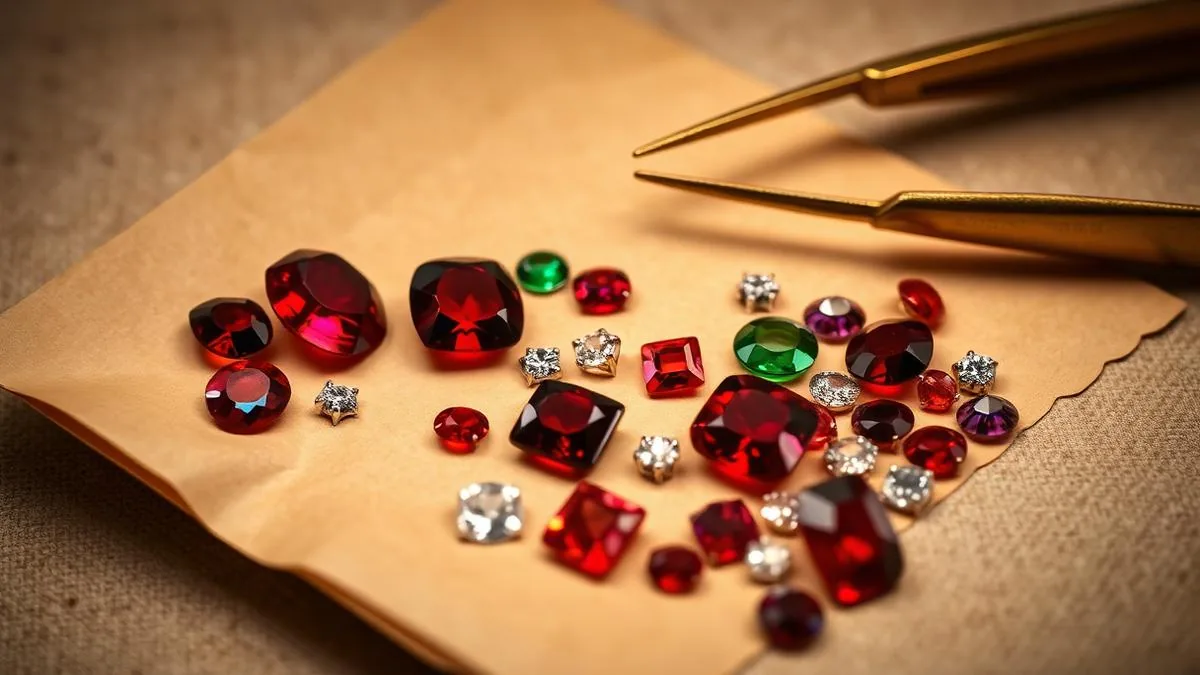
An old mine cut is a hand-cut diamond with a cushion-shaped outline, a small table, a high crown, a deep pavilion and a large open culet. Cut mostly from the eighteenth century to the late nineteenth, it was shaped by eye to follow the rough crystal, so no two are identical. It gives broad, warm flashes rather than the fine sparkle of a modern brilliant.
Before diamond cutting was guided by mathematics, it was guided by the shape of the rough stone and the light of a candle or an oil lamp. The old mine cut is what that approach produced: a cushion-shaped stone, cut by hand, built to catch what light was available rather than to hit a formula.
It is one of the older cuts we handle regularly, and one of the easiest to misjudge if you are used to modern diamonds. This guide sets out what it is, when you will meet it, how to recognize it, and what actually drives its value.
Shop the pieces: Old mine cut rings, curated and available now.
What the old mine cut is
An old mine cut diamond is a hand-cut stone with a squarish or cushion-shaped outline, rounded corners, a small table, a high crown and a large, often visibly open culet. It typically has a full complement of facets in the general brilliant arrangement, but cut and placed by eye rather than to a fixed set of proportions.
The name comes from the diamond mines of Brazil and, before that, India, which supplied much of the rough that European cutters worked in the eighteenth and nineteenth centuries. It describes the cutting style rather than the mine of origin, and it is not a claim about where any particular stone was actually mined.
When it was cut
The old mine cut developed from earlier cushion and old single cut styles over the course of the eighteenth century and remained the dominant diamond cut through most of the nineteenth. You will meet it most often in Georgian and early to mid Victorian jewelry, roughly the late 1700s through the 1860s and 70s, though hand-cutting in this style continued in pockets alongside the rounder old European cut into the later Victorian years.
It was gradually displaced as cutters began working toward a rounder, more symmetrical outline, which is what we now call the old European cut. The two overlap for decades rather than switching over on a fixed date, so a piece can reasonably carry either depending on where and when it was cut.
How to recognize one
The outline is the fastest tell. An old mine cut looks cushion-shaped, almost square with softened corners, rather than round. Held face up next to a modern round brilliant, the difference in outline alone is usually obvious.
Under a loupe, look at proportion rather than polish. The table is noticeably small relative to the stone's width, the crown rises steeply, and looking straight down through the table typically shows a distinct culet, sometimes large enough to read as a small flat window at the stone's center. Facets are rarely perfectly even in size or perfectly aligned with one another, since they were placed and finished by hand, and this gentle irregularity is a sign of genuine age rather than a flaw.
The girdle is usually thin and can be faceted, bruted, or slightly uneven in width around the stone, again a mark of hand work. Symmetry, judged strictly, is looser than any modern grading standard would accept, and that is expected and correct for the period rather than something to be corrected.
- Cushion or squarish outline with rounded corners, not round
- Small table relative to the overall width of the stone
- High, steep crown
- Large, usually visible culet when viewed through the table
- Facets and girdle slightly irregular, consistent with hand cutting
How it behaves in light
An old mine cut was shaped for candlelight and gaslight, both of which are warmer and less directional than modern electric lighting. The result is a softer, broader kind of brilliance, with larger flashes as the stone moves rather than the tight, rapid sparkle of a modern brilliant, and a warmer overall look even in a stone that grades relatively colorless.
Under bright modern lighting this can read as fewer, larger flashes of light and color, sometimes described as a candlelit or lantern-like glow. It is a different aesthetic rather than a lesser one, and it is a large part of why collectors seek these stones out specifically rather than treating them as a downgraded modern diamond.
What drives value
Color and clarity still matter, judged the same way they would in any diamond, though usually face-up and in the mount rather than loose under laboratory conditions. Beyond that, the quality of the cutting itself varies a great deal from stone to stone, since no two were cut to an identical formula: even symmetry, a well-centered culet and minimal chips or abrasion at the facet junctions all support value within the category.
Size and originality to a documented period setting also matter. A larger old mine cut, or one that clearly belongs to the mount it sits in rather than a later replacement, tends to carry a stronger premium than the raw carat weight alone would suggest, because well-preserved examples in original settings are genuinely limited in supply.
Grading and certification realities
Major gemological laboratories can identify and describe an old mine cut and will grade its color and clarity, but the cut grading scales built for modern round brilliants do not apply to it in any meaningful way, since those scales assume proportions the old mine cut was never designed to have. A certificate, where one exists, will typically describe the stone's shape and cutting style along with color and clarity rather than assigning a cut grade in the modern sense.
As with most antique diamonds, many old mine cut stones remain mounted in their original settings and have never been sent for laboratory grading, because removing a century-old stone risks damaging delicate hand-finished metalwork. A careful seller states clearly when weight and grade are estimated in the mount rather than certified, and reserves formal grading for stones that are already loose.
Buying and care notes
Because these stones are older than almost anything else in a jewelry box, ask specifically whether the diamond appears original to its setting. A modern round brilliant sitting in a mount clearly built for a small-table, high-crown stone is one of the clearest signs of a later replacement.
Day to day, old mine cut diamonds are as durable as any diamond, but the settings around them are often delicate hand work with thin prongs or galleries. Have the setting checked periodically by a goldsmith, and follow the same gentle at-home cleaning we recommend for any antique piece rather than an ultrasonic or steam cleaner.
Frequently asked questions
- What is the difference between an old mine cut and an old European cut?
- The old mine cut has a cushion or squarish outline with rounded corners and tends to predate the old European cut, which is rounder and more symmetrical. Both share a small table, a high crown and a typically visible culet, and the two styles overlap in date rather than replacing each other on a fixed year.
- Are old mine cut diamonds rare?
- They are less common than old European or modern cuts because fewer survive and none are being newly cut in the style at any scale, though they are not the rarest antique cut. A well cut example in an original setting is genuinely harder to find than the raw carat weight would suggest.
- Can an old mine cut diamond be re-cut into a modern brilliant?
- Technically yes, but doing so sacrifices a meaningful amount of weight and destroys a piece of cutting history that cannot be replaced. Most dealers and collectors strongly discourage recutting an authentic old mine cut stone.
- Do old mine cut diamonds have a lower clarity or color than modern diamonds?
- Not inherently. Color and clarity are properties of the individual stone and are graded the same scales regardless of cut. What differs is how much brilliance the cut itself returns, which affects how included or how colored a stone appears face-up.
- Is an old mine cut diamond a good choice for an engagement ring?
- Many buyers choose one specifically for its warmer, softer light and its history. It wears exactly as durably as any diamond, provided the setting is checked and maintained like any antique piece.
Written by our estate jewelry team and reviewed by our in-house gemologist, a GIA Graduate Gemologist (GG). We have been buying and selling European antique jewelry since 1973.
From the reading to the piece
Shop old mine cut pieces
Each piece is one of a kind and sells once, so this collection changes constantly.
View old mine cut ringsRelated guides
Keep reading
gemstones
Old European cut diamonds explained
Rounder than an old mine cut, still cut for candlelight and gaslight, not a spotlight.
gemstones
Antique diamond cuts compared
Rose cut, old mine, old European, transitional and modern brilliant, side by side.
gemstones
Diamonds in vintage jewelry
Rose cuts, old mines, transitionals, and how to judge a stone with no certificate.