Gemstones & cuts
Rose cut diamonds explained
A flat base, a domed crown of triangular facets and a soft, candlelit glow.
Written by our in-house jewelry team · Updated August 7, 2026 · 8 min read
In short
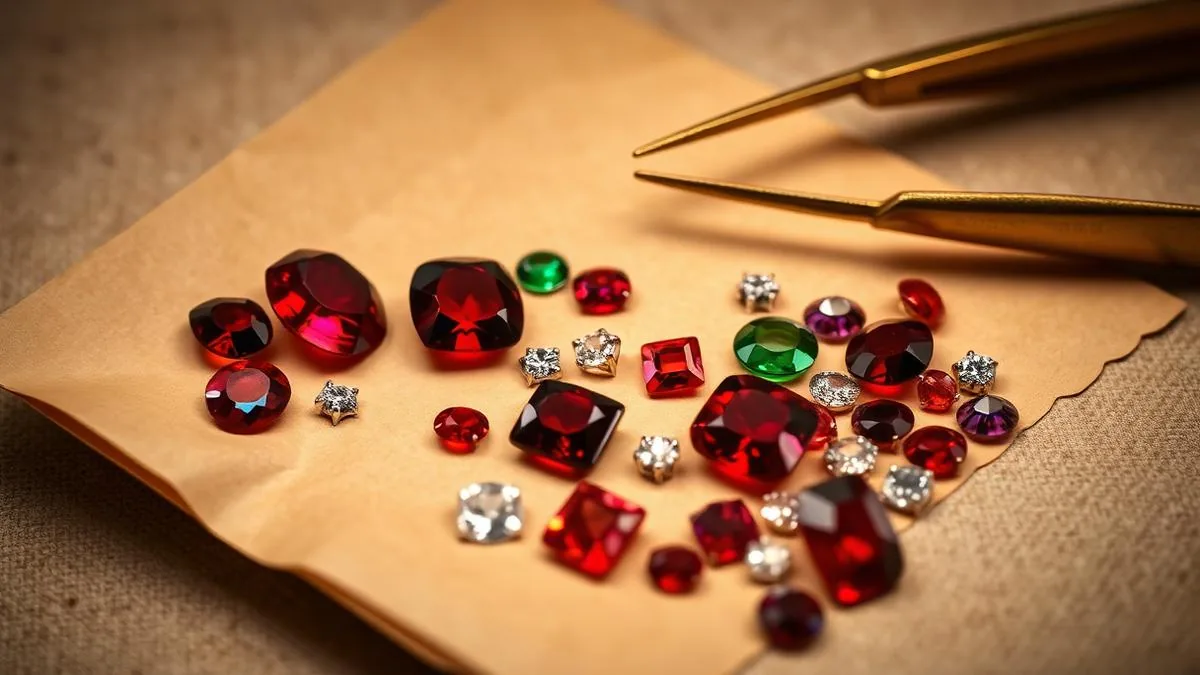
A rose cut diamond has a flat base and a domed top covered in triangular facets, with no pavilion and no table. It was the dominant diamond cut from the sixteenth century into the nineteenth and returns light as a soft, glassy glow rather than the flash of a brilliant. Rose cuts look their best in low light, which is what they were cut for.
A rose cut diamond has no table and no pavilion, just a flat base and a domed crown covered in triangular facets. It is the oldest diamond cutting style still regularly seen in jewelry, and it looks like nothing that came after it: soft, glassy and glowing rather than sparkling.
Because it predates almost every grading convention built for modern diamonds, buying a rose cut means judging it on different terms. This guide sets out what it is, when to expect it, how to recognize and evaluate one, and what to know before you buy.
Shop the pieces: Diamond, curated and available now.
What the rose cut is
A rose cut diamond consists of a flat, unfaceted base and a domed top covered in triangular facets, most commonly somewhere between three and twenty four of them, arranged in one or more rings meeting at a point at the top of the dome. There is no table facet and, because the base is flat, no pavilion and no culet in the sense those terms apply to a brilliant cut.
The style is named for its resemblance to the layered petals of an opening rose bud. It was worked entirely by hand for most of its history, using the rough diamond's natural shape as a starting point rather than cutting toward a fixed target outline.
When it was cut and where you will find it
The rose cut is generally traced to the sixteenth century and was the dominant diamond cutting style from then through the eighteenth century, remaining common well into the Victorian era even as brilliant-style cuts gained ground. You will meet it most consistently in Georgian jewelry and continuing through much of the nineteenth century, often in combination with old mine cut stones in the same piece.
It never fully disappeared. Rose cuts continued to appear in smaller accent stones through the Victorian and Edwardian periods, and the style has seen a genuine revival in fine jewelry made today, where new rose cut diamonds are deliberately chosen for their antique character.
“A rose cut gives you glow rather than fire. Buyers who love them are never trying to buy a brilliant cheaply.”
How to recognize one
The flat back is the clearest identifying feature: turn the stone over, or look at it from the side, and there is no pavilion at all, just a flat base meeting a domed, faceted top. This also means a rose cut diamond is noticeably shallower than a brilliant-cut stone of the same width, since all of its depth is in the crown.
Under a loupe, count the facets and look at their arrangement: triangular facets rising in one or more tiers to a point at the crown's apex, rather than the table-and-crown-and-pavilion structure of a brilliant. Antique, hand-cut rose cuts typically show gentle irregularity in facet size and placement and a slightly uneven outline, which is a sign of age rather than a flaw. Modern rose cuts are cut far more evenly and symmetrically, and are frequently set open-backed in a way that lets light pass through the flat base, which older, closed-back set rose cuts generally do not allow.
- Flat, unfaceted base with no pavilion
- Domed crown covered in triangular facets, typically three to twenty four of them
- No table facet and no true culet
- Noticeably shallow overall depth compared with a brilliant cut of similar width
- Antique examples show hand-cut irregularity; modern rose cuts are precisely symmetrical
How it behaves in light
Without a pavilion, a rose cut diamond cannot produce the internal reflection that gives a brilliant cut its fire and scintillation. Instead it returns a softer, more diffuse glow across its faceted surface, often described as luminous rather than sparkling, and it is especially well suited to warm, low, flickering light such as candlelight, which is exactly what it was originally cut for.
This is a genuine difference in kind rather than a lesser version of a brilliant's sparkle, and it is the reason rose cuts remain popular specifically among buyers who want that softer, antique look rather than maximum brightness.
What drives value
Color and clarity still apply and are judged the same way as for any diamond, generally face-up given how these stones are typically set. Within that, the evenness and quality of the hand cutting itself varies considerably, and a well-executed antique rose cut with regular facets and good symmetry is more desirable than a crude or heavily worn example.
Because rose cuts return less light than a brilliant, they are graded on assumptions built for brilliant cuts. Antique diamond pricing is not directly comparable to modern certified diamonds. Cut, rarity, condition, provenance, color, clarity and the originality of the mounting all affect value. Rarity works in the other direction: a large single rose cut, a well-matched pair or set, or a stone clearly original to a fine antique setting can carry a genuine premium over what its raw carat weight and color and clarity would suggest on their own.
Grading and certification realities
Laboratories can identify a rose cut and will grade its color and clarity, but standard cut-grading scales, built for brilliant-style diamonds, simply do not apply to a stone with no table or pavilion. A certificate for a rose cut, where one exists, will describe the cutting style along with color and clarity rather than assigning a conventional cut grade.
As with other antique cuts, a large share of rose cut diamonds remain mounted in original settings, often closed-back and foiled in earlier Georgian work, and have never been independently graded. Removing such a stone can risk both the stone and a delicate historic setting, so a careful seller states clearly when weight and grade are estimated in the mount.
Buying and care notes
Ask whether a closed-back setting is original. Georgian and early Victorian rose cuts were frequently foil-backed and set in closed mounts to enhance their color and brightness in candlelight, and this closed back should generally be left intact rather than opened, since doing so can permanently alter both the look and the value of the piece.
Because closed-back and foil-backed antique rose cut settings should never be exposed to water, follow careful, dry-cloth cleaning rather than any soak or ultrasonic method, and have the setting checked periodically by a goldsmith given the delicacy of the surrounding period metalwork.
Frequently asked questions
- Are rose cut diamonds less valuable than brilliant cut diamonds?
- Antique diamond pricing is not directly comparable to modern certified diamonds. Cut, rarity, condition, provenance, color, clarity and the originality of the mounting all affect value. Rarity, cutting quality, matched pairs and original antique settings all bear on what a rose cut is worth.
- Do rose cut diamonds sparkle?
- They glow rather than sparkle. Without a pavilion there is no brilliant-style internal reflection, which is exactly why rose cuts suit warm, low light so well and why they read as soft and luminous rather than fiery.
- How do I know if a rose cut diamond is antique or newly cut?
- Antique, hand-cut rose cuts show gentle irregularity in facet size, placement and outline. Modern rose cuts are cut with precise, even symmetry and are often set open-backed, while genuinely old examples are more often in closed-back, foiled settings.
- Can a closed-back rose cut diamond be cleaned safely?
- Not with water or an ultrasonic cleaner. Closed-back and foil-backed antique settings should be wiped only with a dry or barely damp soft cloth, since moisture trapped behind the foil can damage both the look and the setting.
- Why do rose cut diamonds have no culet?
- A culet is a feature of the pavilion, the pointed underside of a brilliant-style cut. A rose cut has a flat base and no pavilion at all, so the term does not apply to it in the way it does to an old mine, old European or modern brilliant cut.
Written by our estate jewelry team and reviewed by our in-house gemologist, a GIA Graduate Gemologist (GG). We have been buying and selling European antique jewelry since 1973.
From the reading to the piece
Shop diamond jewelry
Each piece is one of a kind and sells once, so this collection changes constantly.
View diamondRelated guides
Keep reading
gemstones
Old mine cut diamonds explained
A cushion-shaped, candlelit ancestor of the round brilliant, cut mostly by eye.
gemstones
Antique diamond cuts compared
Rose cut, old mine, old European, transitional and modern brilliant, side by side.
gemstones
Diamonds in vintage jewelry
Rose cuts, old mines, transitionals, and how to judge a stone with no certificate.