Eras
Edwardian jewelry guide, 1901 to 1915
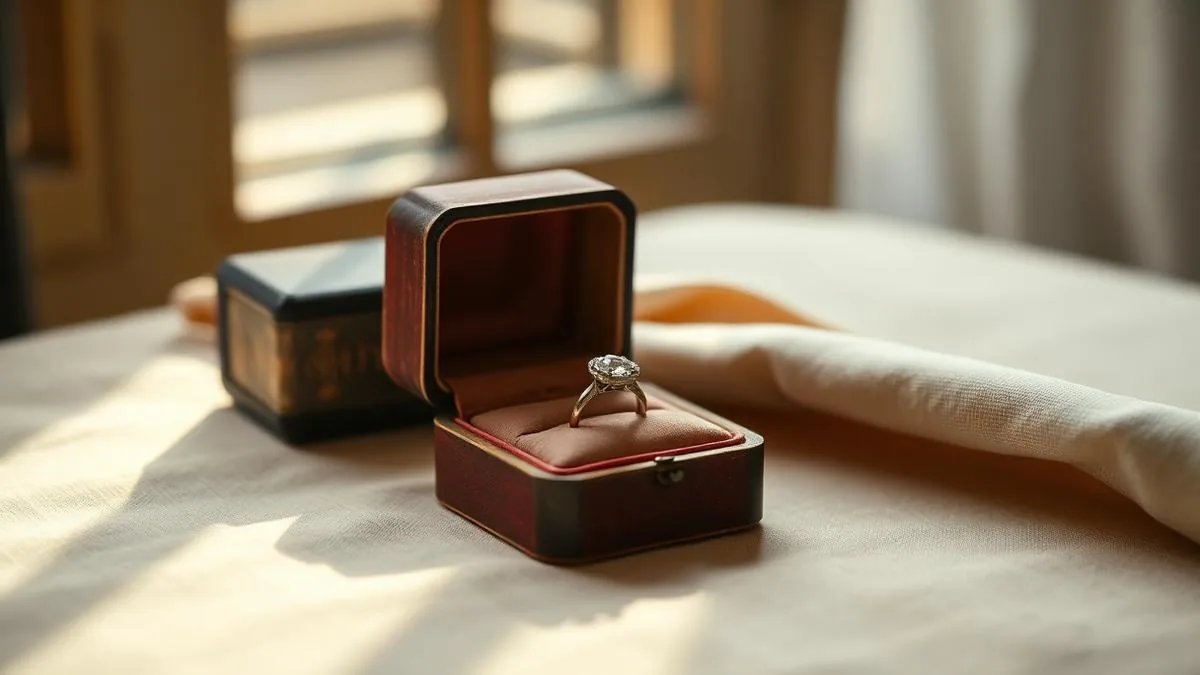
Platinum lace, millegrain and diamonds that appear to float on almost no visible metal.
Written by our in-house jewelry team · Updated August 7, 2026 · 9 min read
In short
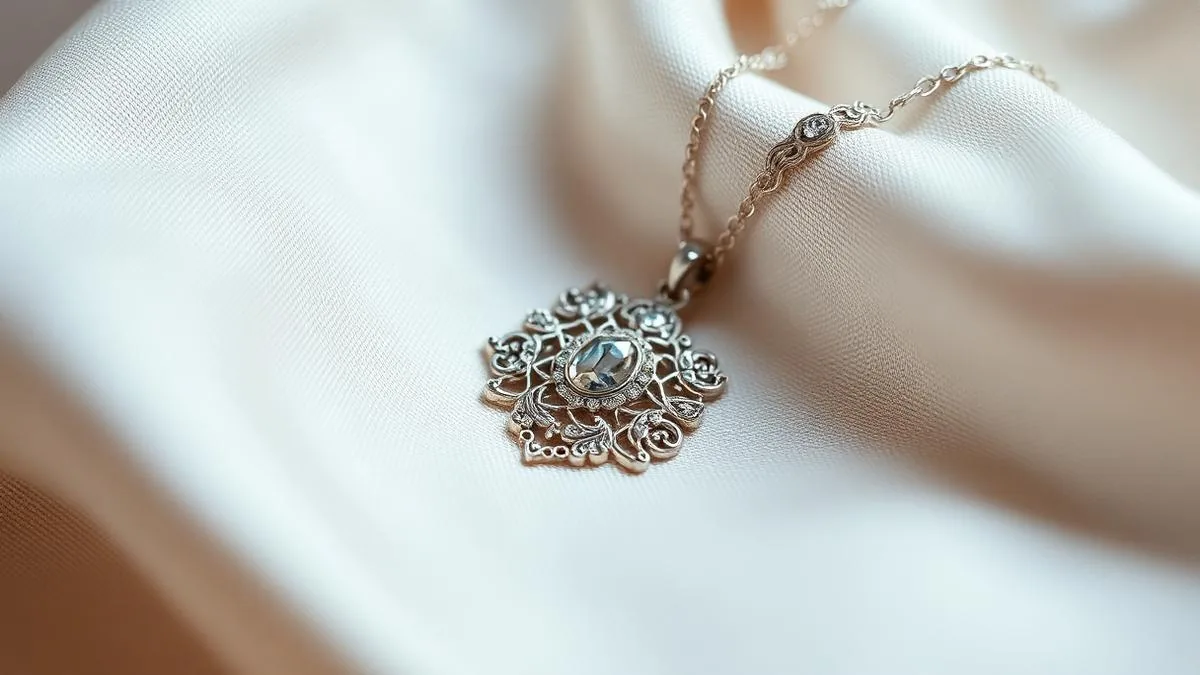
Edwardian jewelry, made roughly between 1901 and 1915, is defined by platinum worked so finely that a diamond seems to float with almost no visible metal. Look for hand-pierced platinum galleries, hairline knife-edge bars, hand-cut millegrain along every edge, garland and bow motifs borrowed from eighteenth-century France, and old European and rose cut diamonds, often paired with natural pearls that were worth as much as the diamonds beside them.
Edwardian jewelry is the white period. New platinum working techniques, refined in the last years of the nineteenth century, let jewelers pierce and mill metal so finely that diamonds seem suspended in air, with barely any visible mount holding them.
The look also carried a name change with it. King Edward VII reigned only from 1901 to 1910, but the style that bears his name ran a little past his death, fading out as Art Deco's harder geometry took hold around 1915.
It is a short, tightly defined window compared with the Victorian era before it, which makes Edwardian pieces easier to date confidently once you know what platinum construction of the period actually looks like under magnification.
Shop the pieces: Edwardian, curated and available now.
How the era is dated
Most dealers bracket Edwardian jewelry between about 1901 and 1915. It begins with Edward VII's accession, but its identity is really about a technical breakthrough, the practical working of platinum, that had been developing since the 1890s and continued to define fine jewelry design for several years after the King's death in 1910.
The end of the period is marked less by a date than by a style shift: as the First World War approached, the soft garlands and bows of Edwardian design gave way to the flatter, more geometric lines that would become Art Deco through the 1920s.
Materials and metals
Platinum is the material that defines the era. It is far stronger relative to its weight than gold or silver, which meant jewelers could work it into threads, knife-edge bars and pierced lacework that would simply bend or break if attempted in a softer metal. This is also the period where platinum largely replaced the older practice of silver-topped gold for diamond settings, since platinum does not tarnish and needed no gold backing for strength.
Gold still appears, usually as a structural backing under platinum tops on rings, or in the plainer parts of a piece, but the visible, decorative metal of an Edwardian piece is almost always platinum.
“The Edwardian ideal was jewelry that looked like it weighed nothing. That lightness is exactly what makes condition the first thing we check.”
Construction and techniques
The vocabulary is soft and architectural at the same time: garlands, ribbon bows, laurel wreaths and lace-like scrollwork, all picked out in a continuous line of small diamonds set so close together that the metal almost disappears between them. This is sometimes called garland style, and it deliberately looked back to French eighteenth-century decorative art rather than forward to anything new.
Millegrain, a fine beaded edge rolled or cut by hand along the metal bordering a stone, is one of the clearest fingerprints of the period, both decorative and functional, since it helps secure the stone while softening the line of the metal. Hand piercing, where a jeweler's saw cuts a decorative pattern directly through solid platinum, gives galleries and undergalleries an openwork lightness that later die-stamped work does not match.
Motifs and typical stones
Bows, garlands, laurel wreaths, lace and honeycomb patterns and lattice work all recur, generally symmetrical and restrained compared with the naturalistic asymmetry of Art Nouveau, which developed alongside it.
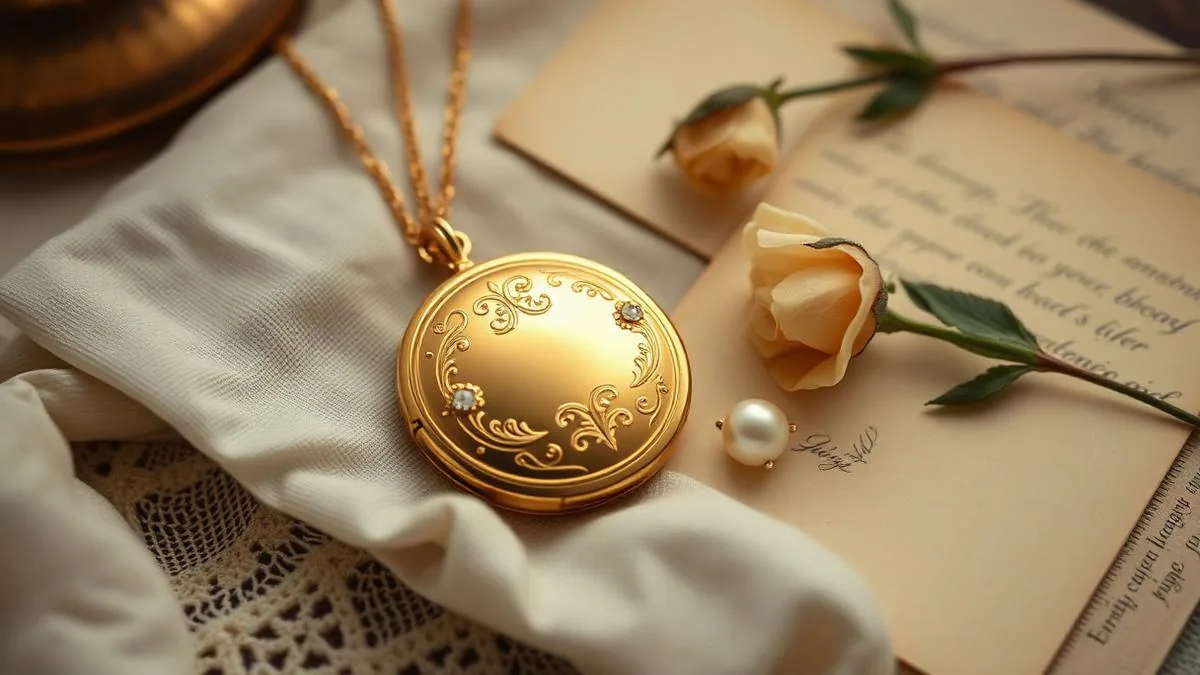
Old European cut and rose cut diamonds are standard, since the modern round brilliant cut had not yet been developed. Natural pearls, at the time worth as much as fine diamonds and sometimes more, appear constantly in Edwardian necklaces, brooches and rings; cultured pearls did not reach the market in volume until the 1920s.
- Hand-pierced platinum galleries and undergalleries
- Hairline knife-edge bars, only possible in a metal as strong as platinum
- Millegrain edging along nearly every set stone
- Old European cut and rose cut diamonds, not modern round brilliants
- Natural pearls used as a primary stone, not only an accent
Telling period pieces from later revivals
Platinum jewelry made in the Edwardian style decades later, whether an honest revival or a later reproduction, is usually given away by its diamonds and its precision. A modern round brilliant cut diamond in an otherwise garland-style setting is an immediate signal that the piece postdates the era, since that cut only became standard from the 1920s onward.
Machine-uniform millegrain, produced with a rolling wheel rather than cut by hand, tends to look mechanically even rather than gently irregular, and casting rather than hand piercing leaves telltale texture differences visible under a loupe. Natural versus cultured pearls should also be verified by gemological testing rather than assumed, since a genuinely old mount can be married to a later cultured pearl replacement.
Condition and wearability
Platinum is durable and does not wear away as quickly as gold, but the delicate, pierced construction that defines the style is also its most vulnerable point. Hairline bars and pierced galleries can bend or crack under a hard knock, so an Edwardian ring is better suited to considered wear than to daily heavy use.
Natural pearls in particular need gentle handling, since they are softer than most gemstones and can be damaged by perfume, lotion and dry storage; wearing them and letting them touch skin oils is actually kinder to a pearl than leaving it shut away.
Buying notes for US buyers
Because natural pearls carry a real premium over cultured pearls of similar appearance, always confirm whether a pearl in an Edwardian piece has been tested, and expect a reputable seller to state clearly whether it is natural, cultured or a later replacement rather than leaving the question open.
Every Edwardian piece we sell is reviewed in-house by our gemologist, a GIA Graduate Gemologist (GG), including stone identification, before it is listed, and comes with a detailed valuation and authenticity report prepared by our gemologist, a GIA Graduate Gemologist (GG). Returns are free and insured within 30 days, and US shipping is free, insured and delivered with duties already included.
Frequently asked questions
- What years count as Edwardian jewelry?
- Roughly 1901 to 1915, spanning slightly beyond King Edward VII's own reign as the platinum-lace style continued until Art Deco's geometry took over.
- Why is platinum so important to Edwardian jewelry?
- Platinum's strength allowed jewelers to pierce, mill and thin the metal far more than gold or silver would allow, producing the airy, lace-like look that defines the period.
- How do I tell Edwardian jewelry from an Art Deco piece?
- Edwardian design is soft and curved, built from garlands, bows and lace patterns. Art Deco, from the 1920s onward, is flatter and more geometric, with straight lines and strong symmetry.
- Are Edwardian diamonds the same cut as modern diamonds?
- No. Edwardian pieces use old European and rose cut diamonds, hand cut for candlelight and gaslight, which look and sparkle differently from the modern round brilliant developed later.
- Is a pearl in an Edwardian piece likely to be natural?
- It is more likely than in later jewelry, since cultured pearls were not widely available until the 1920s, but it should never be assumed. We test and disclose natural versus cultured status on every piece.
- Can Edwardian jewelry be resized or repaired safely?
- Yes, but it should only be done by a jeweler experienced with platinum and antique piercing, since aggressive resizing or soldering can distort delicate lacework that took hand skill to make in the first place.
Written by our estate jewelry team and reviewed by our in-house gemologist, a GIA Graduate Gemologist (GG). We have been buying and selling European antique jewelry since 1973.
From the reading to the piece
Shop Edwardian jewelry
Each piece is one of a kind and sells once, so this collection changes constantly.
View edwardianRelated guides
Keep reading
eras
Art Nouveau jewelry guide, 1890 to 1910
Enamel, whiplash curves and the human figure in gold, made to be looked at rather than appraised by carat.
eras
Art Deco jewelry: a complete guide
1920 to 1935, when jewelry stopped imitating flowers and started imitating architecture.
gemstones
Old European cut vs modern brilliant
Why an antique diamond flashes color where a modern one flashes white.