Eras
Georgian jewelry guide, 1714 to 1837
Hand-wrought gold, closed-back settings and diamonds cut for candlelight, from before machines touched jewelry at all.
Written by our in-house jewelry team · Updated August 7, 2026 · 9 min read
In short
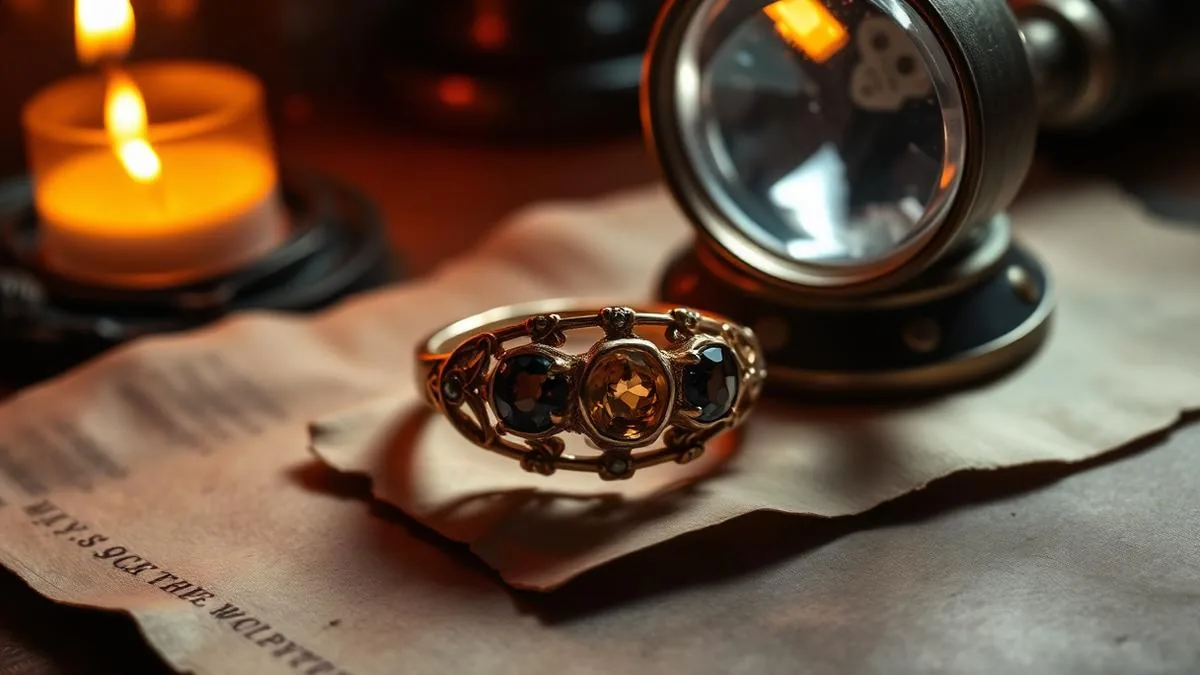
Georgian jewelry was made between roughly 1714 and 1837, spanning the reigns of the four King Georges, entirely by hand and before any mechanized jewelry production existed. Genuine pieces are recognized by closed-back settings, often with a reflective foil behind the stone, by rose cut and old mine cut diamonds cut for candlelight rather than electric light, by high karat or silver-topped gold construction, and by a slight, honest irregularity that machine-made Victorian and later work does not have. Because so much Georgian jewelry was melted down or reset over the following two centuries, surviving pieces are genuinely scarce, and buyers should expect careful, gemologist-reviewed provenance rather than paperwork.
Georgian jewelry is the oldest category most collectors will ever be able to buy and wear. The period runs across the reigns of Britain's first four King Georges, from 1714 to 1837, a span that also includes the neoclassical taste of the late 1700s and the early romantic sensibility that would flower into the Victorian era.
Almost nothing from this period was made with a machine. Every link, every prong, every cut stone passed through a human hand, and that fact shapes everything about how these pieces look, how they were built and how they have survived, or failed to survive, for two hundred years.
Because gold was valuable and fashions changed, an enormous amount of Georgian jewelry was melted down, reset with newer stones, or broken up for its metal during the Victorian period and again during later gold booms. What is left is a small and genuinely finite supply, which is part of why authentic pieces command real attention from collectors and museums alike.
Shop the pieces: Georgian, curated and available now.
How the era is dated
The name comes from the four King Georges of Great Britain, and the period is generally bracketed by George I's accession in 1714 and the death of William IV in 1837, when Victoria came to the throne. Some dealers extend the late boundary slightly or split the period into early, mid and late Georgian to track the shift from Rococo asymmetry to neoclassical restraint and then to the softer sentimentality that leads into early Victorian work.
Dating an individual piece precisely is difficult and usually approximate, because so little Georgian jewelry is hallmarked or dated in the way later Victorian and Edwardian pieces often are. Attribution relies on reading construction, stone cutting and stylistic vocabulary together, which is exactly the kind of assessment we do in-house before a Georgian piece is ever listed.
Materials and metals
High karat gold, typically in the 18K to 22K range, was standard, chosen for workability rather than for a hallmark standard as we think of one today. Silver was also used extensively, especially for diamond settings, because its white color flattered a diamond's color at a time when white gold and platinum did not yet exist in jewelry.
This produced the characteristic silver-topped gold construction: a diamond is set in a silver top for a bright white face, backed by a gold structure for strength, so the piece does not turn the wearer's skin from tarnished silver alone. Sterling silver marks as we know them from the nineteenth century onward are inconsistent or absent, since national hallmarking systems were not yet uniformly applied to jewelry in every country.
“Georgian work was cut by candlelight for candlelight. Judge it under a warm lamp, never under a shop spotlight.”
Construction and closed-back settings
The signature technical feature of Georgian jewelry is the closed-back setting. A stone sits in a solid metal cup rather than an open gallery, with no light able to pass through from behind. This was not decoration for its own sake; a thin reflective foil was frequently placed behind the stone to brighten its color and increase its apparent sparkle in candlelight, the only serious light source most people ever saw jewelry under.
Because everything was cut and shaped by hand, edges, prongs and engraving show gentle, individual variation rather than the crisp uniformity a die or a machine produces. Clasps and pin fittings are simple by later standards, and findings such as C-clasps on brooches, with no safety catch, are typical rather than a fault.
Motifs and typical stones
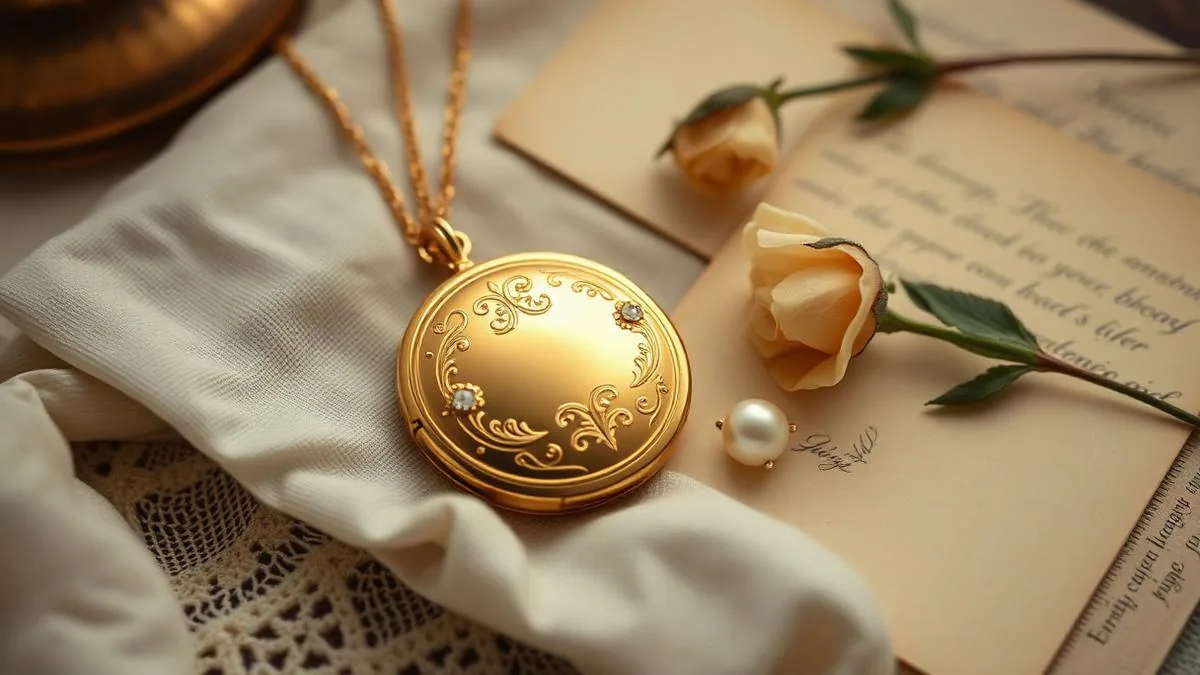
Early Georgian work favors Rococo asymmetry, scrolling foliage and naturalistic flowers. As the century turns, neoclassical taste brings in urns, laurel wreaths, and cameo and intaglio work drawing on Roman and Greek antiquity, popularized in part by the archaeological finds at Herculaneum and Pompeii. Sentimental jewelry, including mourning pieces with woven hairwork, and giardinetti or flower basket rings, also belong to this period and run into the early Victorian years.
Rose cut and old mine cut diamonds are the diamonds of the era, both cut by hand to maximize brilliance under candlelight rather than to a mathematically ideal proportion. Foiled paste, foiled colored gemstones, garnet, amethyst, citrine and coral all appear regularly, often behind a closed back that also protected a softer or more fragile stone.
- Rose cut diamonds with a flat base and a faceted dome, no pavilion
- Old mine cut diamonds, a deep cushion-shaped ancestor of the modern round brilliant
- Foiled stones set in closed-back mounts to maximize color and light return
- Hairwork, seed pearls and enamel in sentimental and mourning jewelry
- Cameo and intaglio carving in shell, hardstone and glass
Telling genuine Georgian pieces from later revivals
The Victorian era, and later the mid-twentieth century, both produced jewelry that deliberately echoes Georgian taste, and honest sellers should always be clear about which period a piece actually belongs to. The single most useful test is the back of the setting: a genuine Georgian stone is almost always closed-back, while a later revival piece set in the Georgian style is far more often open-backed, since jewelers by the Victorian period had largely moved away from foiling and closed backs for diamonds.
Construction tells the rest of the story. Machine-cut regularity in the metalwork, modern findings such as a sprung safety catch on a brooch pin, or a modern round brilliant cut stone in an otherwise Georgian-styled setting are all signs of a later piece, whether an honest antique-style revival or a reproduction made to deceive. We examine each of these points under magnification and disclose the true period plainly rather than using vague language like antique style to blur the date.
Condition and wearability
A two hundred year old piece will show its age, and that is part of its character rather than a defect to be engineered away. Expect softened engraving, a foil that may have dulled slightly with time, and fittings that are simpler and less secure by modern standards, particularly pin backs without a safety catch.
Everyday wear is possible for most surviving Georgian rings and pendants, but we recommend more caution than with a twentieth-century piece: avoid tight-fitting activities, have clasps and pins checked periodically, and treat a Georgian ring as a piece for considered wear rather than for gardening or gym use.
Buying notes for US buyers
Genuine Georgian jewelry is scarce enough that price alone is not a reliable guide to authenticity, and a low price on a piece described as Georgian is more often a sign of misattribution than a bargain. Ask for clear photographs of the reverse of any stone setting, and expect a seller who works with antique material to be comfortable explaining exactly why a piece is dated where it is.
Every Georgian piece we sell is reviewed in-house by our gemologist, a GIA Graduate Gemologist (GG), before listing, and comes with a detailed valuation and authenticity report prepared by our gemologist, a GIA Graduate Gemologist (GG). We also offer 30-day returns with free insured US return shipping and free insured US shipping with duties included, so a piece can be examined at home before the decision is final.
Frequently asked questions
- What years count as Georgian jewelry?
- Roughly 1714 to 1837, covering the reigns of George I through George IV and William IV, up to Queen Victoria's accession.
- How can I tell if a stone setting is genuinely Georgian?
- Look at the back. Genuine Georgian stones are almost always set in a closed back, often over a reflective foil, rather than in the open gallery settings that became standard later.
- Is Georgian jewelry hallmarked?
- Rarely, and inconsistently. National hallmarking of jewelry was not yet applied the way it is today, so dating relies on construction, stone cutting and style rather than a mark alone.
- Can I wear a Georgian ring every day?
- Most surviving pieces can be worn with care, but we recommend treating them for considered daily wear rather than heavy activity, and having clasps and pin fittings checked periodically.
- Why is so little Georgian jewelry available today?
- Large amounts were melted for their gold or reset with newer stones during the Victorian era and later gold booms, so survival rates are genuinely low compared with later periods.
- Is a rose cut diamond less valuable than a modern round brilliant?
- It is valued differently rather than simply less. Rose cuts are prized by collectors for their history and their soft, candlelit sparkle, and a well-preserved antique rose cut in original condition can carry a real premium.
Written by our estate jewelry team and reviewed by our in-house gemologist, a GIA Graduate Gemologist (GG). We have been buying and selling European antique jewelry since 1973.
From the reading to the piece
Shop Georgian jewelry
Each piece is one of a kind and sells once, so this collection changes constantly.
View georgianRelated guides
Keep reading
gemstones
Old European cut vs modern brilliant
Why an antique diamond flashes color where a modern one flashes white.
gemstones
Diamonds in vintage jewelry
Rose cuts, old mines, transitionals, and how to judge a stone with no certificate.
eras
Victorian jewelry: a complete guide
1837 to 1901, sixty-four years of jewelry that was made to be worn every day and usually shows it.