Eras
Vintage 1970s and 1980s jewelry guide
Textured gold, bold color and the signed designer pieces that are now firmly collectible.
Written by our in-house jewelry team · Updated August 7, 2026 · 8 min read
In short
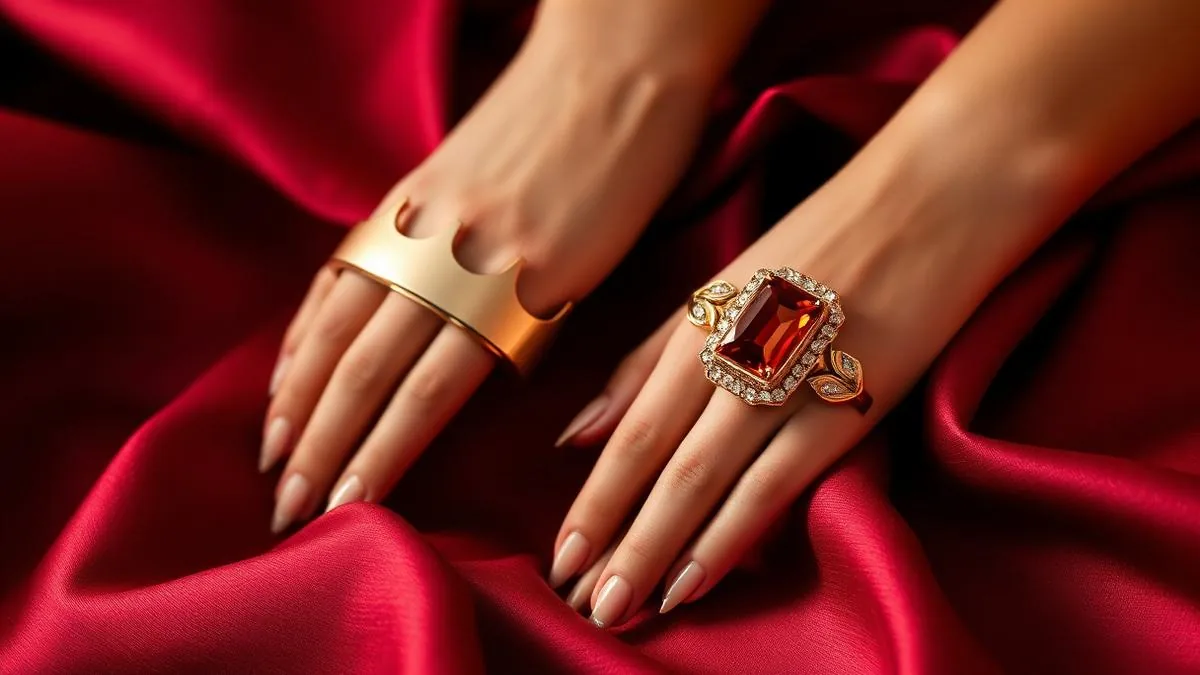
1970s jewelry is textured, organic and heavy, with bark and Florentine gold finishes, large cabochon stones and substantial curb and gourmette chains. 1980s jewelry gets louder and more architectural, with outsized earrings, bold geometric gold and strong designer signatures. By the usual trade definition of roughly twenty to thirty years old or more, pieces from both decades are genuinely vintage today, and signed designer work from this period is an active and growing collecting category.
The 1970s and 1980s are the youngest decades most people think of as vintage, and they are often underestimated because they are still within living memory. In jewelry terms they represent a real and distinct design shift, away from the delicate mid-century solitaire and toward bold, wearable, sculptural gold.
The two decades share a family resemblance, chunky gold, strong texture, real presence, but they read differently once you know what to look for. The 1970s lean earthy and organic; the 1980s lean architectural and loud.
Shop the pieces: 1970s, curated and available now.
How the era is dated
Trade convention generally treats anything roughly twenty years old or more as vintage, so both decades comfortably qualify today, and pieces from the earlier 1970s are approaching fifty five years old. Neither decade is antique in the formal sense, since that term is usually reserved for items at least 100 years old.
Dating within the period relies mostly on style and construction rather than hallmark date letters, since American gold jewelry of this era rarely carries a date mark, though European pieces sold into the US market often carry a karat and country of origin mark that helps narrow their source.
Materials and metals
Yellow gold dominates through both decades, typically 14K in American pieces and 18K in European pieces, often left in a warmer, less brightly polished finish than later jewelry. White gold and platinum are less common outside fine diamond jewelry.
Costume and designer-signed pieces in gold-plated base metal, alongside genuine gold, both belong to this period and both have real collecting interest, provided the metal content is described accurately, which is something we always verify and disclose.
“These are the newest pieces we handle, and the ones where a signature moves the price more than the gold weight does.”
Construction and finishes
1970s gold favors textured surfaces: bark finish, hammered finish, and Florentine engraving, a fine hand-cut crosshatch that gives a soft matte shimmer rather than a mirror polish. Chains are substantial, curb and gourmette links in particular, and cabochon-cut colored stones, turquoise, coral, lapis and amethyst among them, are set into heavy gold mounts.
1980s design turns more geometric and architectural, with clean planes, bold scale and a shift toward statement earrings as the era's defining piece, from large hoops to sculptural clip and post drop earrings. Two-tone gold, mixing yellow with white, and the first wave of bold, oversized designer costume jewelry both belong here.
Motifs and typical stones
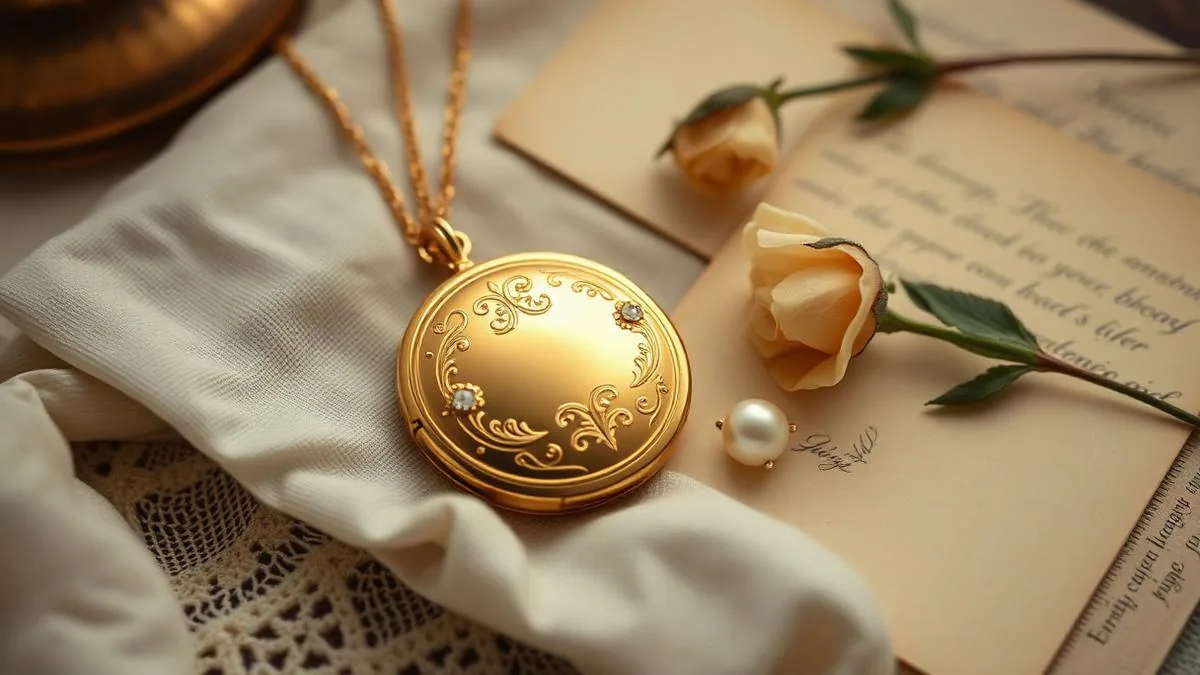
Nature-inspired but simplified forms, leaves, ropes, coins and knots, run through the 1970s, alongside a strong interest in ethnic and global motifs drawing on Middle Eastern, Indian and African design, reflecting the decade's broader fashion trends.
The 1980s bring bold color combinations, strong geometric shapes, and a taste for maximalist scale, oversized hoops, wide cuffs and multi-strand necklaces, along with a new visibility for signed designer costume jewelry as a category worth collecting in its own right.
- Bark, hammered and Florentine textured gold finishes
- Curb and gourmette link chains, often worn substantial and long
- Cabochon turquoise, coral, lapis and amethyst in heavy gold mounts
- Oversized statement earrings, a defining 1980s form
- Signed designer pieces from major fashion and jewelry houses of the period
Telling period pieces from later reproductions
Because this period is recent enough to be widely reproduced and reissued, checking construction matters as much as checking style. Genuine period gold typically shows real weight and hand or vintage-machine finishing consistent with its age, while a modern reissue in a similar style often feels lighter, with crisper, more uniform casting than a piece actually fifty years old.
For designer-signed pieces, the signature itself, its placement, font and stamping method, is often the clearest authentication point, since major houses changed their marks over time in documented ways. We verify signatures and construction together rather than relying on a signature alone.
Condition and wearability
Gold from this period is generally robust and very wearable day to day, since it was designed for an active, less precious approach to jewelry than earlier eras. Cabochon stones can chip at the edges with hard wear, and heavy chains should have their clasps checked periodically, since a clasp under constant load is often the first part to fail.
Costume and gold-plated pieces need gentler handling than solid gold, since plating wears thinner with repeated contact against skin, clothing and other jewelry.
Buying notes for US buyers
Ask whether a piece is solid gold, gold filled or gold plated, since all three exist from this period and the difference matters for both value and care. For designer-signed pieces, ask for a clear photograph of the mark itself, since that is usually the single most useful authentication detail.
We test and disclose metal content on every piece before listing, and every item comes with a detailed valuation and authenticity report prepared by our gemologist, a GIA Graduate Gemologist (GG), where gemstones are involved. US orders ship free and insured with duties included, and we offer 30-day returns with free insured US return shipping if a piece is not right.
Frequently asked questions
- Is 1970s and 1980s jewelry really vintage?
- Yes, by the common trade definition of roughly twenty years old or more, though it is not antique, a term generally reserved for items at least 100 years old.
- What is a Florentine finish?
- A hand-engraved crosshatch texture cut into the gold surface, giving a soft matte shimmer rather than a mirror polish. It is common on 1970s gold jewelry.
- How can I tell 1970s jewelry from 1980s jewelry?
- 1970s pieces tend to be organic and textured, with bark finishes and cabochon stones in heavy chains. 1980s pieces trend more geometric and architectural, with bold statement earrings and larger scale overall.
- Are signed designer pieces from this era worth more?
- Signed designer costume and fine jewelry from the 1970s and 1980s is an active collecting category, and an authenticated signature can add real interest and demand compared with an unsigned equivalent.
- How do I know if a piece is solid gold or gold plated?
- Look for a karat stamp such as 14K or 18K for solid gold, or markings like GF for gold filled and GP for gold plated. When in doubt, ask the seller for verified metal testing rather than relying on appearance alone.
- Can I wear 1970s and 1980s gold jewelry every day?
- Generally yes. Gold from this period was designed for regular wear and is typically robust, though cabochon stones and clasps benefit from periodic checking.
Written by our estate jewelry team and reviewed by our in-house gemologist, a GIA Graduate Gemologist (GG). We have been buying and selling European antique jewelry since 1973.
From the reading to the piece
Shop 1970s jewelry
Each piece is one of a kind and sells once, so this collection changes constantly.
View 1970sRelated guides
Keep reading
eras
Mid-century jewelry guide, 1950 to 1970
Textured gold, clean solitaires and the first modern brilliants.
metals
Solid gold vs gold-filled, vermeil and plated
Four things sold as gold, with very different amounts of gold in them.
gemstones
Turquoise, stabilized and otherwise
Porous, personal, and a stone that changes with the person wearing it.