Authenticity & care
How to read French gold and silver hallmarks
The eagle's head, the boar, the owl, and what French hallmarks can and cannot tell you.
Written by our in-house jewelry team · Updated August 7, 2026 · 8 min read
In short
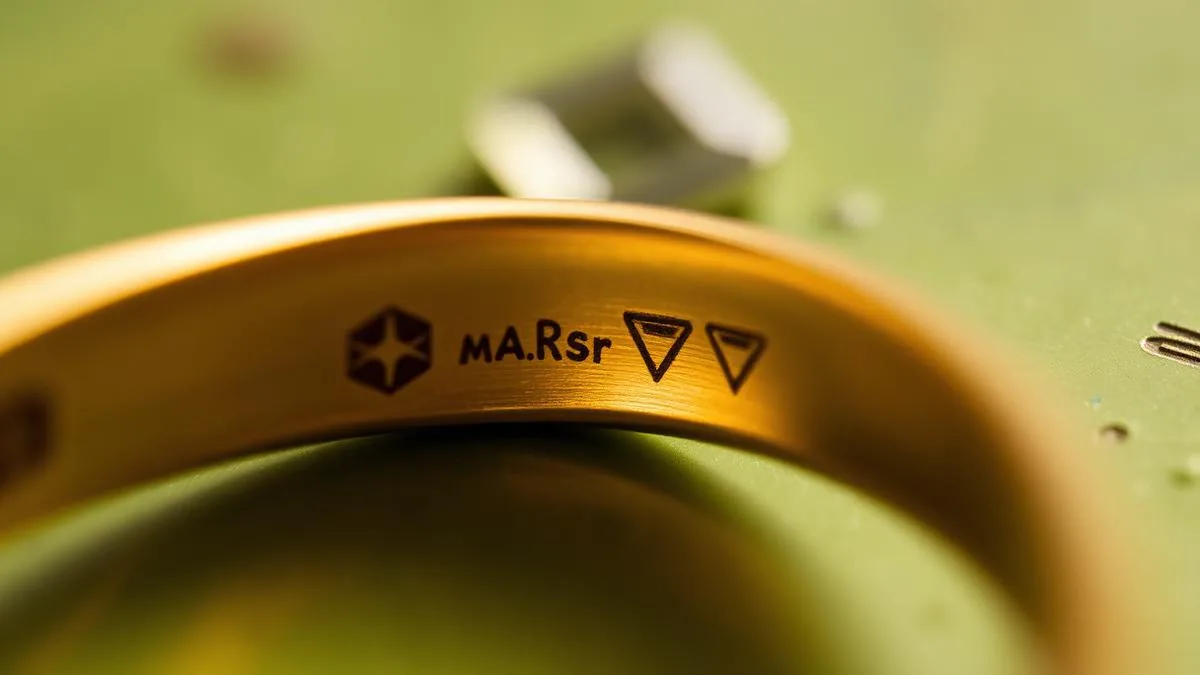
French gold jewelry is stamped with a small punched mark shaped like an eagle's head for 18K gold, alongside a separate maker's mark in a lozenge shape unique to the workshop that made or retailed it. Silver carries a Minerva head for sterling-grade pieces. These marks confirm the metal standard and, when legible, the workshop, but they do not by themselves date a piece or prove who designed it.
France has run a compulsory hallmarking system for precious metals since the early nineteenth century, and it is one of the most consistent in Europe. That consistency is why French gold is so reliable for an American buyer: an eagle's head is a government guarantee of fineness, not a marketing claim.
Reading a French hallmark well means treating it as one input among several, not a verdict. We look at the standard mark, the maker's mark, the way the piece is made, and its wear pattern together, and we explain in every listing what the marks actually show.
Shop the pieces: Art Deco, curated and available now.
The standard marks: what the animal tells you
French precious metal marks use small stamped animal or head symbols rather than words, a system that dates back to guild practice long before it was standardized nationally. For gold, the eagle's head mark indicates 18K (750 thousandths fine), which has been the dominant French gold standard for jewelry for well over a century. An owl mark is used for imported gold items assayed in France, and a scallop shell or other secondary marks appear on smaller gold items such as clasps or findings.
For silver, the Minerva head is the mark most collectors recognize, used for sterling-grade French silver. Numbers stamped near the mark, such as 1 or 2, indicate the fineness grade rather than a date. A boar's head is used on lower-grade silver in some periods and contexts, so the presence of an animal mark alone tells you the metal was assayed in France, and the specific animal tells you the standard, not the year.
These marks are punched, not engraved, and were applied by an assay office rather than by the maker. A crisp, evenly struck mark sitting flush in the metal is a good sign. A mark that looks scratched, added freehand, or sits oddly compared to the rest of the piece deserves a closer look.
- Eagle's head: 18K gold made in France
- Owl: imported gold assayed and marked in France
- Minerva head: sterling-grade French silver
- Boar's head: a lower silver standard used in some periods
The maker's mark, or poinçon
Alongside the state standard mark, French law has long required a maker's or responsibility mark, called a poinçon de maître, struck in a small lozenge shape with the maker's initials and a symbol chosen when the workshop registered with the assay authority. This mark identifies the workshop or retailer responsible for the piece at the time it was made, in the way a hallmark identifies the assay office.
On signed pieces from a known house, the poinçon and the engraved or stamped signature usually appear together, and reading both in order, standard mark first and then maker's mark, is the correct way to work through a French hallmark set. On unsigned workshop jewelry, the poinçon may be the only maker information the piece carries, and it is often too worn or too generic to trace to a specific named workshop with confidence. We describe what is legible and avoid guessing at an attribution the mark cannot support.
Reading the marks in order, and what dating them requires
A practical approach is to find the standard mark first, since it tells you what metal and fineness you are dealing with, then look for the maker's lozenge nearby, usually on the same component such as the inside of a ring shank or the back of a brooch pin. Import or retailer marks, when present, sit separately and indicate a piece that entered France, or entered another market, after being made or partly made elsewhere.
French hallmarks confirm metal content and, where legible, a responsible workshop. They do not carry an encoded date, unlike the British system's date letter. Dating a French piece to a specific decade relies on construction, style, findings, and sometimes a design register or maker history, not on the hallmark itself, so we date by the whole piece and say so plainly rather than implying the hallmark does that work.
Common pitfalls
Worn marks are the most frequent problem. A century of wear, repeated cleaning, or a past repair can blur a hallmark until only the standard mark's rough outline remains, with the maker's lozenge illegible. That is normal on genuinely old jewelry and is not itself a red flag.
Watch for marks that sit on a soldered patch or an obviously replacement section, such as a new ring shank grafted onto an old head, since the mark may then reflect a later repair rather than the original manufacture. Import pieces can also carry two mark sets from two countries, which is expected and not a sign of anything wrong, but it does mean the marks describe a more complicated history than a single workshop.
- A single worn mark with no visible maker's lozenge is common and not automatically suspicious
- A hallmark on an obvious repair or replacement part reflects that repair, not the original piece
- Two nationalities of mark on one piece usually means it was made in one country and later assayed or sold in another
What French hallmarks cannot tell you
A hallmark confirms metal fineness and, where legible, responsibility for the assay. It cannot confirm the design year, the identity of a specific designer within a workshop, or that a gemstone set in the piece is natural, treated, or original to the mount. Those judgments come from construction analysis and gemological testing, which is why our in-house gemologist, a GIA Graduate Gemologist (GG), examines every piece beyond simply reading its marks.
Frequently asked questions
- What does the eagle's head mark mean on French jewelry?
- It marks the item as 18K gold, the main French gold standard, assayed and guaranteed as 750 thousandths fine.
- Do French hallmarks tell you the year a piece was made?
- No. French standard marks confirm the metal fineness, not a date. Dating relies on the piece's construction and style rather than on the hallmark itself.
- What is a poinçon de maître?
- It is the maker's or responsibility mark, a small lozenge with initials and a chosen symbol, registered by a workshop or retailer with the French assay authority.
- Is a worn or partly illegible French hallmark a sign of a fake?
- Not on its own. Genuine antique hallmarks wear down with a century of handling and cleaning. We assess the whole piece, not the mark alone.
- Can a French hallmark prove a piece is by a specific named designer?
- Only when a full signature and maker's mark are present and legible together. A hallmark by itself identifies a workshop's registered mark, not an individual designer's hand.
Written by our estate jewelry team and reviewed by our in-house gemologist, a GIA Graduate Gemologist (GG). We have been buying and selling European antique jewelry since 1973.
From the reading to the piece
Shop French Art Deco pieces
Each piece is one of a kind and sells once, so this collection changes constantly.
View art decoRelated guides
Keep reading
authenticity
How to tell if vintage jewelry is real
Genuine period jewelry usually agrees with itself. Reproductions rarely do.
authenticity
How Cartier marks its jewelry, and how we verify it
Signatures, serial numbers and why marks alone never settle authenticity.
metals
White gold vs yellow gold vs rose gold in vintage jewelry
What gives gold its color, and what each color tells you about a piece's age.