Authenticity & care
How Tiffany & Co marks its jewelry, and how we verify it
Signatures, silver marks and why we verify attribution beyond the stamp.
Written by our in-house jewelry team · Updated August 7, 2026 · 7 min read
In short
Tiffany and Co jewelry is generally marked with the company name, often with additional wording indicating the metal content, and silver pieces frequently carry the sterling standard alongside a pattern or design name. As with any prestige signature, a Tiffany mark can be counterfeited, so we verify attribution through construction, materials and hallmark consistency rather than relying on the stamp alone, and we support verification through the house or an independent specialist for significant pieces.
Tiffany and Co has marked its jewelry and silver consistently for a very long history, and its stamps are generally clear and legible compared with some smaller workshop marks. That clarity is genuinely useful, but it has also made the Tiffany name one of the most frequently counterfeited in jewelry.
As with Cartier, we approach Tiffany attribution carefully. We describe what a mark actually shows, and we do not fill in gaps with specific dates or production details we cannot verify.
Shop the pieces: Tiffany & Co., curated and available now.
The signature and metal marks
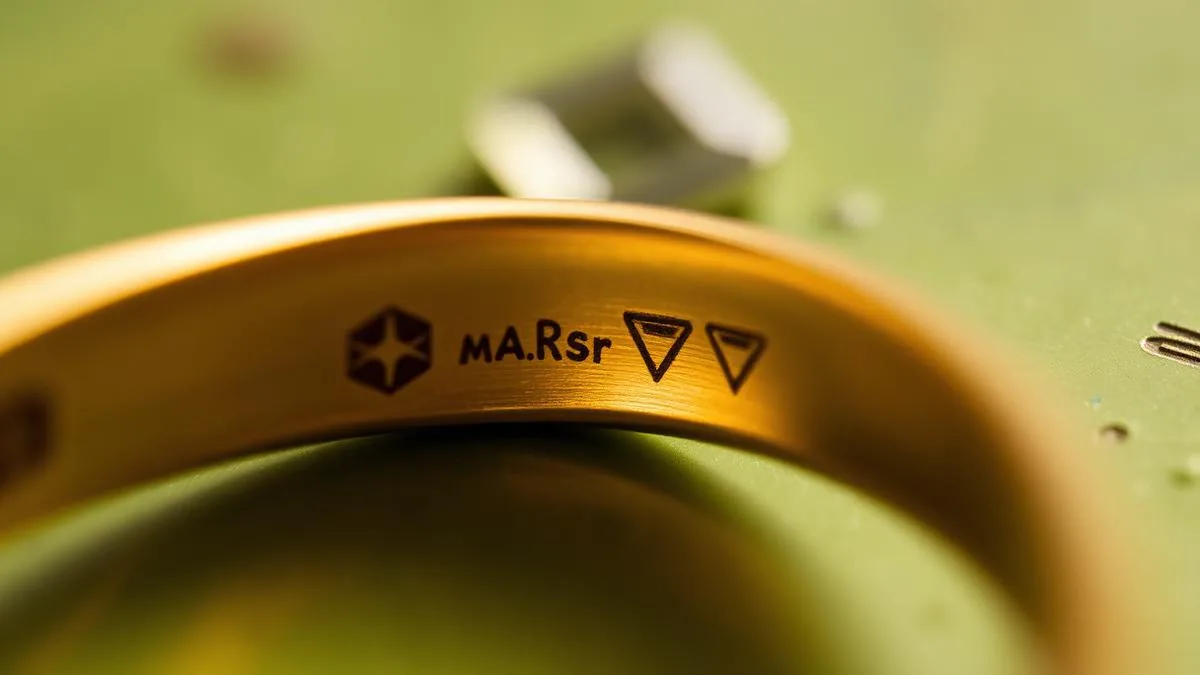
Tiffany jewelry is typically stamped with the company name, and gold pieces generally carry an accompanying karat or fineness indication consistent with the market the piece was sold into, for example a karat stamp for the US market. Tiffany silver has a long tradition of being marked with the word sterling or an equivalent fineness indication, often alongside a pattern name for flatware and hollowware, and sometimes with additional production or order numbers used internally by the company.
Because Tiffany has operated for well over a century, the exact wording, typeface and placement of its marks has changed over that time, and older pieces can look different from more recent ones while both being entirely genuine. A plausible-looking mark from an unfamiliar period is not itself evidence against authenticity, but it is a reason to examine the piece more carefully rather than to accept the mark on its own.
Numbers and internal records
Some Tiffany pieces carry additional stamped numbers relating to the company's own design or production records. As with Cartier, we do not publish a public lookup chart for these numbers, since accurate interpretation depends on access to Tiffany's own archival records or specialist knowledge we would not claim to substitute for.
When such numbers are present and legible, we treat them as useful supporting information to record and, where a client wants a fuller history, as a starting point for a specialist or the company to investigate, rather than as something we would use to assert a specific year or production detail ourselves.
Why we verify beyond the mark
A stamped name is straightforward to copy, and the volume of counterfeit Tiffany jewelry and silver in the secondary market means a mark on its own is not sufficient evidence of authenticity for anything but the most casual purpose. Genuine assessment looks at the quality and consistency of the stamping itself, the construction methods and findings typical of the claimed period, the gemstones and settings where relevant, and whether the overall piece matches known Tiffany practice for its type and era.
For higher-value pieces, particularly signed gemstone jewelry rather than mass-produced silver, we consider verification through the house or through an independent specialist with direct expertise in Tiffany jewelry to be the appropriate next step, and we support customers who want that additional verification rather than treating our own review as the final word.

How we describe Tiffany pieces
Our in-house gemologist examines the mark, construction and materials together as part of a full valuation and authenticity report before we describe any piece as Tiffany, and we say plainly when a mark is worn, partial, or otherwise not fully conclusive, rather than rounding up to a confident attribution the evidence does not support.
Frequently asked questions
- Is a Tiffany stamp enough to prove a piece is genuine?
- No. Tiffany is one of the most counterfeited names in jewelry, so we treat a stamp as a starting point and verify through construction, materials and hallmark consistency, with specialist or house verification recommended for significant pieces.
- What does sterling mean on a Tiffany silver mark?
- It indicates the sterling silver fineness standard, 925 thousandths pure silver, which Tiffany has used consistently alongside its name on silver items.
- Do older Tiffany marks look different from newer ones?
- Yes, wording, typeface and placement have changed over Tiffany's long history, so an unfamiliar older mark is not itself a sign of a problem, though it warrants careful examination like any mark.
- How do you confirm a piece is genuinely Tiffany before selling it?
- Our gemologist reviews the mark, construction, findings and materials together, and for significant pieces we support further verification through the house or an independent specialist.
Written by our estate jewelry team and reviewed by our in-house gemologist, a GIA Graduate Gemologist (GG). We have been buying and selling European antique jewelry since 1973.
The house
Tiffany & Co.
Tiffany & Co. was founded in New York in 1837 by Charles Lewis Tiffany and became the defining American jewelry house of the nineteenth and twentieth centuries. It adopted the 925 sterling silver standard in 1851, well before it was law in the United States, introduced the six prong Tiffany setting in 1886, and its later work is closely identified with the designers Jean Schlumberger, Elsa Peretti and Paloma Picasso.
Read the Tiffany & Co. guideFrom the reading to the piece
Shop signed Tiffany & Co.
Each piece is one of a kind and sells once, so this collection changes constantly.
View tiffany & co.Related guides
Keep reading
authenticity
How Cartier marks its jewelry, and how we verify it
Signatures, serial numbers and why marks alone never settle authenticity.
authenticity
How to tell if vintage jewelry is real
Genuine period jewelry usually agrees with itself. Reproductions rarely do.
metals
Silver and platinum in vintage and antique jewelry
Why platinum defined an era, how sterling silver is used, and how to tell them apart.