Gemstones & cuts
Aquamarine, and the case for a big stone
Emerald's clean-living cousin: big, bright and surprisingly affordable.
Written by our in-house jewelry team · Updated August 1, 2026 · 5 min read
In short
Aquamarine is the blue variety of beryl, the same mineral family as emerald, at 7.5 to 8 on the Mohs scale but far cleaner and tougher because it lacks emerald's dense inclusions. Heat treatment to remove a greenish tone is routine and stable. It gives real presence on the hand for a fraction of the cost of comparable sapphire.
Aquamarine is the stone of Retro and mid-century cocktail rings, precisely because it comes out of the ground in large, clean crystals.
Shop the pieces: Aquamarine, curated and available now.
The essentials
The blue side of beryl, typically clean, typically available in sizes that would be unthinkable in sapphire.
Species and group: Beryl (beryllium aluminum silicate). Mohs hardness: 7.5 to 8. Typical colors: Pale sky blue to deeper blue, sometimes with a green secondary tone.
- Usually eye-clean, unlike emerald, and available in large sizes
- Distinctly dichroic: color can look stronger down the length of the stone
- Commonly cut as emerald cuts and elongated step cuts to show the color
- Hardness suits daily wear, though the stone can chip at sharp corners
Heat, and the green you no longer see
Most aquamarine leaves the ground with a green cast and is heated to remove it. In older jewelry you sometimes meet the untreated green-blue original, which is worth recognizing.
Our gemologist examines every stone before a piece is listed, and the description states what is known and what cannot be determined without a laboratory report.
- Heat treatment to remove a yellow-green component: routine, stable and accepted
- Irradiation is used on some beryls but is uncommon for aquamarine
- Blue synthetic spinel and blue topaz are frequently mistaken for or sold as aquamarine
- Glass imitations appear in costume jewelry and are identified by bubbles and warmth to the touch
Judging color and clarity
With aquamarine, tone does almost all the work. A large pale stone and a smaller saturated one are not competing for the same buyer.
- Aquamarine's blue is typically softer and greyer than the electric blue of treated topaz
- Turn the stone: aquamarine's dichroism produces a visible change in depth of color
- Blue glass shows swirls or bubbles and feels warm quickly in the hand
- Natural stones often show fine liquid or hollow tube inclusions
Deco geometry and Retro scale
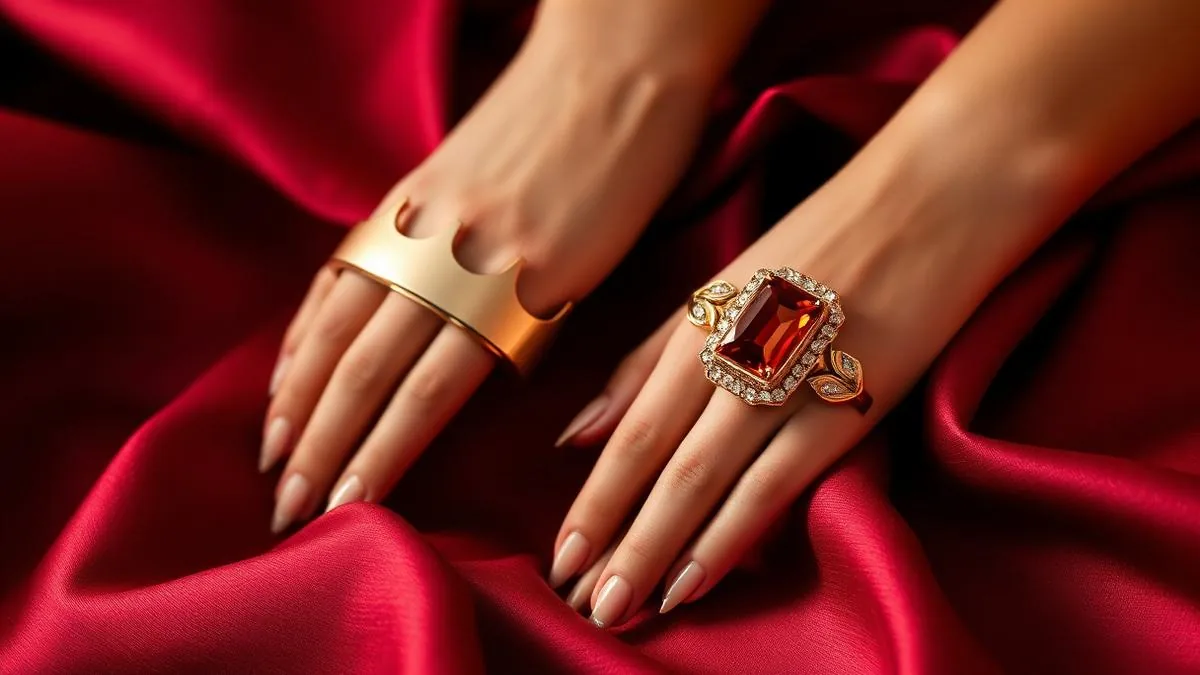
Aquamarine became a signature of the Retro period from the late 1930s, cut into big rectangular steps and set in rose or yellow gold, then continued into mid-century cocktail rings.
Edwardian jewelers used smaller stones with platinum and diamonds, where the pale blue reads almost as a colorless accent.
Frequently asked questions
- Is aquamarine the same as blue topaz?
- No, they are different minerals. Blue topaz is usually irradiated to a stronger blue and is generally less expensive.
- Why is my aquamarine so pale?
- Deeper blue is rarer and priced accordingly. Larger stones can look more saturated simply because there is more material for light to travel through.
- Can I wear an aquamarine ring every day?
- Yes, with a setting that protects the corners. Avoid knocks against hard surfaces, as with any step-cut stone.
Written by our estate jewelry team and reviewed by our in-house gemologist, a GIA Graduate Gemologist (GG). We have been buying and selling European antique jewelry since 1973.
From the reading to the piece
Shop aquamarine jewelry
Each piece is one of a kind and sells once, so this collection changes constantly.
View aquamarineRelated guides
Keep reading
eras
Retro jewelry guide, 1935 to 1950
Rose gold, sculpted volume and big colored stones, born out of wartime scarcity.
gemstones
Emerald, and what a century of oil does to it
The most beautiful and the most fragile of the big four.
gemstones
Amethyst, from royal stone to Victorian staple
Once as costly as ruby, now the most generous purple in the case.