Gemstones & cuts
Single cut diamonds explained
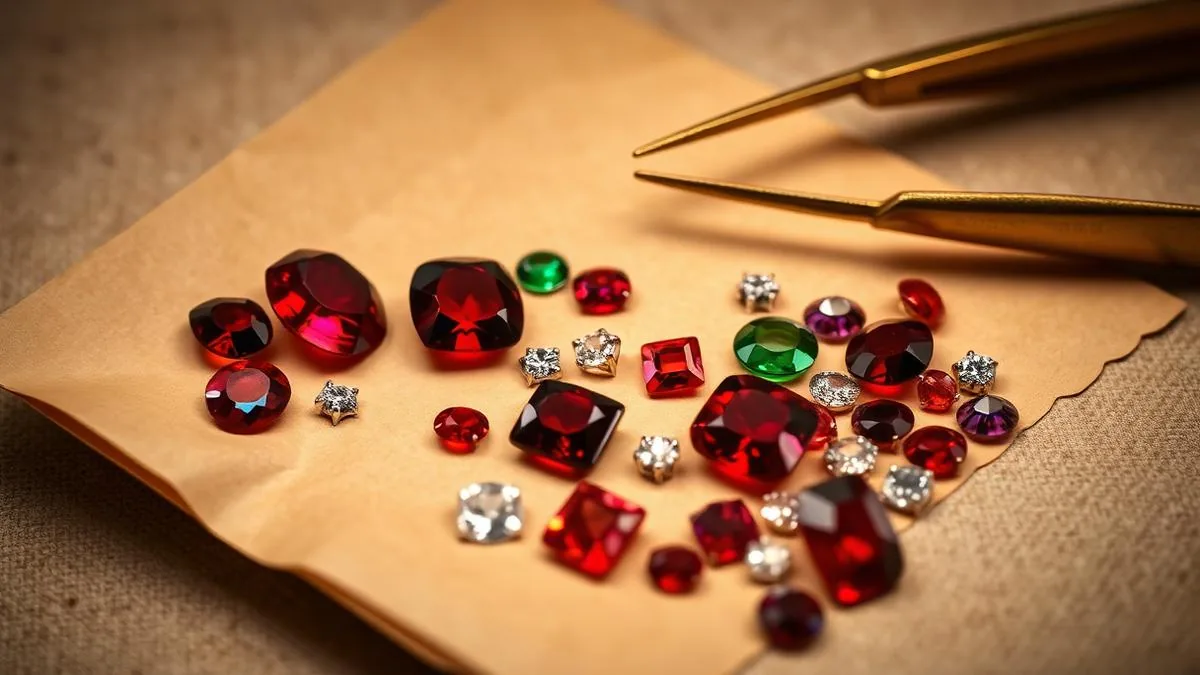
Eight facets around the crown, used for the smallest accent stones in old and new jewelry alike.
Written by our in-house jewelry team · Updated August 7, 2026 · 6 min read
In short
A single cut diamond has around 17 or 18 facets rather than the 57 or 58 of a brilliant. Small single cuts were used in huge numbers as accent stones in Edwardian and Art Deco jewelry, where their crisp, quiet twinkle is a legitimate period feature — not a sign of a lesser piece.
Not every diamond in a piece of jewelry is meant to carry the show. The single cut is the small supporting player: a simplified facet pattern used almost entirely for very small accent stones, both in antique work and in fine jewelry made today.
It rarely gets discussed on its own, but recognizing it helps you understand why a cluster of tiny diamonds around a center stone can look quite different from the center stone itself.
Shop the pieces: Diamond, curated and available now.
What the single cut is
A single cut diamond has a simplified brilliant-style facet arrangement, generally eight facets around the crown plus the table, and a matching simplified arrangement on the pavilion, for a much lower total facet count than a full modern round brilliant. The earliest single cuts, sometimes called eight-cuts, are even simpler still.
It is round in outline like a full brilliant, but the reduced facet count is a practical response to size: cutting a full complement of fine facets onto a very small stone yields diminishing returns, since facets that small are difficult to cut cleanly and difficult for the eye to resolve individually anyway.
When and where it is used
Single cuts appear throughout the history of diamond cutting wherever very small stones were needed, and remain in routine use today for the tiny pave and accent diamonds surrounding a larger center stone. You will meet older single cuts in Edwardian, Art Deco and mid-century jewelry, often bordering an old European, transitional or modern brilliant centerpiece.
The presence of single cut accents does not itself date a piece precisely, since the style has been used continuously, but the quality and regularity of the cutting, along with the era of the center stone and the mount, help place it.
How to recognize one
Under magnification, count the facets around the crown. A full modern brilliant has considerably more facets in that ring than a single cut's typical eight, giving the single cut a visibly simpler, more geometric pattern when compared side by side.
In antique jewelry, single cut melee often shows the same gentle hand-cut irregularity as its larger old European or old mine cut neighbors: slightly uneven facet sizes and a girdle that varies a little in width. Modern single cuts, by contrast, are typically machine-cut and quite uniform, since they are produced in large, consistent batches for pave and accent work.
- Round outline, simplified facet count relative to a full brilliant
- Roughly eight facets around the crown, sometimes with a simplified pavilion
- Used almost exclusively for very small accent and pave stones
- Antique examples may show hand-cut irregularity; modern ones are typically uniform
How it behaves in light
Because it has fewer facets, a single cut diamond shows less of the fine, sparkling scintillation of a full brilliant, and instead reads as small, simpler flashes of brightness. At the very small sizes where it is used, this difference is barely noticeable to the naked eye and does not meaningfully affect the overall look of a piece.
Its role is generally supportive rather than a focal point, adding sparkle and texture around a center stone rather than being examined on its own merits the way a solitaire would be.
What drives value
Single cut accent diamonds are valued collectively rather than individually in most jewelry, based on overall color, clarity and consistency across the group, along with how securely and evenly they are set. A well-matched row of single cuts, even in color and free of visible damage, supports the value of the piece as a whole.
Because they are so small, single cuts are rarely graded or certified individually, and their contribution to a piece's value is generally assessed as part of the total design rather than stone by stone.
Grading and certification realities
Individual single cut melee is essentially never independently certified given its size, and grading for pieces set with them is normally a general description of the group, such as an overall color and clarity range, rather than a stone-by-stone report.
This is standard industry practice rather than a shortcut, since the cost and risk of removing and grading dozens of very small stones would far outweigh any benefit to the buyer.
Buying and care notes
When buying a piece with single cut accents, look at consistency across the group: even color, no obviously chipped or cloudy stones, and secure, even setting, rather than trying to evaluate any one stone in isolation.
Because the stones are small and often pave or bead set, have any loose or missing accent stones repaired by a goldsmith promptly, since a missing melee stone can be harder to match invisibly the older and more irregular the surrounding stones are.
Frequently asked questions
- What is the difference between a single cut and a full cut diamond?
- A single cut has a simplified facet pattern, generally around eight facets on the crown, while a full cut brilliant has considerably more facets arranged for maximum light return. Single cuts are used almost exclusively for very small accent stones.
- Are single cut diamonds a sign of an antique piece?
- Not on their own, since single cuts are still made and used today for small pave and accent work. Hand-cut irregularity in the stones, combined with the era of the center stone and the mount, is a better indicator of age.
- Are single cut diamonds lower quality than full brilliants?
- Not in the sense of being flawed. They are a deliberate, practical cutting style suited to very small stones, where a full brilliant's extra facets would add little visible benefit.
- Can single cut diamonds be certified?
- Individually, essentially never, given their small size. Jewelry set with single cut melee is normally described with an overall color and clarity range for the group rather than a per-stone certificate.
Written by our estate jewelry team and reviewed by our in-house gemologist, a GIA Graduate Gemologist (GG). We have been buying and selling European antique jewelry since 1973.
From the reading to the piece
Shop diamond jewelry
Each piece is one of a kind and sells once, so this collection changes constantly.
View diamondRelated guides
Keep reading
gemstones
Old European cut diamonds explained
Rounder than an old mine cut, still cut for candlelight and gaslight, not a spotlight.
gemstones
Modern brilliant cut diamonds explained
The round diamond cut to a formula, built for maximum sparkle under electric light.
gemstones
Diamonds in vintage jewelry
Rose cuts, old mines, transitionals, and how to judge a stone with no certificate.