Styling & how to wear
How to layer vintage necklaces
Spacing, weight and clasp management, so three chains look like one idea.
Written by our in-house jewelry team · Updated August 7, 2026 · 6 min read

In short
Layered necklaces work when the lengths are genuinely different. Leave at least 2 inches between chains, use three lengths rather than two for a fuller look, vary the weight so the chains do not read as identical, and hang the heaviest pendant on the longest chain so it settles below the others. Add a pendant's own drop to the chain length when you plan the spacing.
Layering is the easiest way to wear a collection rather than a piece. It is also, done carelessly, the fastest way to knot two antique chains together.
Shop the pieces: Locket, curated and available now.
Choose the lengths first
The rule of thumb is a 2 inch minimum gap, and more if pendants are involved. A classic three-chain set is something like 16, 18 and 22 inches, but the numbers matter less than the gaps.
Remember that a pendant adds its own drop. A 1.5 inch locket on an 18 inch chain occupies the space of a 19.5 inch chain, and that is what the next layer has to clear.
Vary weight and texture
Three chains of the same gauge look like one chain that has gone wrong. Put a fine cable next to a heavier curb, or a smooth box chain next to a textured rope, and each layer reads separately.
One focal point is enough. A locket, a gem-set pendant or a substantial charm, and then let the other chains be quiet.
Keeping them from tangling
Fasten the shortest chain last and take it off first. Clasp management is most of the battle: gathering all clasps to the same point at the back keeps them turning together instead of winding around each other.
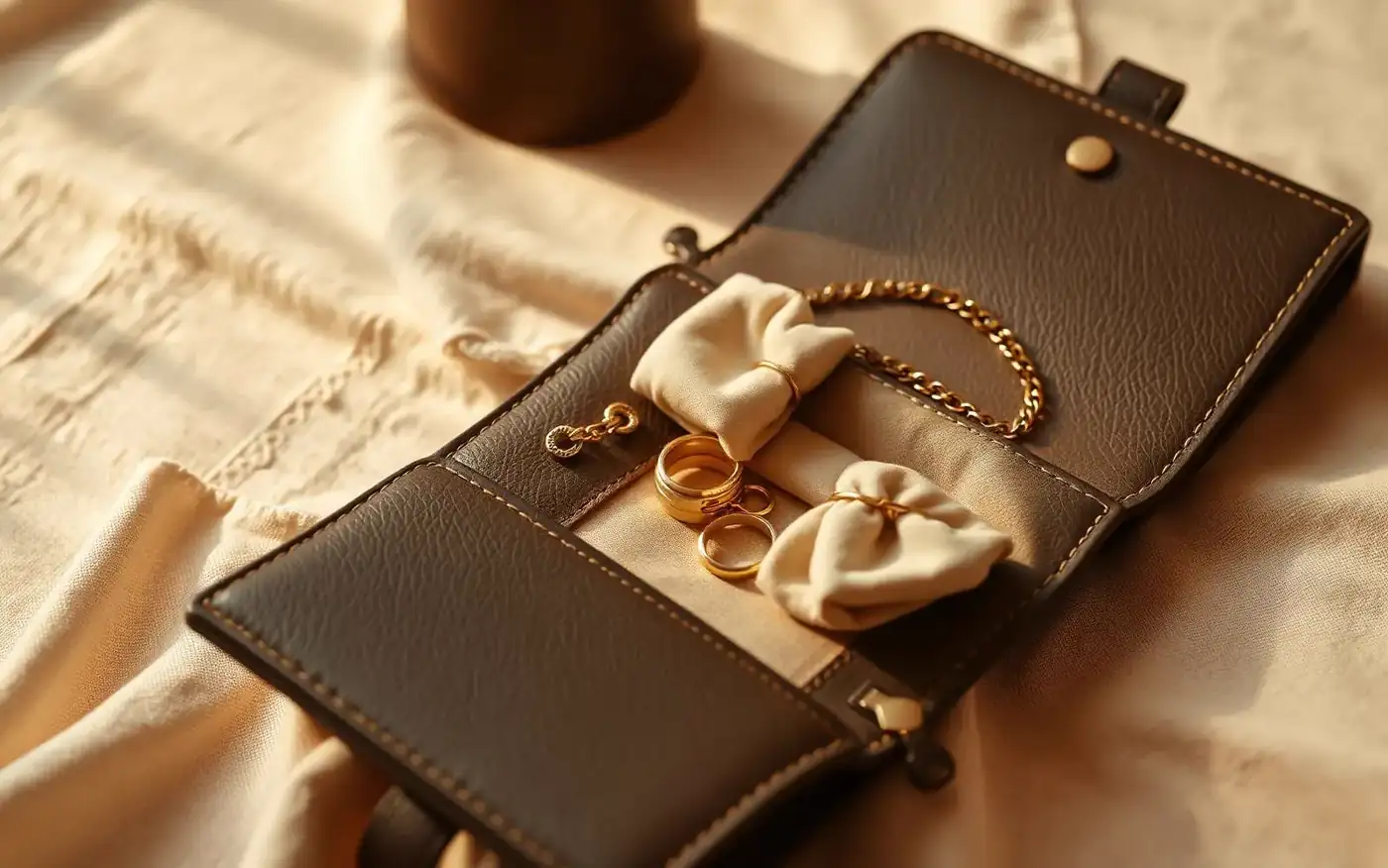
For travel, thread each chain through a drinking straw or a soft tube and fasten the clasp. It looks ridiculous and it works perfectly.
- Minimum 2 inches between chains
- Three lengths reads fuller than two
- Heaviest pendant on the longest chain
- One focal piece per neckline
Necklines and mixing metals
A high neckline supports a single long chain better than a stack. An open collar suits the classic three-length set. A wide boat neck flatters a choker plus one longer chain.
Mixed metals layer well if each metal appears more than once, exactly as with rings. Our guide to mixing gold tones covers this properly.
Frequently asked questions
- What lengths work best for layering?
- Any set with clear gaps. A common starting point is 16, 18 and 22 inches, adjusted upward when pendants add drop.
- How do I stop antique chains from tangling?
- Keep at least 2 inches between lengths, gather the clasps together at the back, and store or travel with each chain fastened and separated rather than loose in a pouch.
Written by our estate jewelry team and reviewed by our in-house gemologist, a GIA Graduate Gemologist (GG). We have been buying and selling European antique jewelry since 1973.
From the reading to the piece
Shop lockets and pendants
Each piece is one of a kind and sells once, so this collection changes constantly.
View locketRelated guides
Keep reading
types
Necklace length guide, with chart
Choker to rope in inches, where each one sits, and how to measure a length you already own.

types
Chain types explained
Cable, curb, Figaro, rope, box, Venetian and anchor, and which links survive daily wear.
styling
Mixing gold tones
Yellow, rose and white together, the way antique jewelers already did it.
how-to
How to store and travel with vintage jewelry
Separate, soft, dry and always in your hand luggage.