How-to & tools
How to store and travel with vintage jewelry
Separate, soft, dry and always in your hand luggage.
Written by our in-house jewelry team · Updated August 1, 2026 · 6 min read
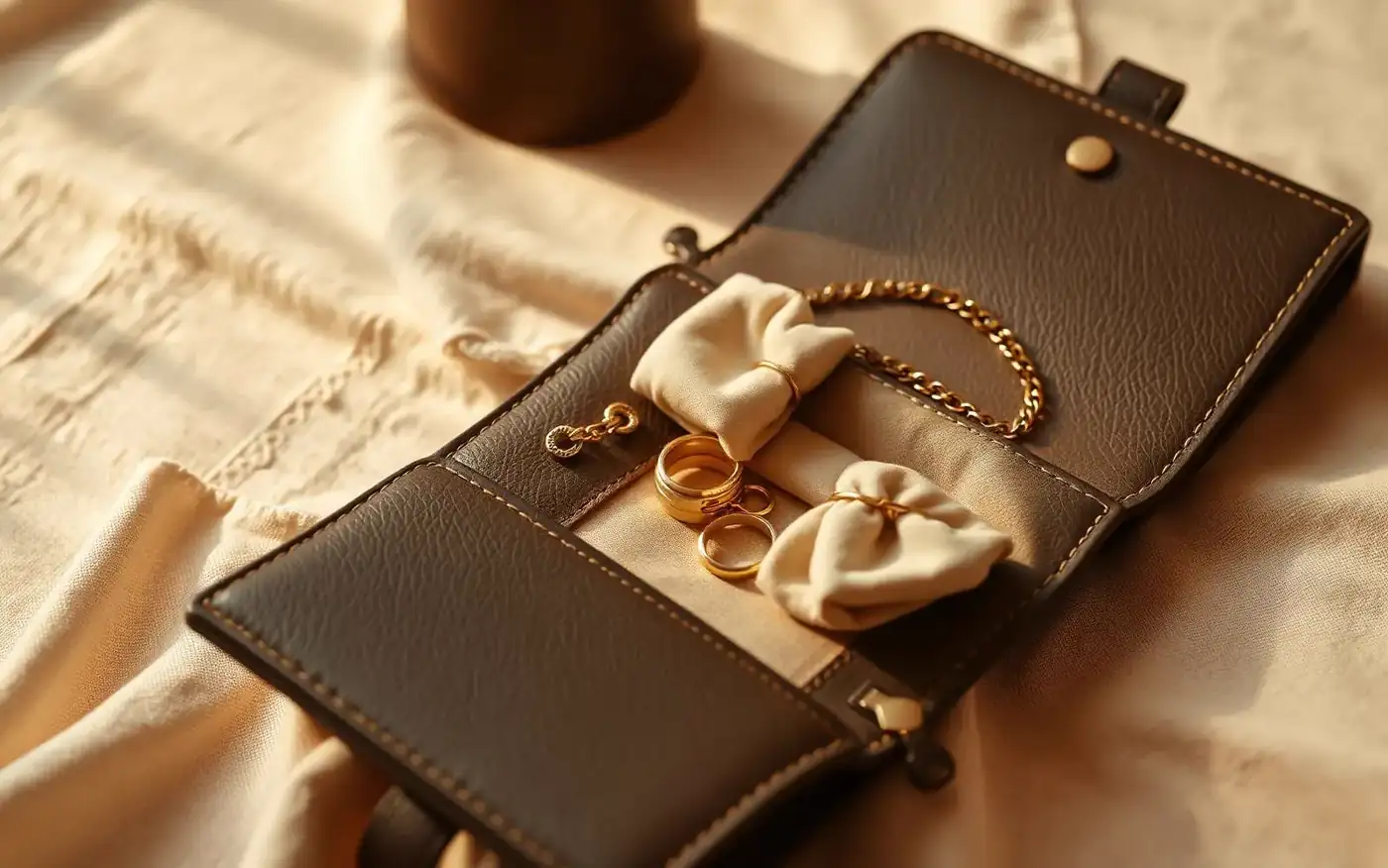
In short
Store pieces separately in soft pouches or a lined box, away from light, heat and damp, with silver kept in anti-tarnish cloth and pearls kept somewhere with normal humidity. When you travel, keep jewelry in your carry-on, use a roll with individual pockets, photograph everything before you leave, and check that your insurance covers pieces away from home.
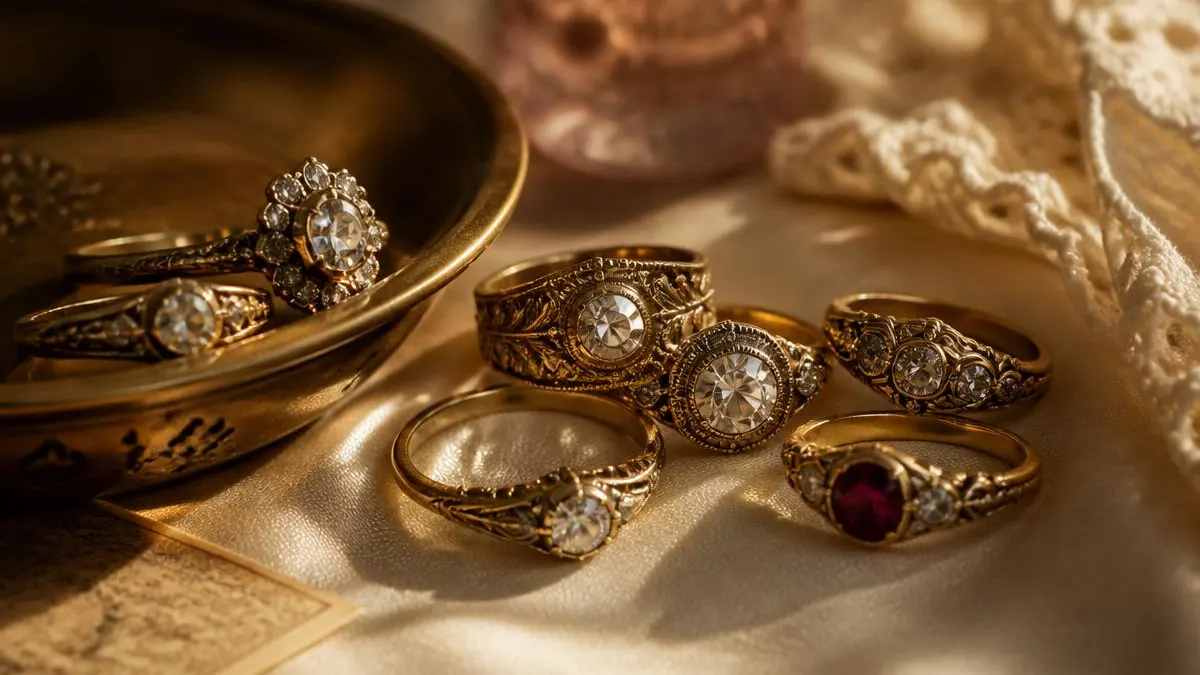
Most scratches on antique jewelry happen in the box, not on the hand. Diamond is far harder than gold, so one loose ring in a drawer will mark everything it touches.
Shop the pieces: Everyday vintage fine jewelry, curated and available now.
Storing at home
Give every piece its own pouch or its own lined compartment. Hang chains rather than coiling them, so they do not kink or knot, and lay heavy necklaces flat.
Keep the box out of direct sunlight and away from radiators and bathrooms. Heat and dry air are the enemies of pearls, opals and emeralds; damp is the enemy of silver, steel pins and any piece with fabric or hair.
- Anti-tarnish strips or cloth for silver and silver-topped gold
- No rubber bands or PVC bags, which release sulfur and blacken silver
- Pearls in a soft pouch, never sealed airtight, and never in a safe-deposit box for years at a time
- Store opals away from strong heat sources, which can dry and craze the stone
Traveling
Jewelry belongs in your hand luggage, always. Checked baggage is excluded from most policies and from airline liability for valuables.
A soft travel roll with individual pockets is worth more than any hard case. Wear the pieces you can, and photograph everything with a ruler in frame before you go.
- Carry a copy of your valuation report or purchase invoice for high-value pieces
- Check whether your policy covers worldwide travel and for how many days
- Take rings off before beaches, pools and hotel gyms, and use the room safe
- For pieces above your policy limit, ask your insurer about a scheduled item rider before you fly
Insurance and documentation
Every piece we sell above our high-value threshold ships with a detailed valuation and authenticity report prepared by our gemologist, a GIA Graduate Gemologist (GG), describing the metal, stones, measurements and condition.
Keep that document and your invoice separately from the jewelry itself, and re-check your coverage every few years, since precious metal and antique diamond values move.
Frequently asked questions
- Is a safe-deposit box a good place for pearls?
- Not for long-term storage. The air is very dry and pearls contain water, so years in a vault can dull or craze them.
- Can I put jewelry through airport security?
- Yes, X-ray scanners do not harm metal or gemstones. Keep the pieces in a tray you can see rather than loose in a bin.
- Do you provide a valuation for insurance?
- We provide a detailed valuation and authenticity report prepared by our in-house gemologist, a GIA Graduate Gemologist (GG). Check with your own insurer which form of documentation they require.
Written by our estate jewelry team and reviewed by our in-house gemologist, a GIA Graduate Gemologist (GG). We have been buying and selling European antique jewelry since 1973.
From the reading to the piece
Everyday vintage jewelry
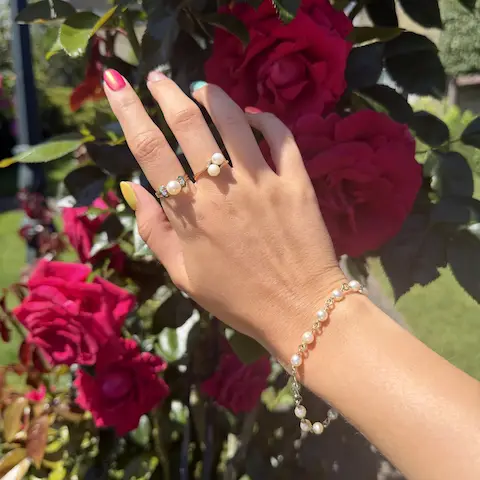
Related guides
Keep reading
how-to
How to clean vintage jewelry at home
Warm water, a soft brush and knowing when to stop.
buying
Jewelry appraisal and insurance in the US
What a valuation report should contain, replacement value versus market value, and how to keep it current.
how-to
Caring for pearls, opals and other soft stones
Last on, first off, and never in an ultrasonic.