Gemstones & cuts
Citrine, and what heat does to amethyst
Sunny, affordable quartz that Retro jewelers turned into cocktail-ring centerpieces.
Written by our in-house jewelry team · Updated August 7, 2026 · 6 min read
In short
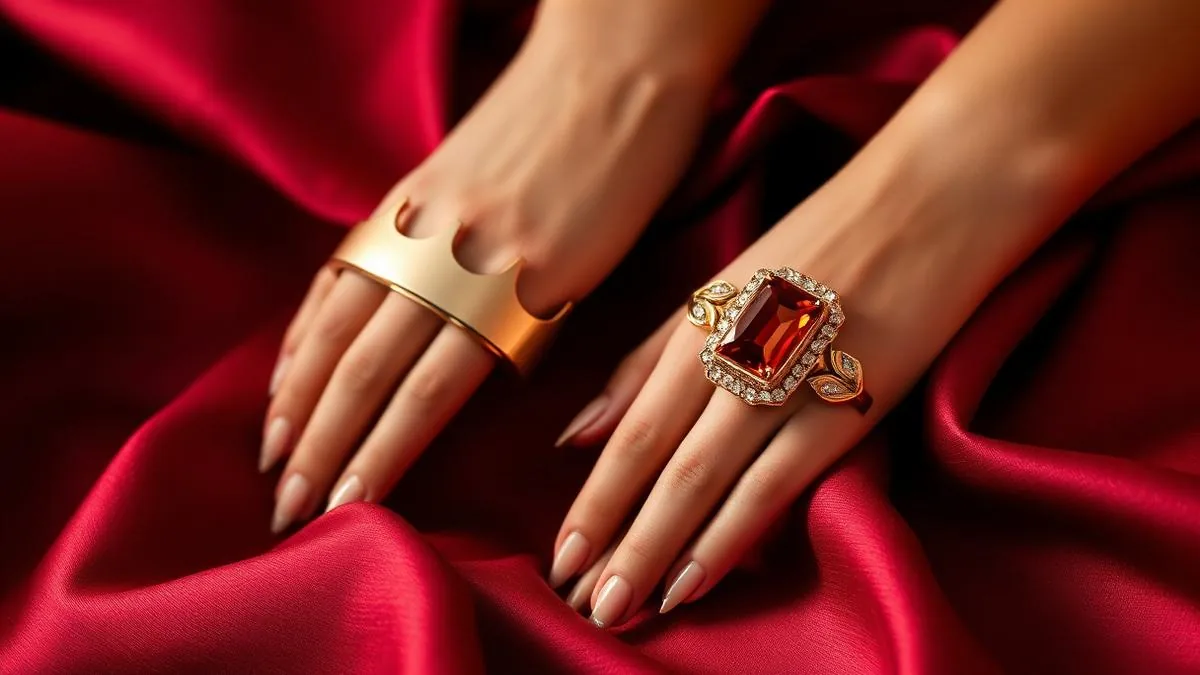
Citrine is the yellow to orange variety of quartz, at 7 on the Mohs scale, tough and stable enough for daily wear. Most citrine on the market, in both vintage and modern jewelry, is produced by heat treating amethyst or smoky quartz, a longstanding and accepted practice, since natural yellow quartz in that depth of color is comparatively rare. It is often confused with topaz, a different and harder mineral, and it was a favorite center stone for large Retro-era cocktail rings in the 1930s and 40s.
Citrine is one of the most approachable colored stones we sell: durable, generally clean, and available in sizes large enough to fill a cocktail ring without an equally large price tag.
It is also one of the most historically confused, having been sold under the topaz name for much of the twentieth century, which is worth untangling before you buy.
Shop the pieces: Retro, curated and available now.
What citrine is
Citrine is a variety of quartz, silicon dioxide, colored yellow to orange by trace iron. It belongs to the same mineral family as amethyst, smoky quartz and rock crystal, and at 7 on the Mohs scale it is durable and resistant to everyday scratching.
Natural, untreated yellow quartz of good color and size is genuinely rare in nature. The great majority of citrine in the trade, including a large share of what appears in antique jewelry, reaches its color through heat treatment.
Color range and what drives it
Citrine ranges from a pale, almost champagne yellow through a warm golden tone to a deep orange-brown sometimes called Madeira citrine, the most highly prized shade in the trade. Color comes from iron impurities within the quartz structure.
Most of this range, and particularly the richer golden and Madeira tones, is produced by heat treating naturally occurring amethyst or smoky quartz. The treatment is stable, permanent and has been standard practice for well over a century, so it should be assumed present rather than treated as a red flag.
- Pale lemon to champagne: lighter natural or lightly treated material
- Golden yellow: the most common commercial tone, typically heat treated
- Madeira, deep orange-brown: the most prized shade, almost always heat treated
- Natural, untreated citrine exists but is uncommon and rarely reaches deep saturation
Clarity, treatments and how they are disclosed
Citrine typically grows with good clarity and eye-clean stones are the norm rather than the exception, so cloudiness or heavy inclusion is worth questioning in a stone sold at a premium.
Beyond heat treatment, citrine is occasionally dyed to intensify or adjust color, a less stable and less desirable treatment that should always be disclosed. It is also frequently confused, in casual selling, with smoky quartz that has simply been described loosely, so a careful seller states the treatment history plainly rather than leaving the word citrine to do all the work.
Durability and care
At 7 on the Mohs scale, citrine holds up well to daily wear and does not require special handling beyond ordinary sense. It has no cleavage plane to worry about, unlike topaz, which makes it a forgiving stone in a ring worn every day.
We still avoid ultrasonic and steam cleaning on antique settings generally, since the risk with old jewelry is usually to the metalwork and claws rather than the stone itself. Warm soapy water and a soft brush clean citrine safely and thoroughly.
Citrine through the eras
Citrine's defining moment is the Retro period, roughly 1935 to 1950, when platinum was restricted and jewelers built large, sculptural gold pieces set with big, affordable colored stones. Citrine, often cut in bold step cuts, filled exactly that role, giving a cocktail ring real visual scale without a diamond-level price.
It also appears earlier, in Georgian and Victorian jewelry, frequently sold under the trade name topaz, a naming habit that continued well into the twentieth century and is the main reason the two stones still get mixed up today.
Citrine versus topaz
The two stones share a similar warm color range but are unrelated minerals with different hardness, 7 for citrine and 8 for topaz, and different value. Because older jewelry and even some older auction catalogs used topaz loosely to describe warm quartz, an antique piece labeled topaz should not be assumed to contain true topaz without a gemologist's confirmation.
A gemologist separates them using refractive index and specific gravity testing rather than color alone, since the visual overlap between a fine citrine and a sherry topaz can be close.
Frequently asked questions
- Is citrine natural or man-made?
- The mineral itself is entirely natural quartz. Most of the color seen in the trade comes from heat treating natural amethyst or smoky quartz, a stable and accepted process rather than a synthetic substitute.
- Why was citrine sold as topaz in old jewelry?
- Citrine and topaz share a similar warm color range, and the topaz name was historically used loosely as a trade term for warm-colored quartz, particularly in the early to mid twentieth century. The two are different minerals.
- Is citrine a good stone for everyday wear?
- Yes. At 7 on the Mohs scale it resists scratching well and has no cleavage plane, making it more forgiving of knocks than topaz of similar hardness.
- How can I tell if a citrine is dyed?
- Dye can pool unevenly in surface-reaching fractures and may fade slightly with prolonged light exposure. A gemologist can confirm this under magnification more reliably than the eye alone.
Written by our estate jewelry team and reviewed by our in-house gemologist, a GIA Graduate Gemologist (GG). We have been buying and selling European antique jewelry since 1973.
From the reading to the piece
Shop Retro citrine jewelry
Each piece is one of a kind and sells once, so this collection changes constantly.
View retroRelated guides
Keep reading
gemstones
Topaz, and the citrine confusion
A hard, affordable stone that spans a colorless imperial glow to London blue.
eras
Retro jewelry guide, 1935 to 1950
Rose gold, sculpted volume and big colored stones, born out of wartime scarcity.
gemstones
Gemstone treatments explained
Heat, oil, fracture filling, diffusion and dye: which are routine, which are serious, and how each is spotted.