Gemstones & cuts
Gemstone treatments explained
Heat, oil, fracture filling, diffusion and dye: which are routine, which are serious, and how each is spotted.
Written by our in-house jewelry team · Updated August 7, 2026 · 9 min read
In short
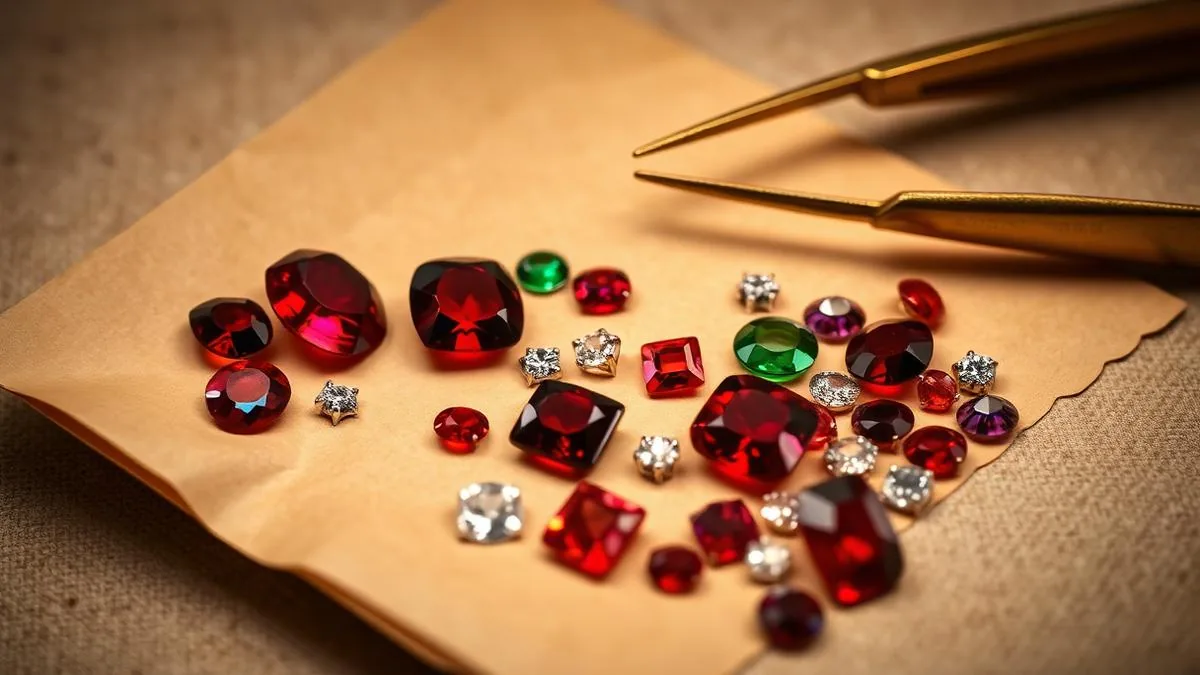
Most colored gemstones sold today, and most that survive in vintage jewelry, have been treated in some way to improve their color or clarity. Heating of sapphire and ruby and oiling of emerald are long established, widely accepted and only modestly affect value when properly disclosed. Fracture filling, lattice diffusion, dyeing and bleaching are more significant treatments, tend to be less durable, and should always lower a stone's value relative to an untreated equivalent of the same visual quality.
Treatment itself is not a problem. An overwhelming majority of colored stones on the market have been treated, and the practice goes back well over a century for some materials. The problem is treatment that is not disclosed, or treatment that is misrepresented as something less significant than it is.
Below is a conservative, stone by stone look at the treatments we see most often, how they are detected, and what each one means for care and for value.
Shop the pieces: Sapphire, curated and available now.
Emerald: oiling and resin filling
Emerald grows with natural surface-reaching fractures in almost every case, and it has been standard practice for centuries to fill those fractures with oil to improve transparency and reduce the visibility of inclusions. Traditional cedarwood oil is the most widely accepted form of this treatment and is considered a normal part of the emerald trade rather than a defect to hide.
Synthetic resins and hardened fillers are a more significant step up, because they are more permanent and can be harder to detect, and their presence should be disclosed as distinct from simple oiling. Any filled emerald, oiled or resin filled, is more fragile than an untreated stone and should never go through an ultrasonic cleaner, a steamer, or contact with solvents such as acetone, all of which can draw out the filler and leave the stone visibly more included.
Diamond: fracture filling and laser drilling
Fracture filling in diamond uses a glass-like substance to fill a surface-reaching break and reduce its visibility, which is a treatment that can be unstable under heat, such as during a repair or resizing, and should always be disclosed. Laser drilling bores a microscopic channel to a dark inclusion so it can be bleached or lightened, leaving a tiny visible tunnel under magnification.
Both treatments are far less common in stones that have been in circulation since before the mid twentieth century, since the techniques are modern, and a diamond found in a genuinely antique setting is far more likely to be untreated. Any diamond suspected of fracture filling or laser drilling should be examined under magnification by a gemologist before a repair that involves heat.
“Treatment is not fraud. Undisclosed treatment is. Every stone we sell is identified before it is listed.”
Sapphire and ruby: heat and diffusion
Heat treatment of sapphire and ruby to improve color and clarity is standard practice across the trade and has been for decades. It is considered permanent, is accepted at every level of the market, and typically has only a modest effect on value compared with an unheated stone of comparable quality, which commands a premium mainly because unheated material is rarer.
Lattice diffusion is a different and more serious matter. It introduces color-causing elements only into the outer skin of a stone under very high heat, so the color does not extend through the body of the gem. A diffused stone can look convincingly saturated while carrying almost none of that color if it were ever repolished, and diffusion should always be disclosed as a distinct and more significant treatment than simple heating.
Turquoise: dyeing, stabilization and irradiation
Natural turquoise is porous and often soft, and a large share of turquoise on the market, vintage and modern, has been stabilized with a colorless resin to harden the material and make it durable enough to set and wear. Stabilization is widely accepted and, disclosed, does not carry the same stigma as more deceptive treatments.
Dyeing turquoise to intensify or alter its color is a more serious treatment, since dye can fade or transfer with contact, and it should always be disclosed separately from stabilization. Irradiation is used on some other gem materials, such as certain diamonds and topaz, to alter color, and where it applies it should likewise be disclosed as a distinct treatment from heating.
Pearl and coral: bleaching and dyeing
Cultured and natural pearls are commonly bleached to even out their base color and are sometimes dyed to achieve colors that do not occur naturally, such as strong black or intense pink, both of which are long established and generally accepted treatments when disclosed. Coral has historically been dyed as well, particularly paler material dyed to resemble the more prized deep red tones, and dyed coral should always be identified as such.
Both bleaching and dyeing can be sensitive to strong light, heat and some cleaning chemicals over time, which is a further reason gentle, conservative cleaning is the right approach for organic gem materials regardless of treatment history.
How treatments are found and disclosed
A trained gemologist identifies most common treatments with a loupe or microscope, looking for characteristic evidence such as flash effects and trapped bubbles in filled fractures, a laser drill hole, an uneven color concentration consistent with diffusion, or dye pooling in a stone's surface-reaching cracks. Independent gem laboratories can confirm more difficult cases with spectroscopy and other instrumental testing.
Our practice is to note any treatment we identify or reasonably infer directly on the product listing, in plain language, rather than folding it into general marketing language. Where a stone's treatment history is genuinely uncertain, we say so rather than asserting either that it is treated or that it is not.
Treatment, care and value
Every treatment described above changes how a stone should be cared for. Filled and oiled stones should avoid ultrasonic cleaners, steamers and solvents. Dyed and bleached materials should avoid prolonged strong light and harsh chemicals. Warm water, a soft brush and a soft cloth are safe for essentially all treated and untreated colored stones alike, and are what we recommend as a default.
On value, the general rule holds across gem types: the more permanent and widely accepted a treatment, the smaller its effect on price relative to an untreated stone of the same visual quality, and the less durable or more deceptive a treatment, the larger the discount should be. An honestly disclosed treated stone at a fair price is a reasonable purchase. An undisclosed one, discovered later, undermines trust in the entire transaction.
Frequently asked questions
- Is a heated sapphire less valuable than an unheated one?
- Yes, generally, but the gap is modest for well matched color and clarity, because heat treatment is standard practice and accepted throughout the trade. Unheated stones with a supporting lab report command a real premium mainly due to their rarity.
- Can I tell if my emerald is oiled just by looking at it?
- Not reliably. Oiling is usually confirmed under magnification by looking for flash effects and residue in surface-reaching fractures, which is why we recommend having any important emerald examined by a gemologist rather than assuming from appearance alone.
- Does dyed turquoise mean the piece is not genuine turquoise?
- No. Dyeing is a treatment applied to genuine turquoise, not a sign of imitation material, though it should always be disclosed since dye can affect durability and value.
- Is fracture filling common in antique diamonds?
- It is uncommon in diamonds that have genuinely been in circulation since before the mid twentieth century, since the technique is modern. It is worth checking on any diamond regardless of claimed age before exposing it to heat during a repair.
- How do you disclose treatments on your listings?
- Where our gemologist, a GIA Graduate Gemologist (GG), identifies or reasonably infers a treatment, we state it plainly on the product listing rather than using vague marketing language, and we say when a stone's treatment history is genuinely uncertain.
Written by our estate jewelry team and reviewed by our in-house gemologist, a GIA Graduate Gemologist (GG). We have been buying and selling European antique jewelry since 1973.
From the reading to the piece
Shop sapphire jewelry
Each piece is one of a kind and sells once, so this collection changes constantly.
View sapphireRelated guides
Keep reading
gemstones
Antique diamond cuts compared
Rose cut, old mine, old European, transitional and modern brilliant, side by side.
authenticity
How to care for your vintage jewelry
Why repolishing can halve the value of a piece that took a century to earn its surface.
buying
How we price our pieces
Materials, maker, era, rarity, condition, provenance and the market together, weighed honestly.