Gemstones & cuts
Garnet is a family, not a stone
A whole family of stones, and the best value in antique jewelry.
Written by our in-house jewelry team · Updated August 1, 2026 · 5 min read
In short
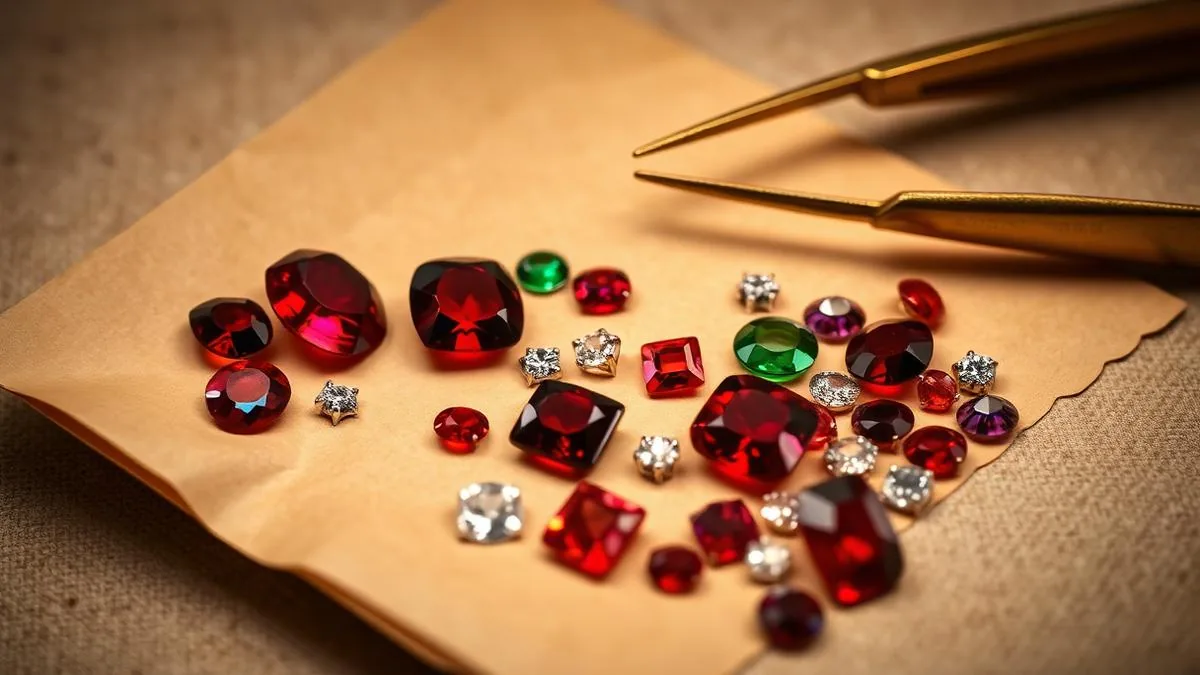
Garnet is not one mineral but a group, ranging from deep red almandine and pyrope through orange spessartine to green tsavorite and demantoid. Hardness runs about 6.5 to 7.5. Garnets are almost never treated, which is unusual among colored stones, and Bohemian pyrope clusters are one of the great bargains in Victorian jewelry.
Say garnet and most people picture a dark red Victorian cluster. That is only one branch of a large family that also includes the brilliant green demantoid the Russians mined in the 1870s.
Shop the pieces: Garnet, curated and available now.
Sorting out the species
Six commercially relevant species share one name, and the difference between them can be a factor of a hundred in price.
Species and group: Garnet group: pyrope, almandine, spessartine, grossular, andradite. Mohs hardness: 6.5 to 7.5 depending on species. Typical colors: Deep red, brownish red, orange, pink, green and, rarely, color-change.
- No cleavage, so garnet is tougher than its hardness alone suggests
- Bohemian pyrope, the classic Victorian garnet, is small, bright and set in dense clusters
- Demantoid garnet has higher dispersion than diamond and often contains horsetail inclusions
- Rhodolite is the purplish-pink variety popular in later Victorian and Edwardian work
Why garnet is usually left alone
Garnet is one of the few colored stones you can generally take at face value, which makes an undisclosed treatment or an outright imitation the thing to watch for instead.
Our gemologist examines every stone before a piece is listed, and the description states what is known and what cannot be determined without a laboratory report.
- Garnet is one of the very few gems that is essentially never treated
- Foil backing in Georgian and early Victorian settings is a construction method, not a stone treatment
- Garnet-topped doublets were used to imitate other stones and are identified on inspection
- Composite or glass imitations are rare but do appear in low-grade costume pieces
Telling one garnet from another
Color alone will not settle it, but color plus context plus a few simple observations usually gets you close enough to ask the right question.
- Red garnet is usually darker and less fiery than ruby and does not fluoresce red
- Under magnification, natural garnet shows crystal or needle inclusions rather than curved growth lines
- Bohemian garnet jewelry typically uses low-karat gilt metal or gold, with hundreds of tiny stones set close together
- Demantoid's horsetail inclusion is diagnostic and considered desirable
Bohemian garnet and the Victorian appetite for red
Garnet is everywhere in nineteenth-century jewelry: Georgian flat-cut and foiled stones, Victorian Bohemian clusters, rose-cut garnet in mourning pieces, and demantoid accents in Edwardian novelty brooches.
Because garnet was never a prestige stone, the pieces survive in quantity and price sensibly, which makes it one of the best places to start collecting real antique jewelry.
Frequently asked questions
- Is garnet always red?
- No. The garnet group covers orange, pink, green and color-change stones. Green demantoid and tsavorite are the most valuable.
- Is Bohemian garnet jewelry valuable?
- It is affordable relative to other antique jewelry, but fine, complete Victorian pieces with all their stones intact are increasingly sought after.
- Can garnet be worn daily?
- In a pendant or earrings, easily. In a ring, expect some abrasion over decades, since it is softer than sapphire or diamond.
Written by our estate jewelry team and reviewed by our in-house gemologist, a GIA Graduate Gemologist (GG). We have been buying and selling European antique jewelry since 1973.
From the reading to the piece
Shop garnet jewelry
Each piece is one of a kind and sells once, so this collection changes constantly.
View garnetRelated guides
Keep reading
eras
Victorian jewelry: a complete guide
1837 to 1901, sixty-four years of jewelry that was made to be worn every day and usually shows it.
gemstones
Gemstone treatments explained
Heat, oil, fracture filling, diffusion and dye: which are routine, which are serious, and how each is spotted.
gemstones
Amethyst, from royal stone to Victorian staple
Once as costly as ruby, now the most generous purple in the case.