Gemstones & cuts
Living with opal
Water, silica and the play of color that defined Art Nouveau.
Written by our in-house jewelry team · Updated August 1, 2026 · 5 min read
In short
Opal is hydrated silica containing several percent water, 5.5 to 6.5 on the Mohs scale. Its play-of-color comes from light diffracting through microscopic silica spheres. It is soft, sensitive to heat and dryness, and it can craze permanently, so it belongs in pendants and earrings more comfortably than in daily-wear rings.
Nothing else looks like opal, which is exactly why Art Nouveau jewelers reached for it. It behaves like a small piece of weather.
It is also the stone customers ask about most nervously, and reasonably so, because it needs different handling from everything else in the box.
Shop the pieces: Opal, curated and available now.
The stone in brief
Hydrated silica that diffracts light, softer than almost anything else you will set in gold, and worth the care it asks for.
Species and group: Hydrated amorphous silica. Mohs hardness: 5.5 to 6.5. Typical colors: White, grey, black and crystal body colors with flashes of every spectral color.
- Contains water, typically around 3 to 10 percent by weight
- Play-of-color is diffraction, not fluorescence or coating
- Black opal has a dark body tone, which makes the color flash appear brighter
- Doublets and triplets, where thin opal is backed or capped, are common and must be identified
Treatments, doublets and assembled stones
With opal the important distinction is not treated versus untreated but solid versus assembled, because a doublet and a solid stone of the same face-up appearance are priced worlds apart.
Our gemologist examines every stone before a piece is listed, and the description states what is known and what cannot be determined without a laboratory report.
- Smoke and sugar treatments to darken body tone in some material
- Impregnation with oil, wax or resin
- Doublets and triplets: assembled stones rather than treatments, and priced very differently
- Synthetic and imitation opal exists and shows a regular columnar or lizard-skin pattern under magnification
“An opal is not a stone you buy from a photograph. It has to move in front of you.”
Checking an opal in the setting
Almost everything you need to know about an opal is visible from the side and from a tilt, which is lucky, because most antique opals are set closed-back.
- Look at the stone from the side: a straight joining line means a doublet or triplet
- Natural play-of-color moves and changes as you tilt the stone, rather than staying fixed
- Very regular, repeating color patches suggest a synthetic
- Fine surface crazing looks like a dried riverbed and cannot be polished out
Opal and Art Nouveau
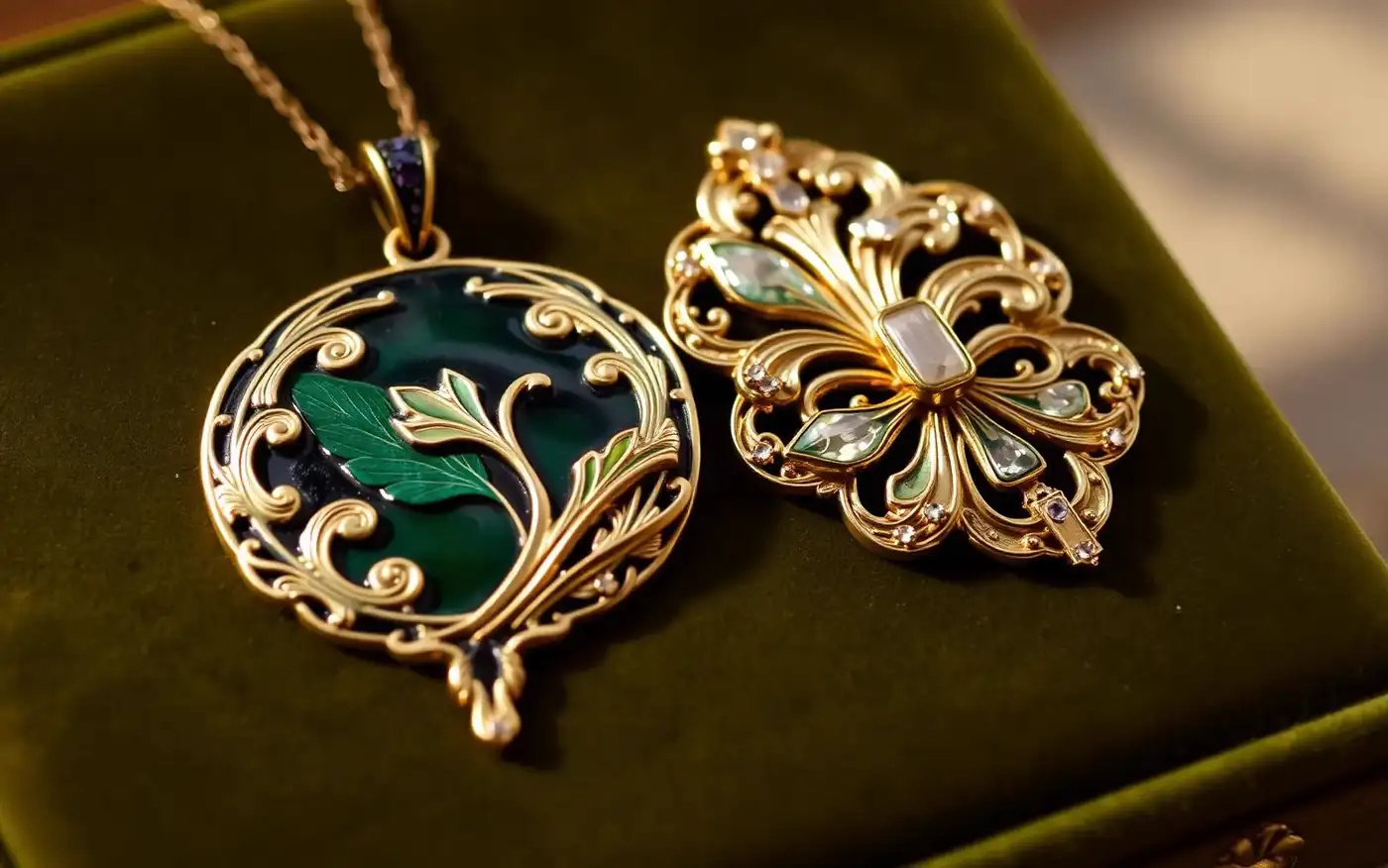
Opal is the signature stone of Art Nouveau, set with plique-a-jour enamel and gold in pendants and brooches, and it stayed popular in Edwardian and Arts and Crafts jewelry.
Because opal is soft, antique opals often show fine scratches and worn edges. We report crazing honestly and we photograph the stone under macro from more than one angle before listing.
Frequently asked questions
- Is it bad luck to wear opal?
- That superstition comes from a nineteenth-century novel, not from any tradition of gemology. It did, however, depress opal prices for decades.
- Can opal get wet?
- Brief contact with water is fine for solid natural opal, but soaking, heat and rapid drying are risky, and doublets and triplets can separate.
- Is opal suitable for an engagement ring?
- Only with realistic expectations. It will pick up scratches and needs a protective setting and gentle handling.
Written by our estate jewelry team and reviewed by our in-house gemologist, a GIA Graduate Gemologist (GG). We have been buying and selling European antique jewelry since 1973.
From the reading to the piece
Shop opal jewelry
Each piece is one of a kind and sells once, so this collection changes constantly.
View opalRelated guides
Keep reading
eras
Art Nouveau jewelry guide, 1890 to 1910
Enamel, whiplash curves and the human figure in gold, made to be looked at rather than appraised by carat.
how-to
Caring for pearls, opals and other soft stones
Last on, first off, and never in an ultrasonic.
gemstones
Turquoise, stabilized and otherwise
Porous, personal, and a stone that changes with the person wearing it.