History
A short history of hallmarking
Europe's oldest consumer protection scheme, and why it is the best dating tool a jeweler has.
Written by our in-house jewelry team · Updated August 7, 2026 · 8 min read
In short
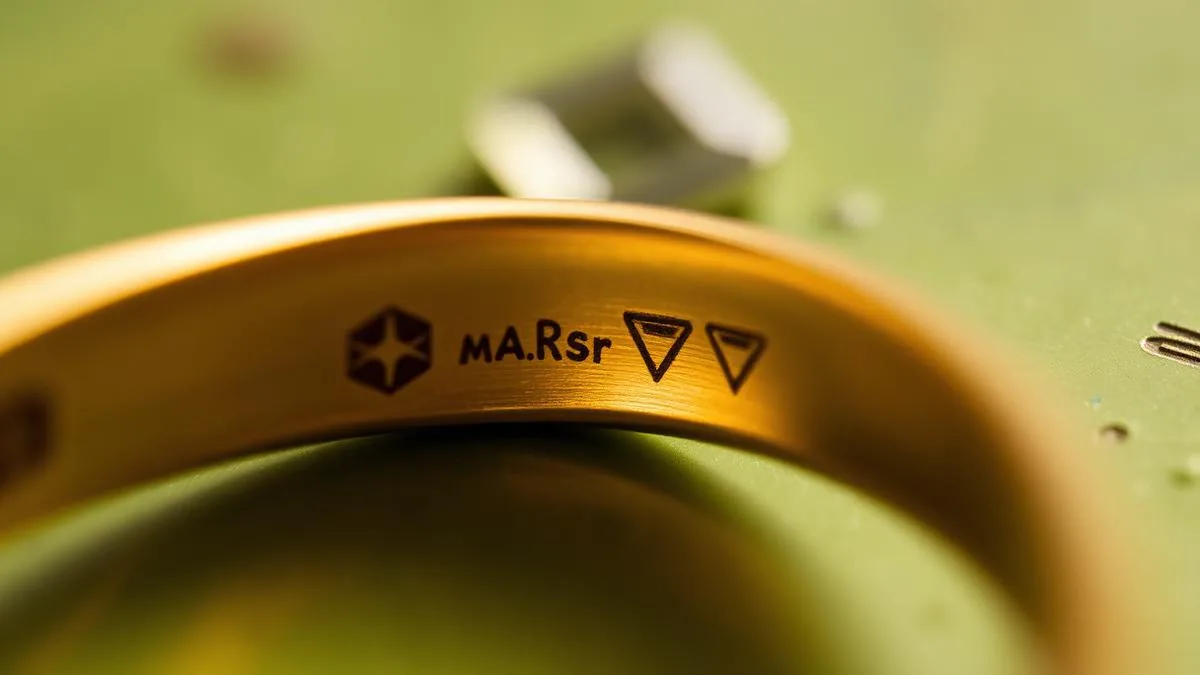
Hallmarking is the practice of independently testing precious metal and striking marks on it to certify its fineness. It began in medieval Europe as a guild and state response to fraud, with the London Goldsmiths' Company striking marks from the fourteenth century and France and the Low Countries developing their own systems. Because the marks changed over time and were controlled by an authority, they are the most reliable evidence a jeweler has for where and roughly when a piece was made.
Hallmarking is one of the oldest forms of consumer protection anywhere, and it exists because gold is easy to adulterate and hard to judge by eye.
For a buyer of European antique jewelry it is also the single most useful thing to understand, because a hallmark is evidence in a field full of opinion.
Shop the pieces: Everyday vintage fine jewelry, curated and available now.
Why it began
Precious metal is worth what its fineness says it is worth, and fineness cannot be assessed by looking. Medieval guilds and rulers had a shared interest in a system where an independent party tested the metal and marked it, so that a buyer did not have to trust the maker.
That is what an assay office is: an independent testing body that assays the metal and strikes marks certifying the result.
Britain
The London Goldsmiths' Company has struck marks since the fourteenth century, and the British system developed into the most legible in Europe: a sponsor or maker's mark, a standard mark for fineness, an assay office town mark and, importantly, a date letter that changes annually.
The date letter is why British pieces can often be dated to the year. Reading it correctly means matching the letter with its typeface and the shape of the surrounding shield against the tables for that office.
France
France developed a distinctive system of small pictorial marks. The eagle's head for 18K gold and the boar's head and crab for silver are among the marks most often met on nineteenth and twentieth century French jewelry, alongside a lozenge-shaped maker's mark.
French marks generally give standard and maker rather than a year, so dating French work usually relies on the combination of mark type, construction and style.
The Netherlands
Dutch hallmarking has a long institutional history and continues today under national law, with assay offices testing and marking precious metal articles where marking is required. Dutch marks indicate fineness and, in various periods, the office and the maker.
As Dutch jewelers, this is the system we work with every day. Where a piece requires assay under Dutch law, that is done by the authorized assay office, not by us.
What a hallmark can and cannot tell you
A hallmark is strong evidence of fineness and origin, and in the British system often of year. It is not proof of who designed a piece, and it can be transferred: a marked section of an old chain can end up in a newer object, deliberately or innocently.
It can also be faked. Genuine marks are struck cleanly with consistent depth and the correct punch shapes for their period. This is why we photograph the hallmark on every piece, at magnification, rather than describing it and asking you to take our word for it.
- Reads fineness: yes
- Reads country and often town: usually
- Reads exact year: British system yes, most others no
- Proves the designer: no
Frequently asked questions
- What does 750 mean on a gold ring?
- It is a fineness mark meaning 750 parts per thousand gold, which is 18K. 585 is 14K and 375 is 9K.
- Does an unmarked piece mean it is not gold?
- No. Marking requirements varied by country, period and article, and marks can be worn away or removed during sizing. Unmarked metal should be tested rather than assumed either way.
- Can hallmarks be faked?
- Yes, which is why they are read in context. A specialist looks at the punch shapes, the depth and cleanliness of the strike and whether the mark is consistent with the construction of the piece.
Written by our estate jewelry team and reviewed by our in-house gemologist, a GIA Graduate Gemologist (GG). We have been buying and selling European antique jewelry since 1973.
From the reading to the piece
Shop hallmarked vintage gold
Related guides
Keep reading
metals
Understanding European gold hallmarks
American gold says 14K. European gold shows you a lion, an eagle's head or a tiny crowned figure. Here is how to read them.
authenticity
How to read Dutch gold and silver hallmarks
The zoetermeer, the lion, and how the Netherlands marks precious metal.
authenticity
How to read French gold and silver hallmarks
The eagle's head, the boar, the owl, and what French hallmarks can and cannot tell you.
authenticity
How to read British gold and silver hallmarks
Assay office marks, the date letter, and how the UK's hallmark system works.