Paris · founded 1906 by Alfred Van Cleef and the Arpels family
Vintage Van Cleef & Arpels
Van Cleef & Arpels opened on the Place Vendome in Paris in 1906, founded by Alfred Van Cleef together with the Arpels family. The house is known above all for the Mystery Setting, patented in 1933, in which calibrated stones are held on hidden rails so no metal shows between them, and for the Alhambra motif introduced in 1968. Signed pieces are scarce in estate stock and are always worth researching properly.
The house
The house made its name in the interwar years with technically ambitious work: articulated clips, transformable pieces that convert from a necklace to bracelets, and the minaudiere, a rigid evening case that carried everything a woman needed in one object.
The Mystery Setting is the house's defining technical achievement. Each stone is cut with tiny grooves in its girdle and slid onto a gold rail beneath the surface, so the finished piece reads as an unbroken field of color. It is extremely slow to make and very few workshops in the world can do it, which is a meaningful part of any attribution.
The Alhambra motif, a four leaf clover outlined in beaded gold, arrived in 1968 and has been produced in long runs ever since in many materials. Like the Cartier LOVE bracelet, the design itself dates nothing; the marks and the construction do.
Iconic designs and collections
- Mystery Setting
- Patented in 1933; stones held on hidden gold rails.
- Alhambra
- Four leaf clover motif introduced in 1968.
The Mystery Setting and the Alhambra
The Mystery Setting, patented by the house in 1933, is its defining technical achievement. Each stone is cut with fine grooves in its girdle and slid onto gold rails hidden beneath the surface, so the finished piece reads as an unbroken field of color with no visible metal between the stones. It is extremely slow to produce and very few workshops can execute it well, which is itself part of any attribution.
The Alhambra motif, a four leaf clover outlined in beaded gold, was introduced in 1968 and has been produced continuously since in a range of materials. As with other long-running motifs from other houses, the design itself does not establish the age of a specific piece.
Recognizing marks and signatures
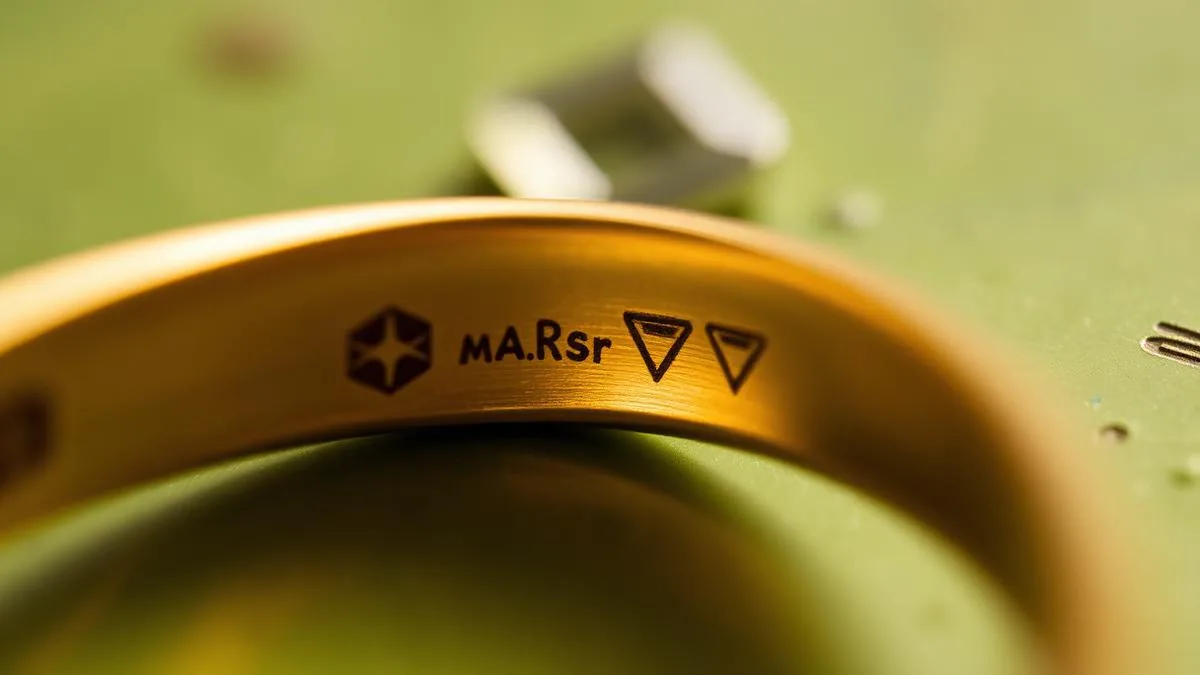
Signed pieces typically read Van Cleef & Arpels, sometimes with a city, and carry a serial or inventory number that the house's own archive can relate to a production record. French made pieces carry French assay marks, including the eagle's head historically used for 18K gold, along with a workshop maker's mark in a lozenge punch. Marks are usually placed discreetly, on a clasp, a gallery or the reverse of a clip rather than somewhere visible when worn.
Common fakes and warning signs
Alhambra jewelry and Mystery Set designs are widely copied. Copies of the Mystery Setting almost always show visible metal between the stones under magnification, since replicating the hidden rail technique well is very difficult. Because signed Van Cleef & Arpels pieces are relatively scarce in general estate stock, an unusually large supply of supposedly signed pieces at low prices is itself a warning sign.
Why marks alone do not authenticate
A stamped signature and serial number can be imitated, and only the house's own production archive can give a definitive answer for a significant piece. Examination of construction, the quality of any Mystery Setting work, and the assay and maker's marks together are what a careful attribution rests on, not the signature by itself.
How to recognize the work
- Mystery Set panels of ruby or sapphire with no visible metal between the stones
- Transformable construction, with clips that detach or a necklace that becomes two bracelets
- Beaded gold outlines and precise, even goldwork on the Alhambra and related motifs
- A very high standard of finishing on surfaces that are never seen when the piece is worn
- Naturalistic clips and articulated forms that move properly rather than sitting stiff
What the marks mean
- A signature, generally reading Van Cleef & Arpels, sometimes with a location
- A serial or inventory number, which the house archive can relate to a production record
- French assay marks on French made pieces, including the eagle's head for 18K gold
- A workshop maker's mark in a lozenge punch on French work
- Marks are usually placed discreetly, on a clasp, a gallery or the reverse of a clip
Buy carefully
Alhambra and Mystery Set designs are copied widely, and copies of the Mystery Setting almost always show metal between the stones under magnification. Signed Van Cleef pieces are rare enough in estate stock that we treat each one as a research project, and we say clearly when a piece is in the style of the house rather than by it.
Common questions
What is the Mystery Setting?
A setting patented by the house in 1933 in which each calibrated stone is grooved and slid onto hidden gold rails, so the finished surface shows stone with no metal between. It is very difficult to execute and difficult to copy convincingly.
When did the Alhambra motif appear?
In 1968. It has been made continuously in many materials since, so the motif alone says nothing about the age of a particular piece.
Can Van Cleef & Arpels pieces be authenticated by the archive?
The house maintains production records and, for significant pieces, its archive is the definitive source. We tell you what our own examination establishes and what would need archive confirmation.
Are you an authorized dealer?
No. We are an independent estate jeweler and we are not affiliated with or endorsed by the house. We buy signed pieces from European estates, examine and photograph the signature, numbers and metal marks, and describe exactly what we can and cannot establish.
When was the Alhambra motif introduced?
In 1968. It has been produced continuously since in a range of materials, so the motif alone does not establish the age of a particular piece.
How can I tell a real Mystery Set piece from a copy?
Under magnification, genuine Mystery Setting work shows no visible metal between the stones. Copies of the technique almost always reveal metal between the stones because the hidden rail method is very difficult to replicate.
Are signed Van Cleef & Arpels pieces common in estate collections?
They are relatively scarce compared with some other major houses, which is one reason we treat each one as a research project rather than assuming authenticity from the signature alone.
Can the house's archive confirm a piece is genuine?
For significant pieces the house maintains production records that can serve as a definitive reference. We describe clearly what our own examination establishes and what would require archive confirmation.
Shop the pieces
Signed Van Cleef & Arpels in stock
Estate pieces signed Van Cleef & Arpels, photographed mark and all. Each one is a single example.
Nothing matching this is available right now. Every piece is a single example and sells once, so this changes regularly. Browse everything in stock or ask our buyers to look for it.